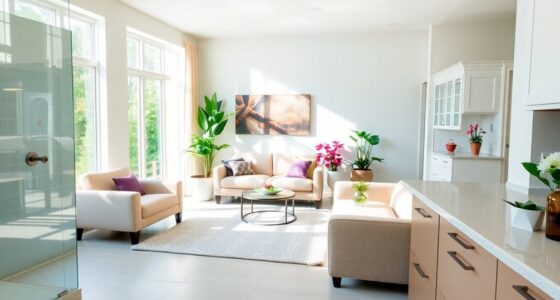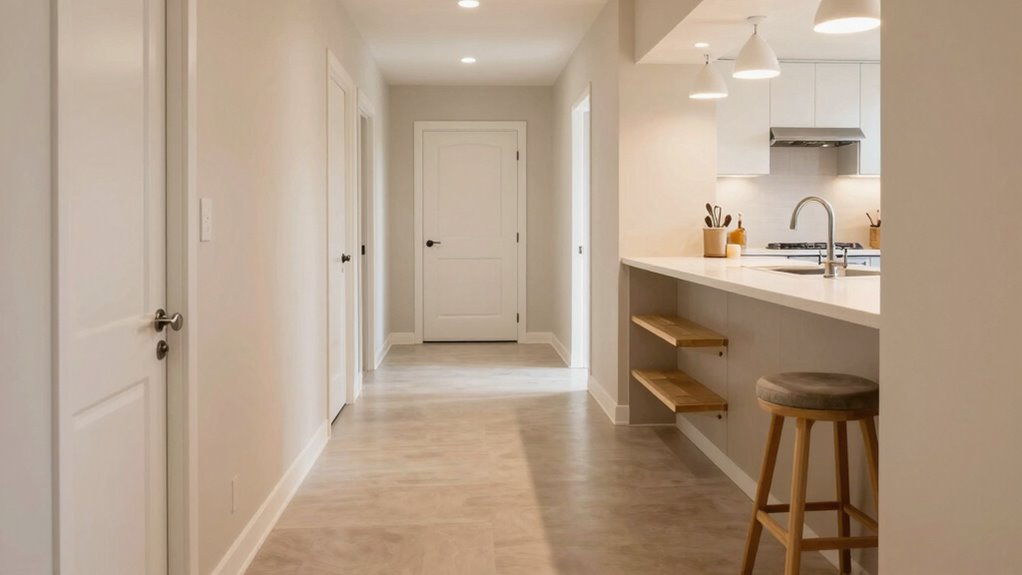
To make your hallways, entryways, and kitchens more age-friendly, guarantee pathways are clear and well-lit with motion-activated lights to prevent falls. Add sturdy handrails and widen doorways or install ramps for easier access. Use non-slip mats and organize items for quick, safe reach. Adjust counters and appliances to comfortable heights, and incorporate ergonomic tools to support independence. Keep safety features consistent and evaluate your space regularly—continuing will reveal more simple changes that can make a big difference.
Key Takeaways
- Install sturdy handrails and proper lighting to enhance support and visibility.
- Ensure pathways are clear, wide, and free of obstacles to prevent falls.
- Use non-slip flooring and mats to reduce slipping hazards.
- Adjust countertops and appliances to accessible heights for easier use.
- Incorporate ergonomic tools and organized storage for safer, more efficient tasks.

As we age, everyday spaces like entryways, hallways, and kitchens become more than just functional areas—they can impact our safety and independence. Making these spaces more age-friendly isn’t just about convenience; it’s about reducing the risk of falls and accidents. One of the key ways to achieve this is by focusing on home safety. Clear, unobstructed pathways are essential, so remove clutter, loose rugs, and obstacles that could trip you up. Proper lighting is equally important, especially in entryways and hallways, where shadows can hide hazards. Installing motion-activated or bright, soft lighting ensures you can see clearly without fumbling in the dark.
Mobility aids play a significant role in creating a safer environment. If you use a cane, walker, or wheelchair, the space around you needs to accommodate these devices comfortably. Widening doorways or installing ramps can help, making it easier to move freely and safely. In hallways, consider adding handrails along the walls to provide support when walking. These rails should be sturdy, at a height that feels natural for you, giving reassurance when balance feels uncertain. When it comes to entryways, a no-step threshold or a gentle ramp makes it easier to transition from outside to inside, especially if you use mobility aids or have limited mobility. Additionally, regular home safety assessments can help identify potential hazards and ensure your environment remains secure. Incorporating age-friendly design principles into your home can further enhance safety and comfort. Consulting with occupational therapists can provide personalized recommendations tailored to your specific needs and living situation. Keeping emergency contact information visible and accessible is also an important aspect of home safety.
In the kitchen, safety modifications are equally important. Countertops should be at a comfortable height, and appliances should be within easy reach to prevent overextending or straining. Non-slip mats on the floor can prevent slips, particularly if spills happen. Installing pull-out shelves or lazy Susans makes it easier to access items without bending or stretching too much. Additionally, ergonomic tools can reduce strain on muscles and joints, making daily tasks easier and safer. Consistent organization reduces chaos and helps you locate things quickly, minimizing the risk of accidents. Additionally, investing in ergonomic tools can lessen the effort needed to prepare meals or perform daily tasks, supporting your independence.
motion-activated LED night lights
As an affiliate, we earn on qualifying purchases.
As an affiliate, we earn on qualifying purchases.
Frequently Asked Questions
What Are the Best Non-Slip Flooring Options for These Areas?
You should choose non-slip flooring options like textured vinyl, rubber, or cork, which provide safety and durability. To enhance grip further, add decorative rugs with non-slip backing or floor padding in high-traffic areas. These solutions prevent slips and falls, making hallways, entryways, and kitchens safer for everyone. Combining these materials guarantees both functionality and style, creating an age-friendly environment that’s comfortable and secure.
How Can Lighting Be Optimized for Better Visibility?
Imagine your home as a lighthouse guiding you safely through the night. You can optimize lighting by installing smart lighting with motion sensors, which automatically brighten pathways as you approach. These sensors reduce shadows and improve visibility, making navigation easier and safer. Adjust the brightness levels to suit your needs, ensuring every corner of your hallways, entryways, and kitchens remains well-lit, just like a lighthouse illuminating the way.
Are There Specific Furniture Types Recommended for Safety?
You should choose furniture with stability and ergonomic designs to enhance safety. Opt for sturdy chairs with non-slip feet and firm armrests, which help with balance and support. Avoid furniture with sharp edges or unstable bases. Look for pieces that are easy to get in and out of, with height appropriate to reduce strain. These choices help prevent falls and make everyday tasks safer and more comfortable for you.
What Maintenance Tips Help Keep These Spaces Safe?
Did you know that falls in the home account for over 30% of injuries among seniors? To keep these spaces safe, regularly check for loose rugs, worn flooring, or clutter that could cause trips. Maintain good lighting, secure handrails, and guarantee accessibility upgrades are in good condition. Regularly cleaning and inspecting these areas helps prevent accidents, ensuring your home remains a safe environment for everyone.
How Can Technology Enhance Safety in These Areas?
You can enhance safety in hallways, entryways, and kitchens by integrating a smart home system that connects security features like motion sensors and cameras. These devices can automatically alert you to unusual activity or emergencies through emergency alerts sent directly to your phone or smart device. This technology provides peace of mind, enables quicker responses, and helps prevent accidents, making these spaces safer and more accessible for everyone.
Conclusion
By making small adjustments in your entryways, hallways, and kitchens, you create safer, more inviting spaces that truly work for everyone. It’s funny how these simple changes can unexpectedly transform your daily routines — making them easier and more comfortable. When you prioritize accessibility now, you’re not just preparing for the future; you’re enhancing your home’s warmth and usability today. Sometimes, the smallest tweaks have the biggest impact, turning everyday spaces into areas of effortless comfort.