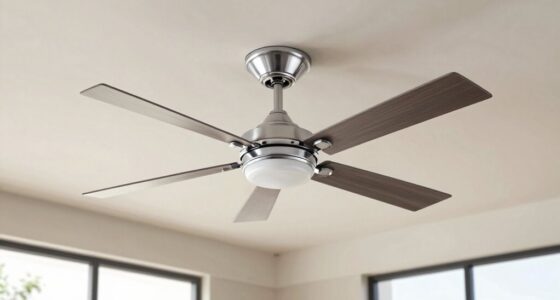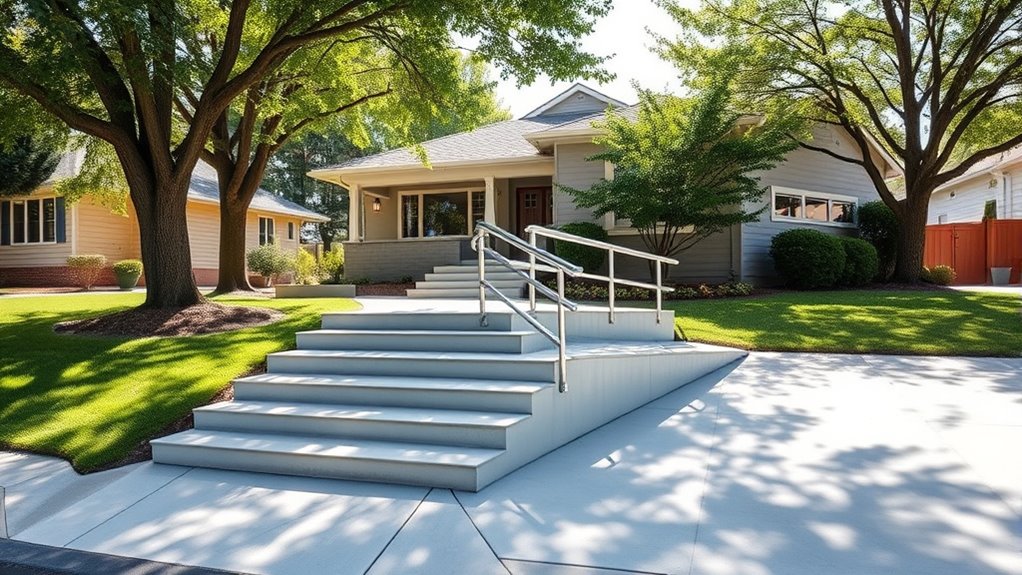

To future-proof your home for aging, you should focus on integrating smart technology and accessible design features. Install smart thermostats, security systems, and voice assistants to boost convenience and safety. Make modifications like wider doorways, low-threshold showers, and easy-to-reach switches to guarantee comfort and independence. Planning ahead with these enhancements can help your home adapt as your needs change, so you stay safe and comfortable for years to come. Learn more about making your home truly future-ready.
Key Takeaways
- Incorporate accessible design features like wider doorways and non-slip flooring to enhance safety and mobility over time.
- Integrate smart technology such as automated lighting and security systems for increased convenience and security.
- Plan for adaptable layouts and low-threshold showers to accommodate aging-related physical changes.
- Install switches, outlets, and controls within easy reach to reduce strain and improve usability as you age.
- Prioritize future-proofing through thoughtful upgrades that support independence, safety, and property value long-term.

As technology advances and climate change accelerates, future-proofing your home becomes vital to guarantee it remains functional, safe, and efficient for years to come. One of the most impactful ways to do this is by integrating smart technology. Smart devices allow you to automate lighting, climate control, security, and even daily routines, making your home more adaptable and easier to manage as you age. For example, installing smart thermostats helps maintain comfortable temperatures without constant manual adjustments, reducing energy costs and providing peace of mind. Smart security systems with cameras and doorbells enable remote monitoring, so you can keep an eye on your home from anywhere, enhancing safety and convenience. Voice-activated assistants can also assist with everyday tasks, offering quick access to information or reminders, which becomes increasingly valuable with age.
Alongside smart technology, accessible design plays a vital role in future-proofing your home. Thoughtful design ensures that your living space remains safe, comfortable, and functional regardless of physical changes over time. This means incorporating features like wider doorways and hallways to accommodate mobility aids, non-slip flooring to prevent falls, and lever-style door handles that are easier to operate than traditional knobs. Installing low-threshold showers and step-free entryways further reduces hazards and makes everyday activities more manageable. Adequate lighting, including motion-activated or dimmable options, enhances visibility and reduces the risk of accidents. Additionally, placing switches and outlets within easy reach minimizes the need for bending or stretching, which can be challenging as you age. Incorporating smart home technology can further enhance adaptability and ease of use as your needs evolve.
Future-proofing your home with smart technology and accessible design isn’t just about preparing for old age; it’s about creating a space that adapts to your evolving needs seamlessly. You’ll find that these features not only support independence but also improve your quality of life today. Smart technology offers convenience and efficiency, while accessible design ensures safety and comfort. When planning upgrades, consider a holistic approach that combines both elements, making your home more resilient to future challenges. As you invest in these advancements now, you’re not just protecting your property—you’re enhancing your daily experience and ensuring your home remains a sanctuary for years to come. The key is to think ahead, choosing solutions that are flexible and scalable, so they continue to serve your needs as they evolve over time.

Sensi Smart Thermostat, Wi-Fi, DIY, Alexa, Energy Star Certified, ST55
- Privacy Protection: Does not sell personal information
- Easy DIY Installation: Quick setup with step-by-step app guide
- Wide Compatibility: Works with most home HVAC systems
As an affiliate, we earn on qualifying purchases.
As an affiliate, we earn on qualifying purchases.
Frequently Asked Questions
How Can Smart Technology Enhance Aging-In-Place Safety?
Smart technology enhances your aging-in-place safety by integrating assistive devices and emergency systems that respond quickly to your needs. You can use voice-activated controls, smart sensors, and monitoring systems to prevent accidents and alert loved ones or emergency services if needed. These devices work seamlessly to create a safer environment, giving you peace of mind and independence while ensuring help is always accessible when required.
What Are Cost-Effective Options for Long-Term Home Modifications?
You can save money by opting for budget-friendly modifications like installing grab bars, adding non-slip flooring, and improving lighting. Look for cost-effective retrofits that require minimal investment but make a big difference in safety. Prioritize easy, DIY projects to stretch your budget further. Remember, a penny saved is a penny earned, and these simple updates can keep your home safe and accessible as you age, without breaking the bank.
How Do I Prioritize Upgrades Based on My Future Needs?
You should prioritize upgrades that enhance home safety first, such as installing grab bars or ramps, to make certain easy access and reduce fall risks. Incorporate renovation planning by considering your current mobility and health needs, then choose adaptable solutions like wider doorways or lever handles. Focus on modifications that provide long-term benefits, allowing you to age in place comfortably and safely, without needing frequent renovations later.
Are There Legal or Insurance Considerations for Home Modifications?
You should check legal considerations like permits and building codes before making modifications, guaranteeing you’re within the law. Insurance implications are also important—some upgrades might affect your coverage or premiums. It’s wise to consult with your insurer and local authorities to avoid surprises later. Taking these steps helps protect your investment and ensures your home remains a safe, legal haven as you age comfortably.
How Can I Involve Family in the Home Adaptation Process?
You can involve family in the home adaptation process by encouraging open communication and collaborative planning. Share your ideas and listen to their input, making them feel part of the decision-making. Organize family meetings to discuss needs and preferences, ensuring everyone’s concerns are addressed. This shared approach helps you create a safer, more comfortable home while strengthening family bonds and making future modifications smoother and more effective.
Conclusion
As you walk through your future-proofed home, envision yourself effortlessly steering through doorways and stairs, your emergency kit always within reach. Just like a well-placed light switch that turns on instantly, these thoughtful updates guarantee comfort and safety when you need them most. By planning ahead, you create a space where aging gracefully becomes second nature—a cozy haven that adapts to your changing needs, making every moment at home feel secure and seamless.