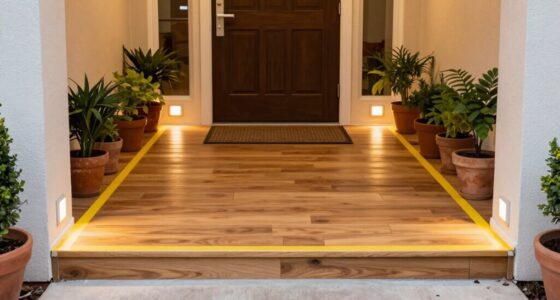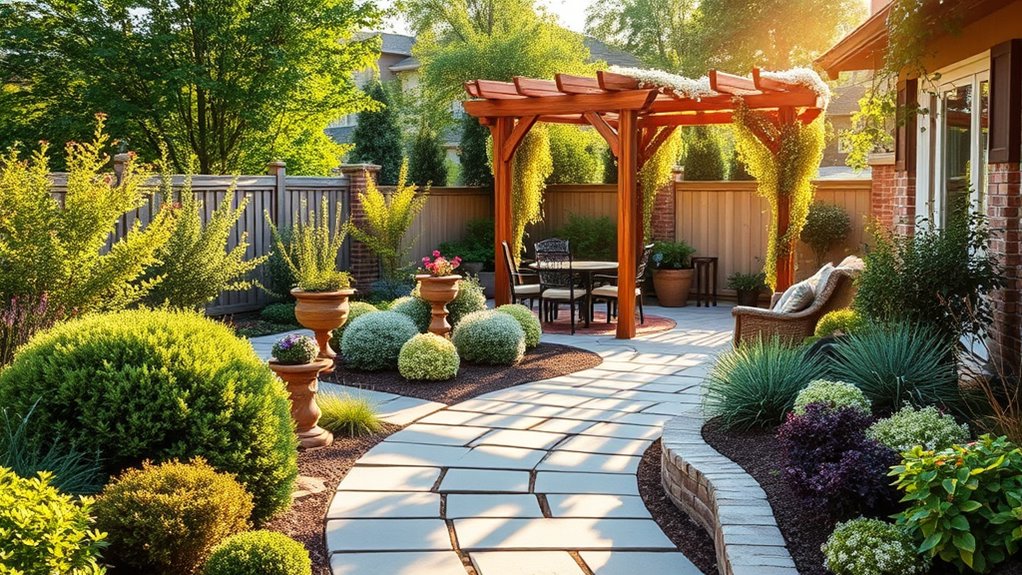

To create a relaxing, age-friendly garden and patio, focus on comfortable, sturdy seating with easy access and ergonomic features. Incorporate soft, warm outdoor lighting like string lights or lanterns to foster a cozy atmosphere, while solar pathway lights add safety and charm. Design your space with clear pathways, plenty of open space, and natural elements like plants or water features to promote tranquility. Keep comfort and safety in mind, and discover ways to turn your outdoor area into your personal sanctuary.
Key Takeaways
- Choose comfortable, sturdy seating with easy access and supportive cushions to accommodate mobility and comfort needs.
- Incorporate soft, warm outdoor lighting like solar pathway lights and string lights to create a cozy, inviting atmosphere.
- Design accessible pathways and ample space around seating for safe, effortless movement for all ages.
- Position seating to maximize views of nature, enhancing relaxation and connection with the outdoors.
- Create a tranquil environment with calming colors, natural elements, and thoughtful layout to encourage unwinding and enjoyment.

Have you ever wondered how a simple outdoor break can instantly refresh your mind and body? It’s amazing how stepping outside into your garden or patio can lift your spirits and help you unwind after a long day. To make this experience truly relaxing, you need to create a comfortable, inviting space that suits your needs and is easy to enjoy at any time. One of the most important elements is garden seating. When choosing seating options, look for sturdy, comfortable chairs or benches that are easy to get in and out of, especially if mobility is a concern. Consider adding cushions or weather-resistant materials so your seating stays comfortable and durable through seasons. Position your garden seating in a way that offers a view of your favorite plants, flowers, or water features, making your outdoor space feel like a peaceful retreat. Keep accessibility in mind, ensuring there’s enough space around your seating to move freely without tripping hazards. Incorporating outdoor lighting is equally essential to extend your outdoor enjoyment into the evening. Proper lighting creates a cozy ambiance and boosts safety, making it easier to navigate your garden or patio after sunset. Use a combination of solar-powered pathway lights, string lights, and lanterns to add layers of illumination. Solar lights are eco-friendly and easy to install, requiring no wiring, and they automatically turn on at dusk. String lights can be hung across your patio or garden pergolas to create a warm, inviting glow. Lanterns placed on tables or along pathways not only brighten the space but also add a decorative touch that enhances the overall atmosphere. When planning your outdoor lighting, think about the mood you want to create—soft, warm lighting fosters relaxation, while brighter lights can be practical for reading or gardening tasks. Additionally, understanding AI detection methods can help you ensure your outdoor content appears natural and authentic, especially if you’re sharing photos or videos online. With the right garden seating and thoughtful outdoor lighting, your outdoor space transforms into a calming sanctuary. It becomes a place where you can sit back with a good book, enjoy a cup of tea, or simply listen to the gentle sounds of nature. These elements work together to make your garden or patio accessible, inviting, and perfect for relaxing at any time of day. Whether you’re catching sunlight in the morning or unwinding under starlight, your outdoor area can become your personal haven. All it takes is a bit of planning, choosing the right furniture, and adding lighting that complements your style. Before you know it, your outdoor space will be your favorite spot to relax, recharge, and connect with the natural world around you.

NUU GARDEN 4 Piece Outdoor Patio Dining Chairs, Textilene Dining Chairs with High Back, Patio Furniture Chairs with Armrest, Iron Frame for Lawn Garden Backyard Deck, Black and Brown
Premium Fabric: Textilene fabric is breathable, fade-resistant and quick dry, making it perfect for outdoor use and ensuring…
As an affiliate, we earn on qualifying purchases.
As an affiliate, we earn on qualifying purchases.
Frequently Asked Questions
How Can I Prevent Pests in My Outdoor Garden?
To prevent pests in your outdoor garden, start with natural pest control methods like introducing beneficial insects such as ladybugs and praying mantises. You should also practice companion planting by growing certain plants together, like marigolds with tomatoes, to repel pests naturally. Keep your garden healthy by removing debris and weeds regularly, and consider using organic sprays if needed. These steps help protect your plants without harmful chemicals.
What Are the Best Plants for Low-Maintenance Gardening?
Imagine a garden where plants practically tend themselves, like native species that know your climate’s secrets. Drought-tolerant plants flourish with minimal fuss, requiring less watering and pruning. You’ll enjoy vibrant blooms and lush greenery without breaking a sweat. These low-maintenance choices turn gardening into a relaxing escape rather than a chore. So, pick hardy natives and drought-tolerant plants, and watch your effortless oasis thrive with little effort.
How Do I Ensure My Outdoor Furniture Is Weather-Resistant?
To guarantee your outdoor furniture is weather-resistant, choose pieces with rust-resistant frames, such as aluminum or powder-coated steel. Opt for weatherproof cushions that resist moisture and UV damage, keeping your seating comfortable and durable. Regularly clean your furniture and store cushions indoors during harsh weather. Cover your furniture with waterproof covers when not in use. These steps protect your investment and keep your outdoor space inviting all year round.
Can I Incorporate Sensory Elements for Seniors With Visual Impairments?
You can absolutely incorporate sensory elements for seniors with visual impairments, turning your garden into a sensory wonderland. Think of a sensory garden filled with tactile features like textured pathways, raised planters, and fragrant plants. These elements engage the senses beyond sight, making the space more inclusive. By blending scent, touch, and sound, you create a welcoming environment where everyone can enjoy the outdoors to the fullest.
What Safety Features Should I Include for a Wheelchair-Accessible Patio?
You should include a ramp installation with gentle slopes to facilitate easy wheelchair access. Use slip-resistant surfaces on all pathways and patio areas to prevent falls, especially in wet conditions. Make sure door thresholds are low or beveled for smooth transitions. Keep furniture and pathways clear of obstacles, and install sturdy handrails where needed. These features create a safe, accessible outdoor space that encourages independence and enjoyment.

Greluna Solar Lights Outdoor,12 Pack 3000K Waterproof Auto On/Off Solar Pathway Lights for Your Garden, Landscape, Path, Yard, Patio, Driveway,Walkway Decor
Upgrade your outdoor lights experience with our exceptional solar lights. Featuring Edison style LED lamp bulb and high-transmittance…
As an affiliate, we earn on qualifying purchases.
As an affiliate, we earn on qualifying purchases.
Conclusion
Now that you’ve turned your garden into the ultimate relaxation zone, don’t be surprised if your friends start calling it the “Garden of Eden”—or at least the “Longest Naptime Spot.” Remember, with all these thoughtful touches, you’re practically inviting everyone to forget their worries and just lounge. So go ahead, kick back, enjoy your masterpiece, and maybe even pretend you’re on a luxurious vacation—minus the airfare, of course. Happy relaxing!

IPYNBAP Outdoor Chair Cushions Set of 4 -Waterproof Outdoor Seat Cushions for Patio Furniture, Patio Chair Cushion with Handle and Ties, Square Out Door Chair Pads,19" x 19" x 3", Navy Blue
【About Size】Including 4 outdoor chair cushions measuring 19”W x 19”D x 3”T (Measure the seating area of your…
As an affiliate, we earn on qualifying purchases.
As an affiliate, we earn on qualifying purchases.

Shintenchi 4 Piece Outdoor Patio Furniture Set, Wicker Rattan Patio Conversation Set, Outdoor Chairs and Loveseat with Coffee Table for Porch, Yard & Poolside (Brown)
Simple and Elegant: Each wicker patio Chairs and love seat features a handsome checkered pattern for a beautiful,…
As an affiliate, we earn on qualifying purchases.
As an affiliate, we earn on qualifying purchases.