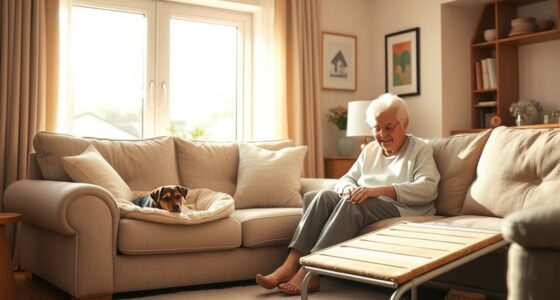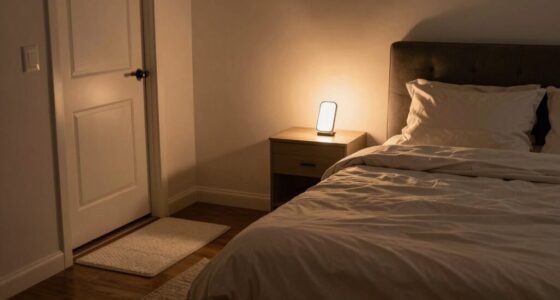
To keep both toddlers and grandparents safe, focus on simple design tweaks like installing safety gates, covering outlets, and securing furniture to prevent tipping. Use non-slip mats and grab bars in bathrooms, widen doorways, and add ramps for easy access. Keep pathways clutter-free and ensure good lighting to reduce trips and falls. Making these small changes promotes safety and confidence for everyone at home—discover more tips that can help create a truly secure environment.
Key Takeaways
- Install safety gates at stairways and doorways to restrict access for toddlers and prevent falls for grandparents.
- Use corner protectors and outlet covers to eliminate sharp edges and electrical hazards.
- Widen doorways or add ramps to improve wheelchair and walker accessibility for seniors.
- Add non-slip mats in bathrooms and secure rugs to prevent slips and trips for all ages.
- Ensure proper lighting with nightlights and bright fixtures to enhance visibility and safety throughout the home.
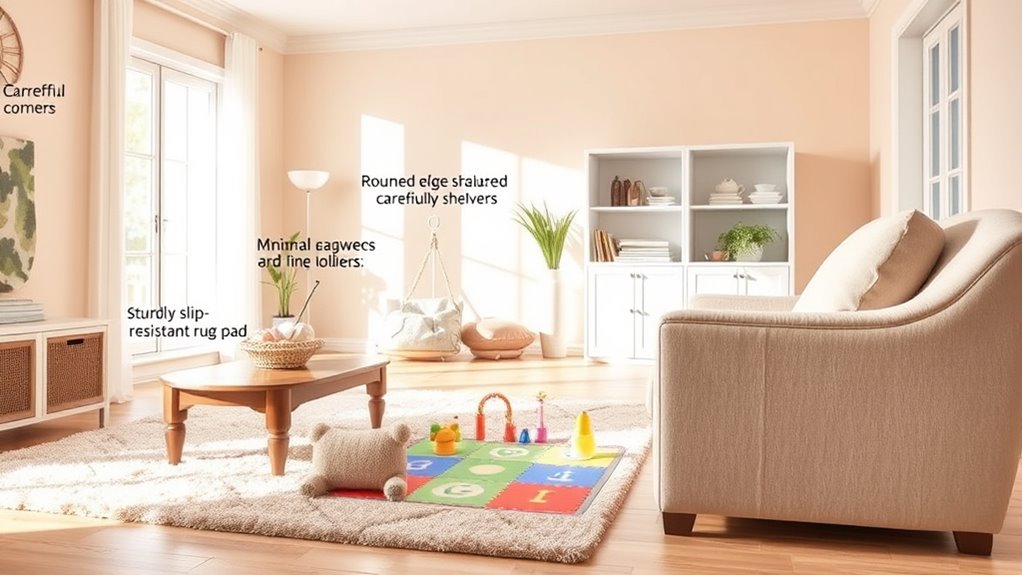
Have you ever wondered what makes a house truly safe? Creating a space that protects both your little ones and your elderly loved ones might seem challenging, but with a few simple design tweaks, you can make your home secure for everyone. Childproofing tips are essential to prevent accidents with toddlers, but it’s equally important to contemplate elderly safety, guaranteeing your home accommodates their mobility and health needs.
Start by examining the common hazards that could harm children and seniors alike. Secure heavy furniture to the wall to prevent tipping, and use corner protectors on sharp edges of tables and counters. For childproofing tips, install safety gates at stairways and doorways to restrict access to unsafe areas. Use outlet covers to prevent electrical shocks, and keep small objects, medications, and cleaning supplies out of reach. These straightforward steps reduce the risk of choking, falls, or poisoning, giving you peace of mind.
Secure heavy furniture, install safety gates, and keep small objects out of reach to prevent accidents for all ages.
When it comes to elderly safety, think about how mobility might be affected. Installing grab bars in bathrooms and along staircases provides support and stability, reducing the risk of falls. Non-slip mats in the bathtub and on bathroom floors are also vital, especially since wet surfaces can be hazardous. Widening doorways or adding ramps can make your home more accessible for wheelchairs or walkers, while ensuring door thresholds are flush with the floor minimizes trip hazards. Bright lighting throughout the house, especially in hallways and staircases, helps everyone see clearly and avoid accidents. Consider replacing traditional light switches with touch or rocker switches, which are easier for those with limited dexterity to operate.
Another key aspect is to keep pathways free of clutter, cords, and rugs that can cause trips. Secure loose electrical cords along walls or hide them behind furniture. Use furniture with stable bases, and avoid placing furniture in narrow walkways. For elderly safety, installing lever-style door handles instead of knobs makes opening doors easier, and adding nightlights in hallways and bathrooms ensures safe navigation at night.
Additionally, being aware of dietary considerations such as cranberry juice consumption and its effects can contribute to overall health and safety, especially for those on certain medications or with kidney concerns. Finally, always communicate with your family members about safety practices. Regularly check that safety devices are in place and functioning properly. Keep emergency contact information visible, and teach children about basic safety rules. For seniors, ensure they’re aware of safety features and encourage open conversations about their needs and concerns.
Frequently Asked Questions
How Do I Child-Proof My Outdoor Spaces Effectively?
To child-proof your outdoor spaces effectively, start by installing secure garden fencing to keep toddlers safe from outside hazards. Make certain gates are self-closing and latch securely. Add outdoor lighting to illuminate walkways and dark corners, reducing tripping risks. Regularly inspect fences and lighting fixtures for damage. Keeping the area tidy and removing sharp or dangerous objects also helps create a safe environment for both kids and grandparents to enjoy outdoors.
What Are Budget-Friendly Safety Upgrades for Seniors?
Imagine your home as a cozy haven where safety is seamless. To keep seniors safe on a budget, focus on fall prevention by installing grab bars and securing loose rugs. Simplify medication management with clear labels and pill organizers. These small, affordable upgrades create a secure environment, preventing accidents and allowing your loved ones to enjoy independence with confidence. Safety doesn’t have to be costly; it’s about smart, caring choices.
How Often Should Safety Assessments Be Done at Home?
You should perform safety assessments at home regularly, ideally every six months, to stay on top of home maintenance and hazard identification. Frequent checks help you catch potential dangers early, like loose handrails or slippery floors. Staying proactive guarantees your space remains safe for everyone, including toddlers and grandparents. Make it a habit to review key areas, especially after home repairs or seasonal changes, to keep your home secure and hazard-free.
Are There Any Eco-Friendly Safety Products Recommended?
Did you know that choosing eco-friendly safety products reduces toxic exposures by 60%? You should look for items made from eco-friendly materials and non-toxic solutions to keep your home safe and green. These products often feature natural, sustainable components that are safe for both children and grandparents. By opting for eco-conscious options, you create a healthier environment and support sustainability efforts, making your home safer for everyone.
What Are Common Overlooked Hazards in Multi-Generational Homes?
You might overlook hazards like hazardous chemicals stored under sinks or in cabinets, which pose risks for children and seniors. Loose rugs can cause trips and falls, especially in high-traffic areas. Regularly check for and secure these hazards, and store chemicals safely out of reach. Ensuring rugs are firmly anchored and removing clutter helps create a safer environment for everyone in your multi-generational home.
Conclusion
By making small design tweaks, you create a space that welcomes both the curiosity of toddlers and the wisdom of grandparents. It’s about balancing safety with comfort, turning your home into a sanctuary where everyone feels secure and free to explore. Just as a sturdy railing supports a grandparent’s walk and a soft rug cushions a toddler’s fall, these simple changes bridge generations. In safeguarding one, you protect them all—building a home where love and safety go hand in hand.