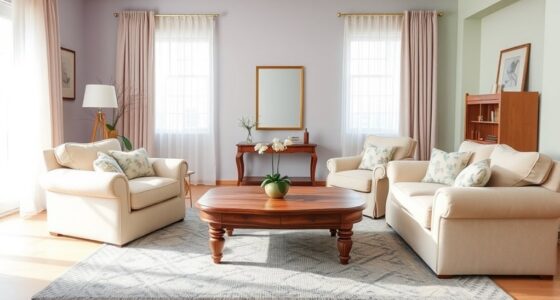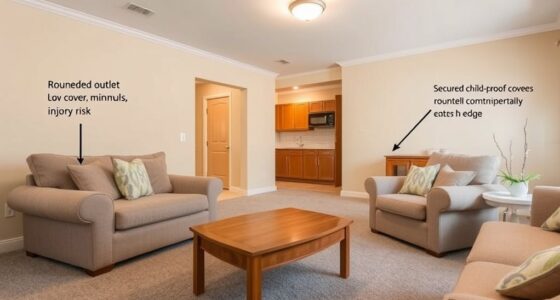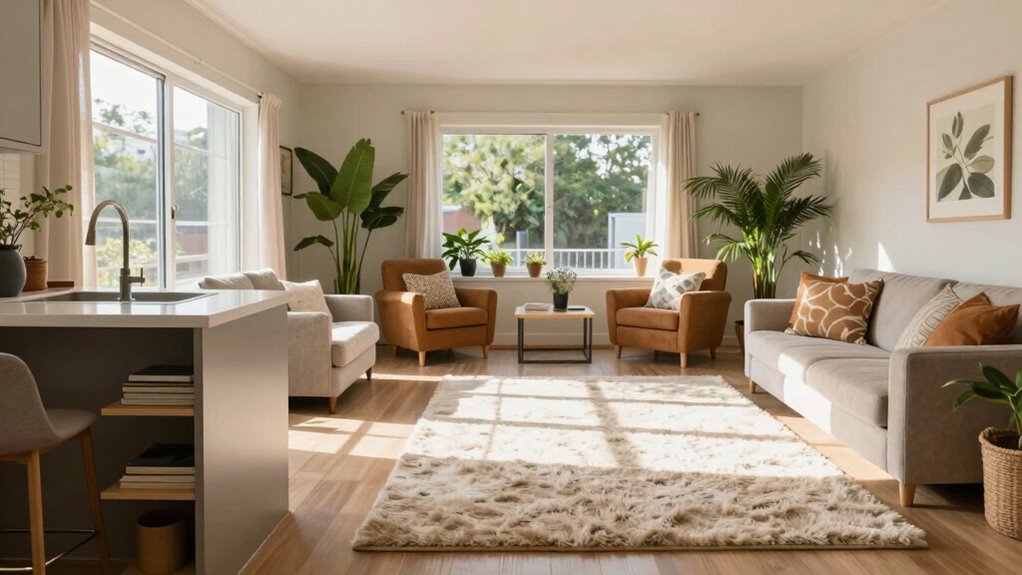

Age-friendly homes feel better for everyone because they’re designed to be safe, accessible, and flexible. Features like wider doorways, non-slip floors, and step-free entrances make daily tasks easier and reduce hazards. These improvements create a home that adapts to your changing needs and promotes social connection within communities. If you want to discover how these thoughtful design choices benefit all ages and stages of life, there’s more to explore ahead.
Key Takeaways
- Universal design features enhance safety and ease of use for people of all ages and abilities.
- Wider doorways and non-slip floors prevent accidents, benefiting everyone, especially children and caregivers.
- Flexible, adaptable spaces accommodate changing needs, making homes more comfortable long-term.
- Community-focused designs foster social connections that benefit mental and emotional well-being of all residents.
- Energy-efficient features lower utility costs and create a more sustainable, comfortable living environment for everyone.

Have you ever considered how your home can better support your needs as you age? Creating an age-friendly environment isn’t just about making life easier for seniors; it benefits everyone by promoting comfort, safety, and a sense of belonging. One key element in achieving this is universal design — a concept that emphasizes designing spaces accessible and usable by all people, regardless of age or ability. When you incorporate features like wider doorways, non-slip floors, lever-style door handles, and step-free entrances, you’re not only helping those with mobility challenges but also making your home more functional for everyone. These adjustments reduce hazards and create a seamless flow throughout your living space, making daily activities easier and safer. Designing for universal access ensures that your home remains adaptable to changing needs over time, further enhancing its longevity and usefulness. Community integration plays an essential role in the appeal and effectiveness of age-friendly homes. When your residence is designed to blend well with the neighborhood and local amenities, it fosters a greater sense of connection and support. Imagine living in a community where parks, shops, and social centers are easily accessible, and your home is part of a network where neighbors look out for one another. Community integration encourages social interaction, which is indispensable for mental and emotional well-being, particularly as you age. Plus, it guarantees that you’re not isolated; instead, you’re embedded in a vibrant, supportive environment that promotes active living and independence. Incorporating accessible community spaces can further enhance this sense of inclusion and connectedness. Designing for universal access and community integration also means considering flexible spaces that adapt to different needs over time. For example, a guest room can double as a home office or a caregiver’s space, giving your home a versatile edge. Incorporating low-threshold entryways and wider hallways makes it easier for wheelchairs or walkers to navigate, should the need arise. These features don’t just serve seniors—they enhance convenience for everyone, whether you’re carrying groceries, hosting visitors, or managing a temporary injury. Additionally, incorporating adaptive design principles can help future-proof your home, ensuring it remains functional as circumstances change. Moreover, universal design promotes energy efficiency, which benefits both the environment and your utility bills. The idea is to create a home that’s welcoming and practical for all stages of life. Ultimately, making your home age-friendly isn’t about sacrificing style or comfort; it’s about designing intentionally to serve a broader community. Universal design principles foster inclusivity and ease, transforming your living environment into a space that supports independence and promotes social bonds. When you prioritize these features, you’re not only preparing for your future but also creating a home that feels more open, safe, and inviting right now. It’s a smart investment that improves everyday life for everyone, making your home a true sanctuary of comfort and connection.
As an affiliate, we earn on qualifying purchases.
Frequently Asked Questions
How Can Age-Friendly Design Improve Overall Home Safety?
Age-friendly design improves overall home safety by incorporating universal accessibility features, such as no-step entries and wide doorways, making movement easier for everyone. Future-proofing features like adjustable lighting and non-slip floors help prevent accidents as needs change over time. These upgrades create a safer, more comfortable environment, reducing risks of falls and injuries, and ensuring your home remains functional and secure for all ages.
Are Age-Friendly Modifications Expensive to Implement?
Age-friendly modifications can be affordable if you consider cost considerations early. You might find budget planning helpful to prioritize essential updates, like grab bars or better lighting, over more costly changes. Many modifications are budget-friendly and can be done gradually, making it easier to manage expenses. With some research and smart planning, you can create a safer, more comfortable home without breaking the bank.
Can Age-Friendly Features Be Added to Existing Homes Easily?
Did you know over 50% of home modifications can be completed with minimal remodeling challenges? You can add age-friendly features to your existing home easily by focusing on design flexibility. Simple upgrades like grab bars, ramps, or widened doorways often require little effort and can be customized to match your style. These changes make your home safer and more comfortable without extensive renovations, so you can enjoy the benefits now.
Do Age-Friendly Homes Increase Property Value?
Yes, age-friendly homes can increase property value. When you incorporate universal design features and sustainable materials, your home appeals to a broader market, including eco-conscious buyers and those seeking accessible living. These upgrades make your home more adaptable and future-proof, boosting its desirability and resale value. By investing in age-friendly features now, you not only enhance comfort but also create a smart, sustainable investment for the long term.
What Are Common Challenges in Creating Age-Friendly Homes?
You might worry about costly renovations, but creating an age-friendly home with universal accessibility and lifestyle adaptability doesn’t have to break the bank. Common challenges include balancing safety features with aesthetics, finding space for modifications, and ensuring the home remains functional for all ages. You’ll need to plan carefully to maintain comfort and style, making your home safer and more adaptable without sacrificing its warmth or personality.
Conclusion
So, ironically, designing homes that make life easier for seniors often turns out to make everyone’s day better. You get fewer tripping hazards, easier-to-reach everything, and a space that feels safer and more welcoming. It’s funny how thinking about the needs of one group can improve life for all. Turns out, making your home age-friendly isn’t just kind — it’s simply good sense for everyone living in it. Who knew?