A well-planned lighting layout makes your caregiving space safer, more comfortable, and easier to navigate. It helps eliminate dark corners and shadows that can cause accidents or confusion. By balancing ambient and task lighting, you guarantee good visibility during different activities and times of day. Proper layout also offers flexibility with zones and controls, supporting independence and adapting to changing needs. Keep exploring how thoughtful lighting design can make your space even better.

Get furniture and decor delivered free — and shop member deals
- Fast, free delivery on millions of items
- Access to Prime Big Deal Days deals on October 6–7
- Prime Video, Amazon Music and more included
Key Takeaways
- Proper lighting layout ensures safety by eliminating shadows and reducing fall risks.
- Strategic placement of lights enhances visibility for caregiving activities.
- Zoned lighting allows for customization based on different needs and times of day.
- An effective layout balances ambient and task lighting for comfort and functionality.
- Good lighting design promotes independence and reduces eye strain for caregivers and recipients.
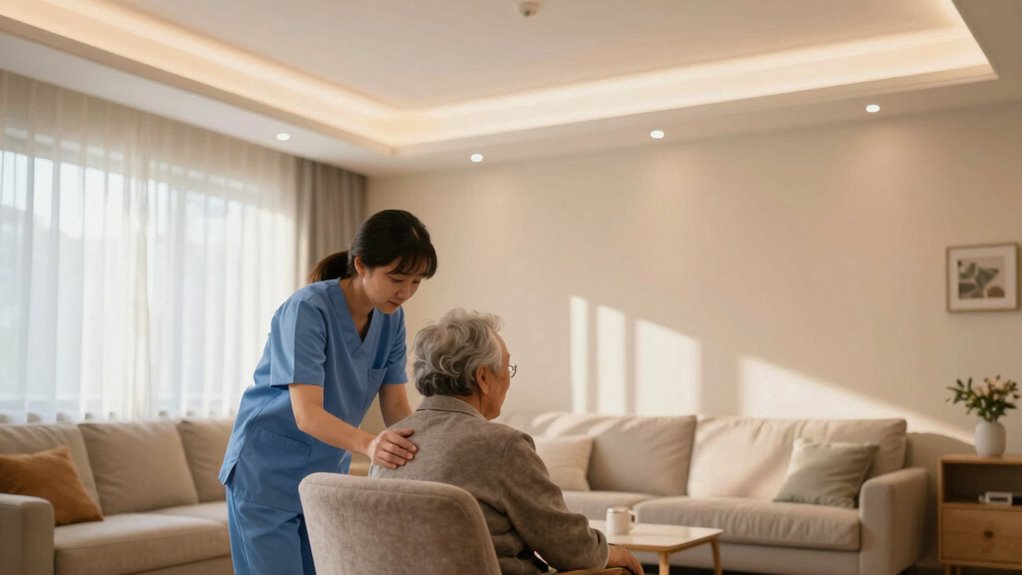
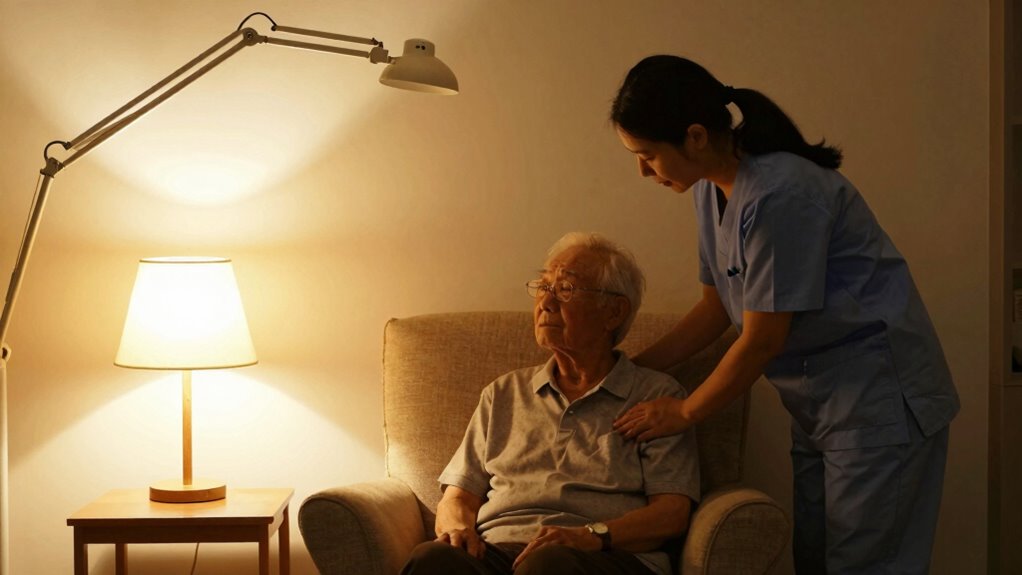
Have you ever considered how lighting impacts the safety and comfort of caregiving spaces? The way you set up your lighting can make a big difference in the daily experience for both caregivers and those receiving care. Proper lighting isn’t just about brightness; it’s about creating a balanced environment where every activity feels safe and natural. Ambient illumination provides the overall light that fills the room, ensuring the space isn’t dark or overly harsh. It sets the scene and helps everyone move around comfortably without straining their eyes. On the other hand, task lighting is essential for specific activities, like administering medication, preparing meals, or assisting with personal care. It offers focused, brighter light where it’s needed most, reducing the risk of accidents or errors.
Effective caregiving lighting balances ambient and task illumination for safety, comfort, and a calming environment.
The key is to blend ambient illumination with task lighting seamlessly. When you have good ambient lighting, you eliminate shadows and dark corners, which can cause confusion or accidents. Soft, evenly distributed light helps create a welcoming environment that feels safe and calming. Meanwhile, task lighting should be adjustable and directed precisely where it’s needed. For example, a well-placed reading lamp or adjustable under-cabinet lights in the kitchen can make a big difference during detailed activities. This targeted lighting reduces eye strain and improves accuracy, especially in situations where attention to detail is crucial. Additionally, understanding the importance of lighting layout can help you design spaces that enhance safety and comfort effectively. Properly planned lighting layouts also consider lighting zones, which allow for greater flexibility and customization to meet changing needs. Adjusting lighting based on the time of day and activity type can significantly improve the overall caregiving environment. Incorporating lighting flexibility ensures the space adapts smoothly to different circumstances and preferences.
Creating a adaptable lighting scheme also involves understanding lighting controls, which enable easy adjustments and promote independence for care recipients. Your lighting layout should also consider the different needs of the space throughout the day. Bright, natural-like lighting during the daytime can boost alertness and mood, while softer, warmer tones in the evening promote relaxation. You might incorporate dimmable fixtures or multiple lighting zones to achieve this flexibility. Positioning light sources strategically ensures that caregivers and care recipients aren’t constantly adjusting or straining their eyes. For example, placing ambient lights higher up on walls or ceiling fixtures keeps the general space illuminated without causing glare, while task lights are placed at eye level or closer to the work area for maximum effectiveness. Recognizing the importance of lighting adaptability can help you create a space that easily adjusts to changing needs and preferences.
Ultimately, thoughtful lighting layout enhances safety by preventing falls and mishaps, and it improves comfort by creating a soothing environment. When you pay attention to how ambient illumination and task lighting work together, you craft a space that’s functional, safe, and welcoming for everyone involved in caregiving. Good lighting isn’t just an accessory—it’s a fundamental part of delivering quality care and ensuring everyone feels secure and at ease in their environment.
adjustable task lighting for caregiving spaces
As an affiliate, we earn on qualifying purchases.
As an affiliate, we earn on qualifying purchases.
Frequently Asked Questions
How Does Lighting Impact Emotional Well-Being in Caregiving Environments?
Lighting plays a vital role in caregiving environments by boosting emotional well-being through mood enhancement and improving visual clarity. When you use well-designed lighting, you create a calming atmosphere that reduces stress and anxiety for both caregivers and those receiving care. Clear, appropriate lighting helps prevent eye strain and confusion, fostering a sense of safety and comfort. In turn, this supports positive emotions and overall mental health in caregiving spaces.
What Are the Cost Differences Between Various Lighting Layouts?
You might find that the cost comparison between different lighting layouts varies based on layout efficiency. For instance, a well-designed layout often costs less long-term because it minimizes energy use and maintenance. Conversely, more complex setups with multiple fixtures can have higher initial expenses. By prioritizing layout efficiency, you save money upfront and in ongoing costs, making your caregiving space both functional and budget-friendly.
How Often Should Lighting Be Adjusted in Caregiving Spaces?
You should perform lighting maintenance and adjustments regularly in caregiving spaces, ideally every three to six months. Adjustment frequency depends on changes in space, resident needs, or equipment. Regularly checking lighting guarantees safety, reduces eye strain, and maintains a comfortable environment. Stay attentive to any flickering or dimming, and promptly adjust or replace lighting components to keep the space well-lit and supportive of caregiving activities.
Can Lighting Changes Improve Patient Recovery Times?
Lighting changes can markedly improve patient recovery times. Studies show that natural illumination boosts mood and reduces recovery duration by up to 20%. You can enhance healing by optimizing the lighting layout with ample natural illumination and focused task lighting. This setup minimizes eye strain and creates a calming environment, helping patients relax and recover faster. Proper lighting design in caregiving spaces truly supports better health outcomes.
What Are the Best Lighting Options for Elderly Caregivers?
For elderly caregivers, the best lighting options combine ambient glow and task lighting. Ambient glow provides a soft, overall light that reduces eye strain and creates a comfortable environment. Task lighting focuses on specific areas, like medication stations or bed sides, ensuring clarity and safety. You should choose adjustable, glare-free lights that are easy to operate, helping you perform caregiving tasks efficiently while maintaining your comfort and safety.
Conclusion
By balancing brightness with boundaries, you build a beautiful, safe sanctuary where caregivers can comfortably care and clients can confidently coexist. Thoughtfully tailored lighting transforms everyday spaces into welcoming, well-lit wonderlands. Remember, the right lighting layout isn’t just about illumination—it’s about inspiring safety, supporting senses, and shaping a sanctuary where compassion and clarity coexist seamlessly. So, set the scene with strategic lighting, and watch your caregiving space flourish into a functional, friendly haven for all.
Fall Picks
fall essentials
As an affiliate, we earn on qualifying purchases.