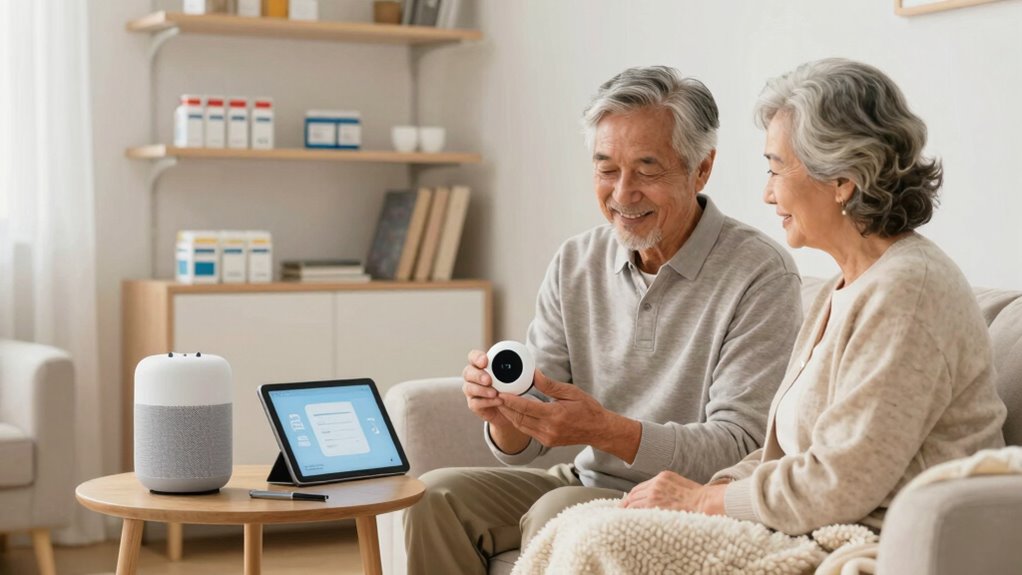

You can reduce caregiving friction by integrating smart home routines that simplify daily tasks and create stability. Use voice-activated assistants, automated lighting, and medication reminders to make routines predictable and less stressful. Involving loved ones through digital calendars or apps fosters connection and cooperation. Flexibility is key—adjust routines as needs change. By adding these tech solutions, you’ll find caregiving becomes more manageable and emotionally rewarding. Keep exploring how these tools can transform your routine for better care.
Key Takeaways
- Implement smart home devices like voice assistants and automated lighting to streamline daily caregiving tasks.
- Use digital calendars and reminder apps to ensure consistent medication and activity schedules.
- Incorporate flexible routines that adapt to changing moods or needs, reducing frustration.
- Involve loved ones through interactive tech tools to enhance communication and emotional connection.
- Regularly assess and adjust routines with technology to minimize friction and promote seamless caregiving.
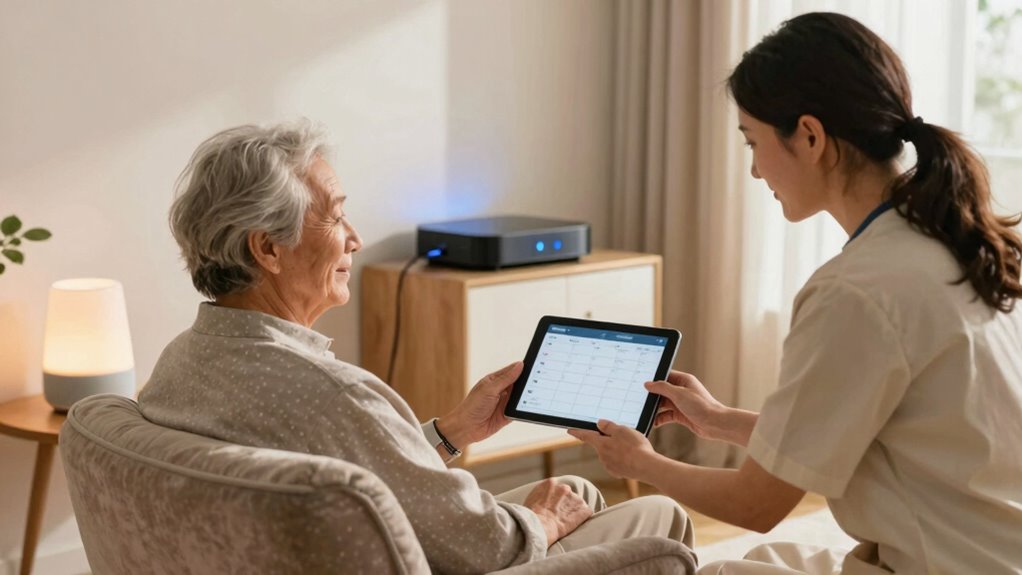
Establishing consistent caregiving routines can make a significant difference in managing daily responsibilities and reducing stress. When your routines are predictable, you’re less likely to feel overwhelmed, and your loved one benefits from stability and familiarity. To make this happen, incorporating tech integration into your home routines can be a game-changer. Smart devices like voice-activated assistants, medication reminders, and automated lighting help streamline daily tasks, giving you more time and mental space. For instance, setting up a voice-controlled system to remind your loved one to take medication or turn off appliances minimizes confusion and ensures uniformity. These tools also reduce the mental load of remembering every small detail, making caregiving more manageable.
Consistent routines reduce stress and promote stability, especially with helpful tech tools like voice assistants and reminders.
Alongside tech, emotional support is essential. When routines are predictable, it provides a sense of security for your loved one, which can ease anxiety and agitation. Regularly scheduled activities—such as morning chats, walks, or shared meals—offer moments of connection that reinforce emotional bonds. You should also consider creating a calming environment and using gentle, reassuring communication during routines. This emotional support helps your loved one feel valued and understood, reducing resistance or frustration that sometimes accompanies caregiving tasks.
To further reduce friction, involve your loved one in establishing routines. When they have a say in what happens and when, they’re more likely to cooperate and feel empowered. Use tech tools to facilitate this involvement—like digital calendars or interactive apps that let them choose activities or set reminders. This collaborative approach fosters a sense of control, reducing conflicts and fostering cooperation. Additionally, keep routines flexible enough to accommodate changing needs or moods. Technology can assist here as well, with adaptable schedules or adjustable reminders that respond to your loved one’s current state.
Consistency shouldn’t mean rigidity. If you notice resistance or signs of distress, adapt your routines without sacrificing the overall structure. For example, if a morning walk becomes too tiring, switch to a shorter, more manageable activity that still offers physical and emotional benefits. The goal is to create a balanced routine that provides stability while respecting your loved one’s comfort and preferences. Incorporating smart home technology can help facilitate these adjustments easily and smoothly. Recognizing the importance of caregiving routines in reducing stress and promoting well-being is essential for both caregivers and loved ones. Additionally, understanding how predictable routines can foster a sense of security helps in creating a supportive caregiving environment, supported by technological tools that can adapt to evolving needs. Furthermore, leveraging assistive technology can enhance independence and comfort for your loved one, making routines more effective and less burdensome.
smart home voice assistant for elderly care
As an affiliate, we earn on qualifying purchases.
As an affiliate, we earn on qualifying purchases.
Frequently Asked Questions
How Can Technology Assist in Reducing Caregiving Stress?
Technology helps reduce your caregiving stress through remote monitoring, allowing you to keep an eye on your loved ones’ safety without being physically present. Virtual companionship apps provide emotional support and engagement, easing feelings of loneliness for both caregivers and seniors. These tools offer peace of mind, streamline communication, and make caregiving more manageable, so you can focus on quality time and personal well-being while ensuring your loved ones stay safe and connected.
What Are Some Effective Ways to Communicate With Care Recipients?
You should practice compassionate communication and respectful listening when talking with your care recipients. Speak kindly, maintain eye contact, and show empathy to foster trust. Listen attentively without interrupting, and validate their feelings. Using clear, simple language helps avoid misunderstandings. By creating a respectful and understanding environment, you make your care recipients feel valued and supported, easing caregiving stress and strengthening your relationship.
How to Handle Emergencies During Caregiving Routines?
When emergencies strike, don’t panic—pretend you’re in a movie and follow your script! You’ve got your emergency protocols and safety measures ready, so stick to them. Call emergency services if needed, and make sure your care recipient feels safe and reassured. Keep a list of contacts handy, stay calm, and act swiftly. Your quick, confident response can turn chaos into controlled chaos, saving the day!
What Privacy Considerations Are Important in Smart Home Setups?
You need to prioritize data security and consent management in your smart home setup. Protect sensitive information with strong encryption and secure passwords. Always get clear consent from everyone involved before collecting or sharing data. Regularly review privacy settings and update permissions to guarantee that only authorized individuals access personal information. Staying vigilant about these privacy considerations helps maintain trust and keeps your caregiving environment safe.
How to Personalize Routines for Different Care Needs?
You can personalize routines by creating tailored schedules that meet each care recipient’s specific needs. Set up tailored alerts to remind them about medication, appointments, or daily tasks, ensuring they stay on track. Adjust routines based on their preferences, routines, and health conditions, making caregiving more efficient and less stressful. Regularly review and update these routines to adapt to changing needs, providing attentive and customized support.
Conclusion
By weaving smarter routines into your caregiving tapestry, you transform chaos into a well-orchestrated dance. Every step becomes a gentle ripple, easing tension and fostering harmony. With thoughtful adjustments, you create a sanctuary where patience flows like a steady stream, and frustration dissolves like fog in the morning sun. Embrace these changes, and watch your caregiving journey bloom into a resilient garden, thriving amidst challenges, guided by the nurturing light of smarter routines.