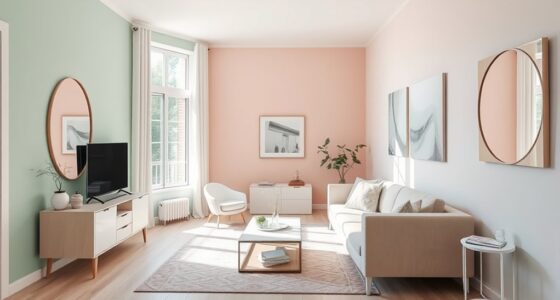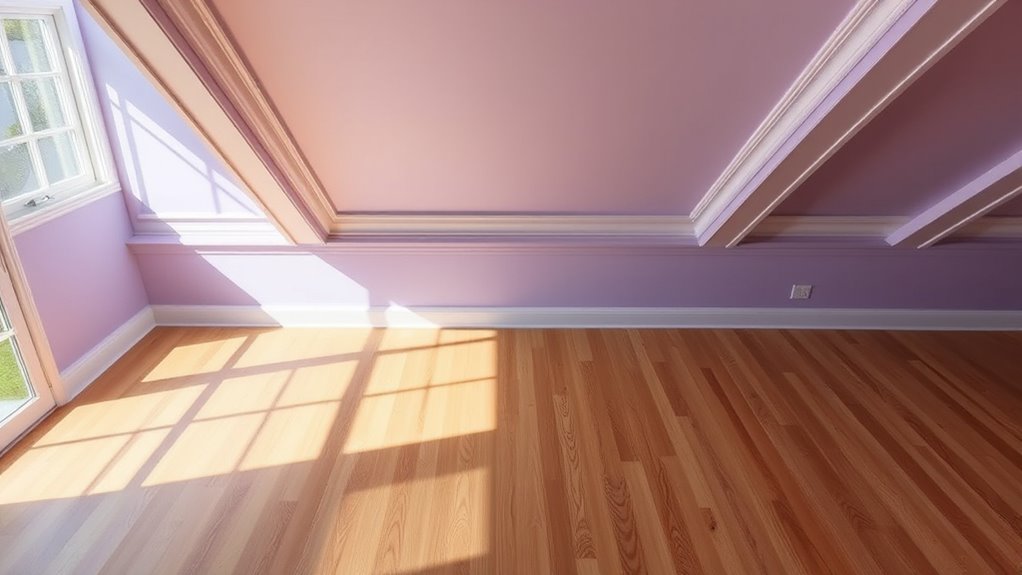

From ceiling to floor, your color choices set the foundation for a cohesive look. Using complementary or matching tones creates harmony, while textured ceilings and varied flooring textures can add visual interest. Lighting accents highlight these elements, enhancing textures and colors throughout the space. By carefully selecting colors that flow seamlessly from top to bottom, you’ll create an inviting environment. To learn more about integrating these elements effectively, keep exploring how to unify your entire room design.
Key Takeaways
- Coordinate ceiling and floor colors to create a seamless, cohesive visual flow throughout the space.
- Use contrasting or complementary hues to highlight architectural features and add depth.
- Incorporate textured flooring and painted ceilings to enhance texture contrast and visual interest.
- Match lighting accents with overall color scheme to emphasize ceiling and floor design elements.
- Balance color choices on ceilings and floors to support wall tones and furniture for harmonious interior design.
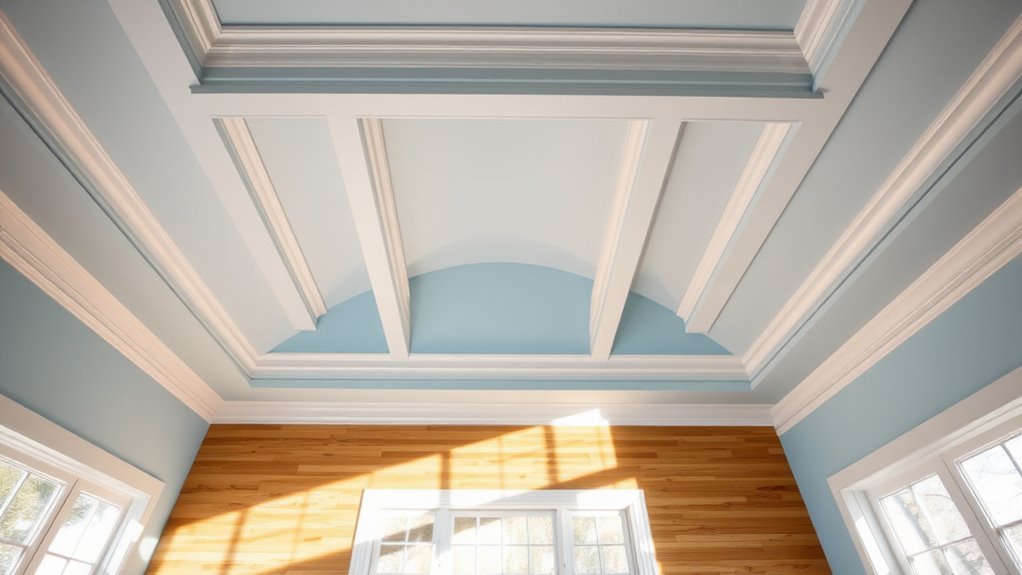
When designing your space, it’s easy to focus on walls and furniture, but ceilings and floors play an essential role in tying your color scheme together. These elements set the foundation and create visual harmony that influences the overall mood. By thoughtfully selecting lighting accents and flooring textures, you can elevate your design and make every detail work in harmony. Incorporating visual harmony ensures that all elements in your space work seamlessly, enhancing the overall aesthetic. Lighting accents are key to highlighting your ceiling and floor choices. For ceilings, consider installing fixtures that cast warm or cool light, emphasizing their color or texture. Recessed lighting, pendant lights, or even cove lighting can create a layered effect, making your ceiling feel more integrated with the rest of your space. If you choose a painted ceiling in a bold hue, lighting can accentuate that color without overpowering the room. On the other hand, soft, ambient lighting can make a neutral ceiling feel cozy and inviting. Similarly, in flooring, lighting accents help showcase textures and patterns. Positioning lights to cast shadows across textured flooring, like wood grains or terrazzo, highlights their depth and richness. Proper lighting can make flooring textures a focal point, adding visual interest without competing with other design elements. Your flooring textures also play an essential role in establishing your color scheme. Smooth, polished hardwood floors can add warmth and sophistication, especially when paired with complementary wall colors or furniture fabrics. Textured carpets or rugs introduce tactile variety, making the space feel more layered and inviting. If you opt for patterned tiles or concrete with subtle color variations, these textures can serve as a visual anchor that pulls the room’s palette together. When selecting flooring textures, think about how they interact with your ceiling’s color. For example, a matte-finish ceiling with a textured, tactile floor creates a balanced visual weight, preventing the space from feeling flat. Conversely, gloss finishes on ceilings can reflect light, enhancing colors and textures below. Ultimately, your goal is to create a cohesive environment where ceilings and floors support your overall color scheme. Use lighting accents to emphasize textures and colors, drawing attention to their unique qualities. Choose flooring textures that complement your walls and furniture, establishing harmony and depth. By paying attention to these details, you’ll craft a space that’s visually compelling from top to bottom, where every element works seamlessly together.

Rust-Oleum Zinsser Ready-Mixed Popcorn Ceiling Patch, 1-Quart
- Value-Added Ceiling Patch: Provides great value for repairs
- Easy to Apply: Convenient and simple to use
- Multi-Purpose Repair: Fixes blemishes, scratches, and scrapes
As an affiliate, we earn on qualifying purchases.
As an affiliate, we earn on qualifying purchases.
Frequently Asked Questions
How Can I Choose Ceiling and Floor Colors That Complement Wall Colors?
To choose ceiling and floor colors that complement your wall colors, consider your overall color scheme. For ceilings, opt for lighter ceiling paint choices like whites or soft hues to brighten the space, especially if your walls are darker. For floors, select flooring material options, such as wood or tile, in neutral tones that balance your walls. Keep a cohesive look by matching tones or creating a subtle contrast for visual interest.
Are There Specific Color Combinations to Avoid for Ceilings and Floors?
They say **“familiarity breeds contempt,” so avoid clashing color schemes or overly dark choices for ceilings and floors. Stay clear of bold, contrasting colors that clash with your walls, as they can make a space feel disjointed. Instead, opt for harmonious, muted tones** that complement your wall colors. This keeps your space balanced and inviting, preventing visual chaos and creating a cohesive look from ceiling to floor.
How Do Lighting Conditions Affect the Appearance of Ceiling and Floor Colors?
Lighting conditions profoundly impact how your ceiling and floor colors appear. Natural light tends to enhance brightness and reveal true hues, making colors look softer or more vibrant. Artificial lighting, especially warm or cool bulbs, can alter the perceived tone—warm lights add coziness, while cool lights create a more stark look. You should test your color choices under both lighting conditions to ensure they look great in every setting.
Can Different Textures Enhance the Overall Color Scheme of Ceilings and Floors?
Did you know that rooms with varied textures are 30% more visually appealing? Different textures can definitely enhance your ceiling and floor color schemes by creating contrast and depth. Texture contrast draws the eye and adds interest, while pattern coordination ensures harmony. Using diverse textures, like matte ceilings with glossy floors or textured rugs, elevates your space’s overall aesthetic, making it more dynamic and inviting.
What Are the Latest Trends in Ceiling and Floor Color Coordination?
You should explore the latest trends in ceiling paint finishes like matte or satin, which add depth without glare, and pair them with flooring material options such as engineered hardwood or textured tiles. Coordinating subtle shades or bold contrasts creates visual interest. Keep in mind that using complementary or monochromatic color schemes for ceilings and floors can make your space feel cohesive and modern while emphasizing your unique style.
Conclusion
Now that you see how ceilings and floors can unify your space, imagine the subtle shift when you choose that unexpected color or texture. It’s more than just aesthetics—it’s the secret to transforming your entire room. Are you ready to step beyond the ordinary and create a design that leaves everyone in awe? The possibilities are endless, but only you can open the full potential of your space. The next move could redefine your entire home.