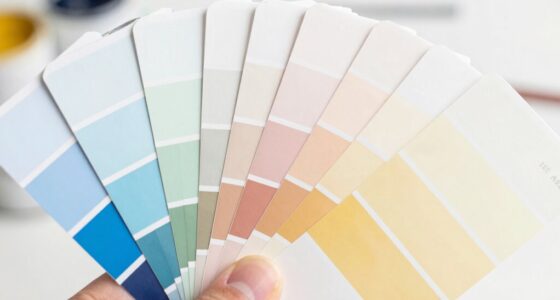
Your living room colors can markedly influence your mood and feelings. Warm hues like red and yellow boost energy and create a lively atmosphere, while cool tones like blue promote calmness and relaxation. Cultural meanings also shape how you perceive these colors, affecting your emotional response. By choosing the right shades and balancing them with neutral tones, you can craft a space that enhances your well-being. Keep exploring to discover how to make your space truly uplifting.
Key Takeaways
- Colors influence mood and atmosphere, with blues promoting calm, yellows boosting energy, and warm tones providing comfort.
- Cultural meanings of colors, like red symbolizing passion or luck, shape emotional responses in your living space.
- Balancing vibrant hues with neutral shades prevents overstimulation, supporting a relaxing and inviting environment.
- Proper lighting and decor enhance the emotional impact of color choices, affecting how the space feels daily.
- Thoughtful color selection aligns with desired moods, promoting well-being and positive interactions in your living room.

Color psychology explores how different colors influence your emotions, behaviors, and perceptions. When you choose the colors for your living room, you’re not just picking a shade—you’re shaping the mood and atmosphere of the space. Understanding color symbolism and cultural color meanings can help you make design decisions that support your desired feelings and interactions. For example, red often symbolizes energy and passion in Western cultures, but in some Asian traditions, it represents luck and prosperity. Knowing these cultural color meanings helps you select hues that resonate positively with your personal and cultural background, creating a welcoming environment.
When you opt for blue, you’re tapping into a color linked to calmness, trust, and serenity. Its soothing qualities can help reduce stress and foster relaxation, making it a perfect choice if you want your living room to be a tranquil retreat. On the other hand, yellow, associated with happiness and optimism, can energize your space and lift your mood. However, keep in mind that in some contexts, yellow may also symbolize caution or anxiety, depending on the cultural color meanings attached to it. So, if you’re aiming for a cheerful, lively vibe, yellow can be effective, but balance it with neutral tones to prevent overstimulation.
Green, often connected to nature and growth, promotes harmony and balance, making your living room feel fresh and inviting. Its universal appeal across cultures emphasizes feelings of renewal and health. If you prefer a cozy, intimate atmosphere, warm colors like beige, terracotta, or soft browns can create a sense of comfort and stability. These hues are often associated with security and reliability, aligning with their cultural color meanings. When you choose these warm shades, you evoke feelings of grounding and warmth, ensuring your living space feels welcoming. Additionally, understanding the effectiveness of color choices can help you craft a space that truly enhances your mood and daily interactions.
Keep in mind that the impact of color isn’t just about individual hues but also about how they interact with lighting, furniture, and accessories. The cultural color meanings tied to certain shades can influence how others perceive your space and how it makes you feel. By thoughtfully considering color symbolism and cultural interpretations, you can create a living room that not only looks good but also supports your emotional well-being. Whether you want to energize, soothe, or foster a sense of harmony, understanding these nuances helps you make informed choices that shape your mood and experience every day.
Frequently Asked Questions
How Do Different Shades of the Same Color Influence Mood?
Different shade variations of the same color can notably influence your emotional responses. Lighter shades tend to evoke calmness and relaxation, making your space feel open and airy. Darker shades, however, might create a cozy, intimate atmosphere or even feelings of melancholy. By choosing the right shade variations, you can tailor your living room’s mood to match your desired energy, making your space more inviting and emotionally resonant.
Can Color Choices Impact Mental Health Long-Term?
Color choices can influence your mental health over time through color therapy, shaping your emotional responses daily. By surrounding yourself with calming hues like blues or greens, you may reduce stress and anxiety, promoting long-term well-being. Conversely, bright colors might energize you but could also cause overstimulation. Being mindful of your color environment helps foster positive emotional responses, supporting your mental health in the long run.
Are There Cultural Differences in Color Perception?
Think of color perception as a global tapestry, woven with cultural symbolism and color associations across cultures. You’ll find that meanings of colors shift depending on where you are, influencing feelings and reactions. For example, white signifies purity in some cultures but mourning in others. Recognizing these cultural differences helps you understand how color impacts mood differently worldwide, making your choices more meaningful and culturally sensitive.
How Does Lighting Affect the Mood Created by Color?
Lighting profoundly influences how color affects your mood in a space. Natural light enhances true colors and creates a lively, welcoming ambiance, while artificial lighting can alter colors’ tones, making them feel warmer or cooler. You’ll notice that different lighting conditions change the overall emotional effect of your living room, emphasizing the importance of choosing the right lighting ambiance to complement your color scheme and set the desired mood.
Which Colors Are Best for Promoting Relaxation?
If you want to promote relaxation, choose calming colors like soft blues, gentle greens, or warm neutrals. These shades are often used in color therapy to reduce stress and create a peaceful atmosphere. Focus on color coordination to balance these hues with your decor, making your space more soothing. By selecting the right colors, you can design a living room that helps you unwind and feel more at ease.
Conclusion
Think of your living room as a canvas—you’re the artist, choosing colors that paint your mood. Just as a sunrise can spark hope or a storm can stir unrest, your walls influence how you feel inside. By selecting hues that resonate with your desired vibe, you craft a sanctuary that energizes or soothes you. Remember, the colors you surround yourself with act like a symphony, shaping your daily emotional landscape with every brushstroke.