Adding personality to your space through DIY color projects like tie-dye lets you create vibrant, personalized decor that truly reflects your style. You can experiment with different dye techniques, mix your own colors, and transform simple items into statement pieces. Whether you choose dip-dye, swirl, or tie-dye methods, these projects are cost-effective and fun. Keep exploring to discover tips and tricks that will elevate your colorful creations to the next level.
Key Takeaways
- Explore various dyeing techniques like tie-dye, dip-dye, and swirling patterns to customize home décor items.
- Use vibrant, personalized colors to create statement pieces such as pillowcases, curtains, or wall hangings.
- Follow safety guidelines and eco-friendly practices for fun, sustainable DIY color projects.
- Experiment with color mixing to achieve unique shades that reflect your personal style and space.
- Ensure proper setting and rinsing of dyed items for long-lasting, vibrant home accents.
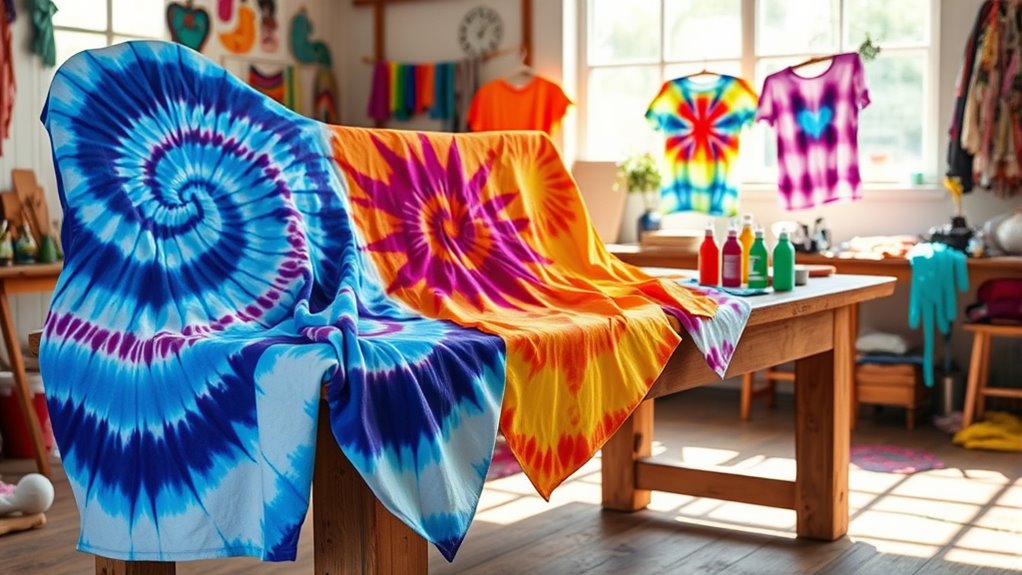
Adding a splash of color to your space is easier and more rewarding than you might think. One of the simplest ways to do this is through DIY color projects, like tie-dyeing fabrics or customizing home décor. When you start experimenting with color mixing, you gain control over the shades you want, creating unique, vibrant pieces that reflect your personality. But before you jump into dyeing, it’s essential to understand dye safety. Choose dyes specifically made for fabric or craft projects, and always work in a well-ventilated area. Wearing gloves and protective clothing helps avoid skin stains, and keeping dyes out of reach of children or pets is vital to prevent accidents.
Color mixing is at the heart of many DIY projects. By blending primary colors—red, blue, and yellow—you can craft an array of secondary and tertiary hues. This process allows you to tailor the color intensity and tone to match your aesthetic, whether you prefer bold, saturated colors or softer, pastel shades. When working with dyes, start with small amounts to test how they blend and dry, especially if you’re creating custom shades for specific projects. It’s a good idea to keep a color chart or palette nearby, so you can replicate your favorite mixes later. Remember, patience is key; some colors deepen as they dry, so give your fabric or surface time to set before evaluating the final look. Additionally, understanding the impact of dye environmental impact can help you make more eco-friendly choices for your projects.
Mix primary colors carefully to create custom, vibrant shades for your DIY projects.
Beyond simple tie-dye, you can personalize everything from pillowcases to curtains, turning ordinary items into statement pieces. For example, you might dip-dye a set of napkins in a gradient of blues or create a tie-dye wall hanging with swirling, multi-colored patterns. The possibilities are endless, and the process is forgiving enough for beginners. Just make sure to follow safety instructions on your dye packaging—this guarantees not only vibrant results but also your safety. Properly rinsing your dyed items and fixing the colors with the recommended post-dye treatments will help your projects last longer.
Incorporating DIY color projects into your space is a fantastic way to add personality and a handmade touch. With careful attention to dye safety and an understanding of color mixing, you’ll be able to produce eye-catching pieces that brighten your home and showcase your creativity. Remember, the key is to enjoy the process, experiment freely, and celebrate the vibrant results you create yourself. Your space will thank you for the personalized splash of color that only you can bring to life.

12 Colors Tie Dye Kit, Fabric Dye Set for Kids Adults Parties
- Premium Tie Dye Kit: All-inclusive for vibrant fabric art
- Easy for All Ages: Beginner-friendly with step-by-step instructions
- 12 Vivid Colors: Wide palette for creative designs
As an affiliate, we earn on qualifying purchases.
As an affiliate, we earn on qualifying purchases.
Frequently Asked Questions
What Safety Precautions Should I Take During Dyeing Projects?
When dyeing, you should always prioritize safety. Wear protective gear like gloves and aprons to prevent skin stains and irritation. Guarantee proper ventilation safety by working in a well-ventilated area to avoid inhaling fumes. Keep your workspace tidy, and follow the dye manufacturer’s instructions carefully. These precautions help you enjoy your creative project without risking health issues or messes. Stay safe and have fun with your dyeing adventures!
Can I Use Natural Dyes Instead of Synthetic Ones?
Yes, you can definitely use natural dyes instead of synthetic ones. Plant-based dyes are a great option for those seeking eco-friendly and non-toxic synthetic dye alternatives. They’re safe to work with and bring beautiful, earthy tones to your projects. Just keep in mind that natural dyes may require more prep and patience, but the results are unique and personalized, aligning perfectly with your desire for a safer and sustainable DIY coloring experience.
How Long Do DIY Dyed Projects Typically Last?
Dye longevity varies based on the type of dye and fabric, but generally, DIY dyed projects last several months to years. To guarantee your colors stay vibrant, perform colorfastness testing before washing. Proper care, like washing in cold water and avoiding harsh detergents, helps maintain dye stability. Keep in mind that natural dyes may fade faster than synthetic ones, so regular touch-ups can keep your projects looking fresh longer.
Are There Eco-Friendly Dyeing Options Available?
Imagine your creative projects as a garden blossoming with vibrant life; eco-friendly dyes help keep that garden thriving. You can choose natural pigment options like plant-based dyes or mineral powders, which are gentle on the environment. Eco-friendly dyes not only give your crafts rich, beautiful colors but also guarantee you’re nurturing the planet while expressing your personality. It’s a colorful way to make a positive impact, one project at a time.
How Can I Fix Mistakes or Uneven Coloring?
If you notice mistakes or uneven coloring, don’t worry. You can use a color correction technique by applying a dye set fix to even out the color. Gently re-dye the affected areas, making sure to blend the new dye with the existing color. For small mistakes, a quick touch-up with a slightly darker dye can also help. Just be patient and take your time to achieve a uniform, vibrant finish.
Conclusion
So, there you have it—your gateway to turning plain into fabulous with just a splash of color. Who knew that a little dye could turn your space into a masterpiece? Just remember, if your DIY project ends up looking like a unicorn threw up, you’re probably doing it right. Embrace the chaos, because in the world of tie-dye and beyond, perfection is overrated—personality, on the other hand, is priceless. Happy creating!