

To prevent oversized wall art from looking lost, focus on proper placement, framing, and lighting. Hang your piece at eye level and leave enough space around it to breathe, ensuring it’s proportionate to your wall and furniture. Choose a strong frame that complements the artwork and room style. Use adjustable lighting to highlight its details without glare. Mastering these elements creates harmony and impact—continue exploring to discover more insider tips for a stunning display.

Get furniture and decor delivered free with Prime
- Fast, free delivery on millions of items
- Prime Video, Amazon Music and more included
- Member-only deals all year
Key Takeaways
- Ensure the oversized art is hung at eye level, around 57-60 inches from the floor, for optimal visibility.
- Balance the artwork’s scale with surrounding furniture and wall space to prevent it from overpowering the room.
- Use appropriate framing that complements the piece and provides visual weight for stability.
- Properly light the artwork to highlight details and prevent it from blending into the wall.
- Leave enough space around the piece to allow it to breathe and stand out as a focal point.
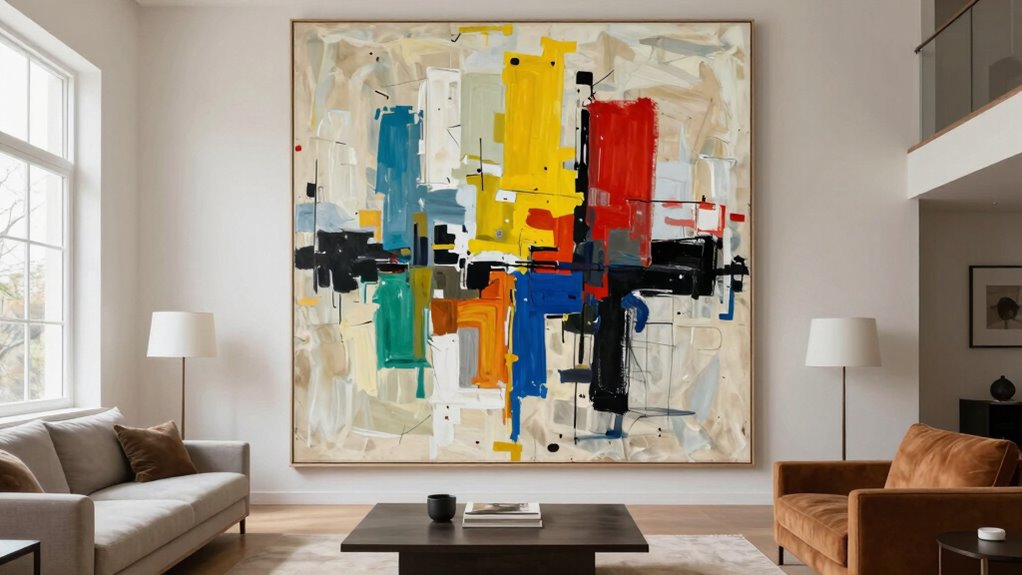
When it comes to hanging oversized wall art, understanding the right rules can make all the difference between a cluttered mess and a stunning focal point. The key to making large pieces stand out without overwhelming your space is knowing how to properly anchor them within the room. One essential aspect is ensuring your artwork is well-lit, which is where gallery lighting plays a crucial role. Proper lighting highlights the details, textures, and colors of your piece, drawing attention without causing glare or harsh shadows. Adjustable picture lights, track lighting, or wall-mounted fixtures can be strategically placed to illuminate your art evenly. This not only accentuates your piece but also creates a cohesive visual flow within the room. Additionally, wall art placement is vital, as positioning your piece correctly can enhance its impact and ensure it complements your overall decor. Framing techniques are equally important in framing your oversized wall art for maximum impact. A strong, well-chosen frame can serve as a visual anchor, helping the art feel intentional rather than lost in the wall. When selecting a frame, consider its width, color, and material in relation to the artwork and the surrounding decor. For larger pieces, thicker or more substantial frames often work better, providing a sense of balance and stability. You also want to ensure the frame complements the art’s style—sleek and modern for contemporary pieces or ornate for classic works. Proper framing not only enhances the overall presentation but also protects the artwork and makes hanging easier. Additionally, gallery lighting can be customized to suit different art styles and room settings, ensuring your piece is showcased in the best light possible. Achieving a harmonious look involves considering the proportion of your art to the wall and furniture around it, as scale plays a significant role in visual balance. Incorporating visual weight considerations can also help in creating a balanced and appealing display. Speaking of hanging, the placement of your oversized art is critical. Instead of centering it awkwardly on a large wall, aim to position it at eye level, with the center roughly 57-60 inches from the floor. This creates a natural viewing height and prevents the piece from feeling disconnected or lost. To avoid a cluttered look, leave enough space around the art—generally a few inches from neighboring furnishings or walls. This breathing room ensures the piece is a focal point rather than an afterthought. Additionally, paying attention to the art’s scale in relation to your furniture and room size can help in creating a cohesive and balanced display. Finally, consider the scale of your furniture and other decor. An oversized piece should complement and enhance these elements, not compete with them. When you combine thoughtful gallery lighting, strategic framing techniques, and careful placement, your large wall art will command attention beautifully. It becomes a statement, effortlessly transforming your room into a curated, stylish space where every element works in harmony.
adjustable picture lighting for wall art
As an affiliate, we earn on qualifying purchases.
As an affiliate, we earn on qualifying purchases.
Frequently Asked Questions
How Do I Choose the Right Wall for Oversized Art?
To choose the right wall for oversized art, consider one with enough scale proportion to handle its size without overwhelming the space. Look for a wall with a clear focal point or open area that creates visual balance, so the piece doesn’t seem lost or overpowering. Avoid cluttered or small walls, and opt for a spot where the art can breathe and truly make an impact.
What Framing Options Work Best for Large Wall Art?
Think of your large wall art as a star on stage; framing it right makes all the difference. Opt for sturdy frames with matte finishes to reduce glare and give your art a sophisticated look. Shadow boxes add depth, creating a gallery-like feel that elevates the piece. These options help your oversized art stand out without overpowering your space, ensuring it remains a focal point rather than getting lost in the background.
How Can Lighting Enhance Oversized Wall Pieces?
You can enhance oversized wall art by using ambient illumination to create a soft, overall glow that highlights the piece without overwhelming it. Add accent lighting, like wall sconces or track lights, to focus attention directly on the artwork’s details and textures. Combining these lighting techniques guarantees your art becomes a focal point, adding depth and vibrancy to your space while preventing the piece from looking lost or flat on the wall.
Should Oversized Art Be a Focal Point or Complement Other Decor?
Oversized art should be a focal point to create a striking visual impact. Proper art placement draws the eye and anchors your space, making it feel intentional. To achieve this, guarantee there’s visual balance by pairing the artwork with complementary decor that highlights its size without overwhelming the room. This way, your oversized piece stands out beautifully, serving as the centerpiece without clashing with other elements.
How Do I Prevent Oversized Art From Overwhelming a Small Space?
To prevent oversized art from overwhelming a small space, you should focus on color coordination and furniture placement. Choose artwork that complements your wall’s hues to create harmony, and position your furniture to frame the piece without crowding it. Balance boldness with simplicity, ensuring the art remains a striking focal point without dominating the room. This approach keeps your space feeling open, inviting, and well-balanced.
Conclusion
Remember, the key to oversized wall art isn’t just filling space—it’s creating harmony. Think of your wall as a stage where your art takes center, but with enough room to breathe. By following the rule of balancing size with surrounding elements, your piece will stand tall without feeling lost in the crowd. When you strike this balance, your wall becomes a canvas where every piece shines and tells its story—like a spotlight illuminating a star in the night sky.
Halloween Picks
halloween
As an affiliate, we earn on qualifying purchases.