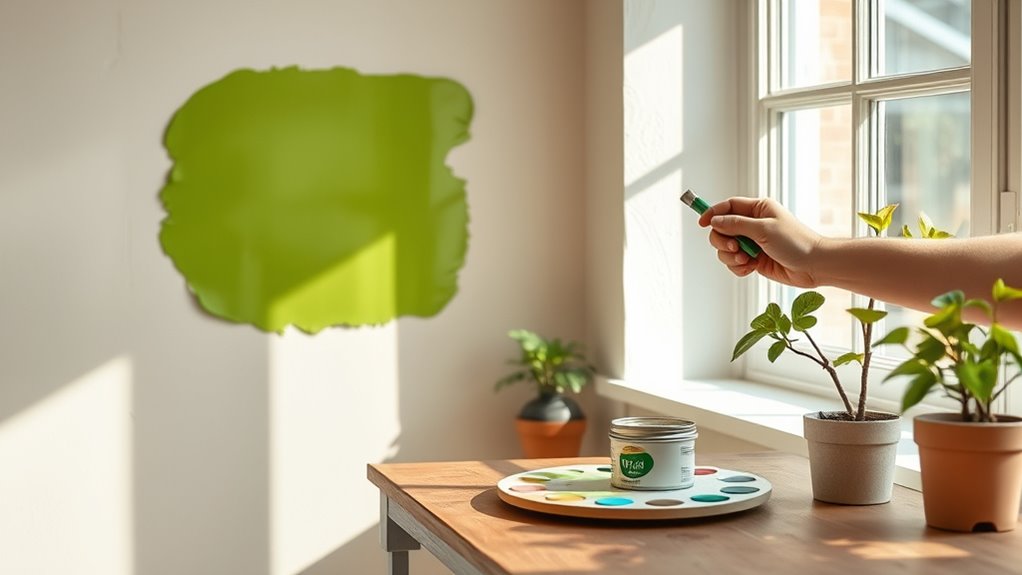

Choosing low-VOC, eco-friendly paints is a smart move for healthier indoor air and a greener planet. These paints emit fewer harmful chemicals, improve indoor air quality, and are often just as durable and beautiful as traditional options. Proper application and surface prep help guarantee they last longer, resisting peeling and fading. Want to discover tips on selecting, applying, and maintaining these eco paints for the best results? Keep exploring to learn more.
Key Takeaways
- Select low-VOC or zero-VOC paints to reduce harmful emissions and improve indoor air quality.
- Opt for water-based eco-friendly paints for easier application and quicker drying times.
- Ensure proper surface preparation and follow manufacturer instructions for optimal durability.
- Choose high-quality, durable eco paints to ensure long-lasting, vibrant finishes.
- Maintain painted surfaces gently, avoiding harsh cleaners to preserve environmental and aesthetic benefits.

Eco-friendly paints are gaining popularity as more people seek sustainable ways to decorate their homes. These paints not only reduce harmful emissions but also align with your desire to create a healthier living environment. When choosing eco-friendly options, you might wonder about their performance, especially regarding paint durability and application techniques. Rest assured, many low-VOC paints are designed to match or even surpass conventional paints in longevity and finish quality. Their durability depends on factors like the paint’s formulation, surface preparation, and proper application. By selecting high-quality eco paints and following recommended application techniques, you ensure your walls will stand the test of time, resisting peeling, cracking, and fading.
Eco-friendly paints offer durable, high-quality finishes that resist peeling, cracking, and fading when applied with proper techniques.
Applying eco-friendly paints isn’t much different from traditional methods, but there are some key tips to maximize their effectiveness. First, always prepare your surface thoroughly—clean, smooth, and dry it before painting. This step helps the paint adhere better, improving both durability and finish. Use high-quality brushes or rollers designed for water-based or low-VOC paints, as these tools facilitate smoother application and help avoid streaks or uneven coverage. When applying the paint, follow the manufacturer’s instructions carefully, including recommended coats and drying times. Applying multiple thin coats often results in a more durable and evenly finished surface compared to one thick coat.
Temperature and humidity levels during application also influence the final outcome. Ideally, paint when the room is within the recommended temperature range and humidity is low, which prevents issues like bubbling or improper curing. Pay attention to the type of eco-friendly paint you choose; water-based paints typically offer easier application and quicker drying times, making them suitable for most indoor projects. Oil-based eco paints, while less common, can provide a more durable finish for high-moisture areas like kitchens and bathrooms, if you follow proper application techniques.
Additionally, understanding the importance of proper surface preparation and choosing paints with proven durability can significantly enhance the longevity of your eco-friendly paint job. Lastly, after painting, proper curing is essential for maximizing durability. Avoid cleaning or subjecting the painted surface to heavy use until the paint has fully cured, which can take several days. Regular maintenance, like gentle cleaning with a soft cloth and avoiding abrasive scrubbers, helps preserve the integrity of your eco-friendly paint job over time. Embracing these application techniques and selecting paints with proven durability ensures your eco-friendly choice remains vibrant and resilient, proving that sustainability and quality can go hand in hand.
Frequently Asked Questions
Are Low-Voc Paints as Durable as Traditional Paints?
Yes, low-VOC paints are just as durable as traditional paints. They often offer comparable paint longevity and maintain color retention over time. Modern low-VOC formulas have improved markedly, ensuring that your walls stay vibrant and resistant to wear. You can confidently choose eco-friendly options without worrying about sacrificing performance, knowing that your paint will last and keep its color for years to come.
How Do Eco-Friendly Paints Affect Indoor Air Quality Long-Term?
Eco-friendly paints positively impact indoor air quality long-term by minimizing harmful emissions. You’ll notice improved indoor air since these paints release fewer volatile organic compounds (VOCs), reducing respiratory issues and allergies. The health benefits are significant, especially if you or your family have sensitivities. By choosing low-VOC, eco-friendly paints, you create a healthier living environment, ensuring cleaner indoor air and long-lasting benefits for your overall well-being.
Can Low-Voc Paints Be Used on All Surfaces?
Surface suitability and application versatility depend on the specific low-VOC paint. You can confidently coat wood, drywall, and metal surfaces, but always check the label for compatibility. Some paints excel on certain surfaces but may not adhere well to others. So, before you begin, verify surface compatibility to guarantee a smooth, successful application. Adapt your approach, and you’ll enjoy eco-friendly, effective finishes across diverse surfaces.
What Are the Cost Differences Between Eco-Friendly and Conventional Paints?
You’ll find that eco-friendly paints generally cost more upfront compared to conventional options, but a price comparison shows they often offer long-term savings due to their durability and low VOC levels. While the initial investment might be higher, you benefit from better indoor air quality and fewer health risks, which can reduce your future expenses on health-related issues. Overall, eco-friendly paints provide value that outweighs the initial cost difference.
Are There Any Certifications to Verify Eco-Friendly Paint Claims?
Yes, there are certifications to verify eco-friendly paint claims. You should look for eco label standards like Green Seal or GREENGUARD, which guarantee the product meets strict environmental and health criteria. The certification process involves rigorous testing and documentation, so you can trust that the paint genuinely reduces VOCs and environmental impact. Always check for these labels to confirm you’re choosing truly eco-friendly paints.
Conclusion
By choosing low-VOC, eco-friendly paints, you’re not just transforming your space—you’re making a statement for the planet. Imagine each brushstroke as a step toward a healthier environment, where every color you pick echoes your commitment to sustainability. Don’t let your walls tell a story of pollution; let them whisper of care and conscious choices. After all, isn’t it time your home reflected the world you want to live in? Make that change today.