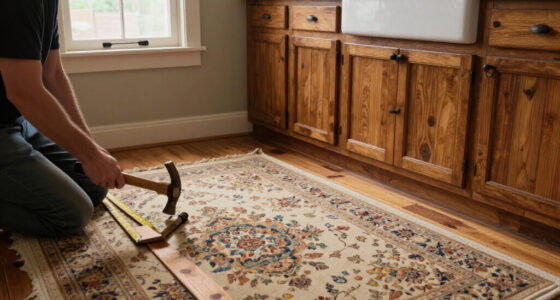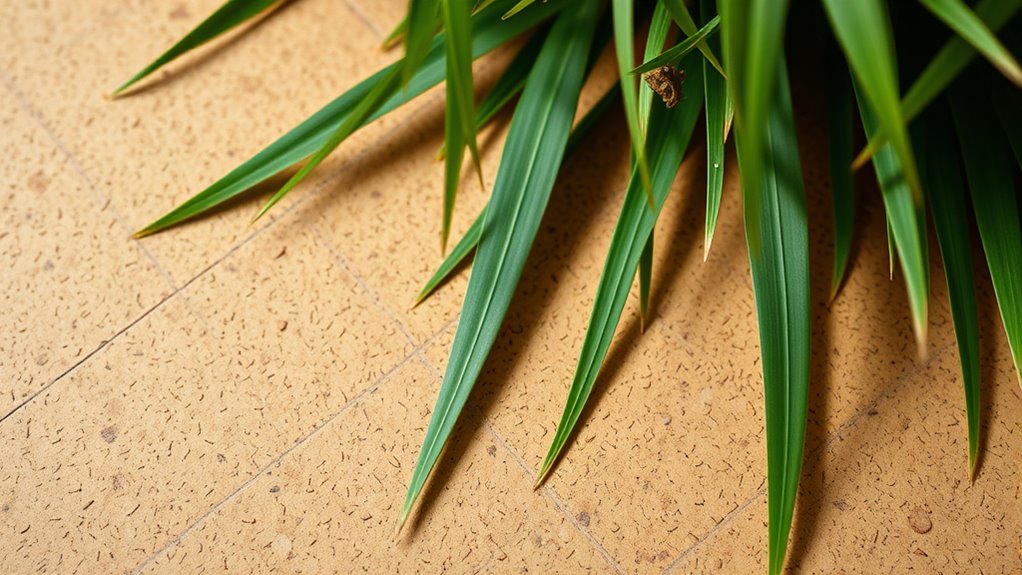

Choosing green floors made from materials like bamboo and cork helps you create healthier indoor spaces while supporting sustainable habits. Bamboo grows rapidly, and cork is harvested without harming trees, making them eco-friendly choices. These materials emit fewer toxins, improve air quality, and offer durability that reduces replacement needs. Plus, cork provides natural insulation, making your home more energy-efficient. To discover more about why these options are good for you and the environment, keep exploring your options.

Get furniture and decor delivered free — and shop member deals
- Fast, free delivery on millions of items
- Access to Prime Big Deal Days deals on October 6–7
- Prime Video, Amazon Music and more included
Key Takeaways
- Bamboo and cork are rapidly renewable materials that promote sustainable flooring options.
- They emit fewer VOCs, improving indoor air quality and creating healthier living environments.
- Eco-friendly manufacturing practices use renewable resources and minimize environmental impact.
- Both materials offer durability and natural insulation, enhancing energy efficiency and comfort.
- Choosing bamboo and cork supports responsible resource management and environmentally conscious living.

In today’s environmentally conscious world, choosing eco-friendly flooring options is more important than ever. When you opt for materials like bamboo or cork, you’re making a decision that benefits both your home and the planet. These materials are celebrated not only for their renewable nature but also for their sustainable manufacturing processes. Unlike traditional hardwoods that can take decades to mature, bamboo grows rapidly—sometimes up to a meter a day—making it a genuinely sustainable choice. Cork, harvested from the bark of cork oak trees, regenerates naturally without harming the tree, allowing for continuous harvesting without deforestation. This sustainable approach ensures that your flooring choices align with eco-friendly principles, supporting responsible resource management.
Choosing bamboo and cork flooring supports sustainable living and eco-friendly resource management.
Moreover, choosing eco-friendly floors like bamboo and cork can considerably improve indoor air quality. Many conventional flooring options release volatile organic compounds (VOCs) and other harmful chemicals into the air, which can affect your health over time. In contrast, eco-conscious materials are often manufactured with lower chemical emissions, reducing indoor air pollution. When you select flooring made from sustainably sourced bamboo or cork, you’re likely to enjoy a healthier living environment because these materials tend to emit fewer VOCs and formaldehyde. This contributes to a space where you can breathe easier and avoid unnecessary exposure to toxins.
The manufacturing processes behind these eco-friendly floors also emphasize sustainability. Many brands prioritize using renewable resources and eco-friendly adhesives or finishes that produce minimal waste and emissions. This commitment to sustainable manufacturing means your flooring isn’t just good for the environment—it’s also crafted with fewer pollutants that could compromise your indoor air quality. When installation and maintenance are done with eco-conscious products, you further diminish your home’s environmental footprint, creating a safer and healthier space for everyone.
Additionally, bamboo and cork floors are durable and long-lasting, which means you won’t need to replace them frequently. Their resilience reduces waste and the demand for new materials, reinforcing the cycle of sustainability. You also get the advantage of natural insulation properties—cork, in particular, helps regulate temperature and sound, making your home more energy-efficient. This combination of durability, natural insulation, and responsible manufacturing practices supports a lifestyle that’s both eco-friendly and health-conscious.
In choosing eco-friendly floors like bamboo and cork, you’re making a positive impact on the environment and your indoor environment alike. These materials exemplify how sustainable manufacturing and attention to indoor air quality can go hand in hand, helping you create a healthier, greener, and more sustainable living space.
As an affiliate, we earn on qualifying purchases.
Frequently Asked Questions
How Durable Are Bamboo and Cork Floors Over Time?
You’ll find bamboo and cork floors quite durable over time, especially with proper maintenance. Bamboo often offers a high durability comparison, making it suitable for high-traffic areas, while cork provides excellent resilience against impacts and noise. For long-term resilience, both materials hold up well—they may require periodic refinishing or sealing. Overall, your choice depends on your lifestyle needs, but both options can serve you reliably for many years.
Are Green Floors Suitable for High-Traffic Commercial Spaces?
Absolutely, green floors can handle high-traffic commercial spaces, proving their resilience. Think of bamboo and cork as the marathon runners of flooring—they’re durable and environmentally friendly. Their environmental impact is lower than traditional options, making them a smart choice. Plus, the cost comparison shows they’re often more affordable in the long run, especially considering maintenance and longevity. You’ll enjoy a sustainable, stylish space that stands up to daily wear and tear.
What Maintenance Is Required for Eco-Friendly Flooring?
You should regularly follow cleaning routines, using gentle, eco-friendly cleaners to keep your eco-friendly flooring looking its best. Avoid harsh chemicals that can damage the surface. Applying protective treatments periodically helps prevent scratches and stains, extending its lifespan. Make sure to sweep or vacuum frequently to remove debris, and mop with a damp cloth as needed. Proper maintenance preserves the beauty and sustainability of your bamboo or cork flooring for years to come.
Can Bamboo and Cork Floors Be Installed Over Existing Flooring?
Think of installing bamboo or cork floors like laying a new foundation on a sturdy building. You can install these over existing flooring, but beware of installation challenges like uneven surfaces or adhesives. It may save you money upfront, but consider cost considerations for prep work. Properly prepared, your eco-friendly floors will look stunning and last longer, turning your space into a sustainable sanctuary.
Are There Any Health Risks Associated With Eco-Friendly Flooring Materials?
Eco-friendly flooring materials like bamboo and cork are generally safe, but there can be some health risks. You should watch for chemical emissions that might impact indoor air quality, especially if the flooring isn’t certified for low emissions. Proper installation and choosing products with eco-labels can minimize these risks. Always ventilate your space well after installation to guarantee any volatile compounds dissipate, keeping your indoor environment healthy.
Conclusion
Choosing green floors like bamboo and cork not only benefits the environment but also transforms your space into a sanctuary of sustainability. Imagine walking on a surface that’s as gentle on the planet as it is stylish underfoot—nature’s gift beneath your feet. By opting for eco-friendly materials, you become part of a larger story—one where every step you take leaves a lighter footprint. So, why not let your home echo with the harmony of nature?
Fall Picks
fall essentials
As an affiliate, we earn on qualifying purchases.