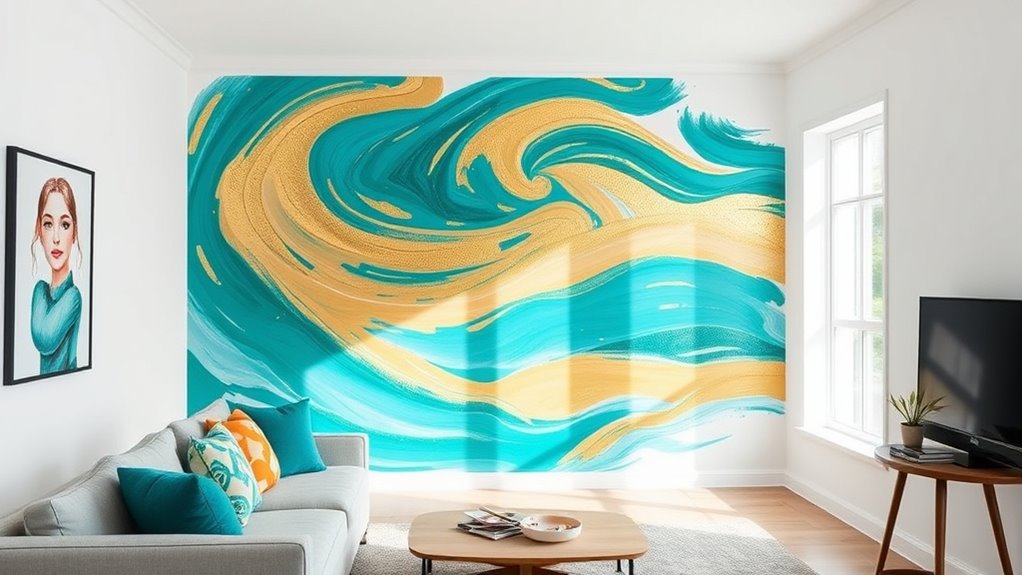

To create an impact with your accent wall, try painting bold color blocks using painter’s tape for clean lines and modern appeal. You can also experiment with geometric patterns, sketching shapes first and taping each section before applying your chosen hues. Remember to press the tape firmly and take your time for sharp edges. For more ideas on vibrant techniques that will truly wow, explore additional tips below.

Get furniture and decor delivered free — and shop member deals
- Fast, free delivery on millions of items
- Access to Prime Big Deal Days deals on October 6–7
- Prime Video, Amazon Music and more included
Key Takeaways
- Choose a bold, contrasting color to create a striking focal point on your accent wall.
- Use painter’s tape carefully to achieve crisp, clean lines for geometric or color-blocked designs.
- Sketch your pattern lightly before painting to ensure accuracy and desired symmetry.
- Incorporate color theory to select harmonious or energetic color combinations that enhance your space.
- Experiment with different techniques like color blocking or geometric patterns for personalized, impactful results.
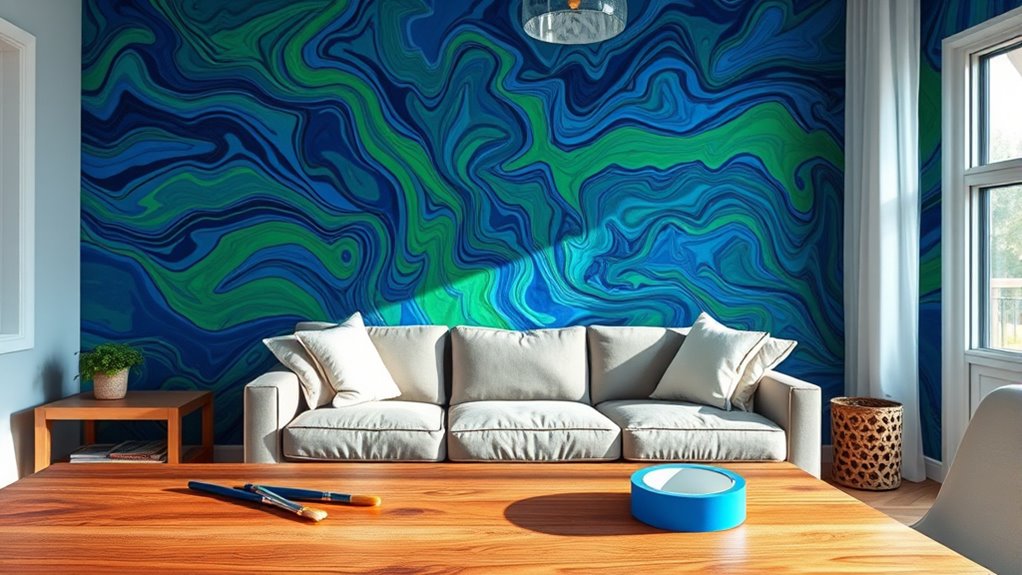
Have you ever wondered how a simple change can dramatically transform a room? One of the easiest and most impactful ways to do this is by creating an accent wall with eye-catching design techniques. With a little creativity and some basic tools, you can turn a plain wall into a stunning focal point that energizes the entire space. Two popular approaches to achieving this are color blocking and geometric patterns. These techniques allow you to add depth, contrast, and personality without overwhelming the room.
Color blocking is straightforward but highly effective. It involves painting large, solid sections of color directly on the wall, creating bold, clean lines that catch the eye. You don’t need to be an artist to pull this off; simply select two or three complementary or contrasting colors, measure out your sections carefully, and use painter’s tape to define your shapes. The key to success lies in precision and patience—ensure the tape is pressed down firmly to prevent bleeding, and wait for each color to dry before removing the tape. This technique can create a modern, minimalist vibe or a playful, vibrant atmosphere, depending on your color choices.
Color blocking creates bold, clean lines with simple, large color sections for a modern or vibrant look.
Geometric patterns take your accent wall to the next level. They involve creating shapes—triangles, diamonds, hexagons, or abstract forms—using painter’s tape to map out your design. Start with a pencil or chalk to sketch your pattern lightly, then tape off each shape meticulously. When you paint within the taped boundaries, you can use different colors for each shape, adding complexity and visual interest. Geometric patterns work well in contemporary or eclectic rooms, giving the space a sophisticated, dynamic feel. They also allow for a lot of personal flair—mixing colors and shapes can reflect your style perfectly.
Both techniques benefit from a steady hand and patience, but the results are well worth the effort. They’re perfect projects for a weekend DIY, and you can customize them to fit your space’s aesthetic. When choosing your colors, consider the mood you want to create—calming blues and greens for serenity, bold reds and oranges for energy. The beauty of these methods lies in their flexibility; you’re in control of how subtle or dramatic your accent wall becomes. By experimenting with color blocking or geometric patterns, you add a layer of visual intrigue that makes any room feel more curated and lively, all with a simple coat of paint. Additionally, understanding color theory can help you select harmonious or striking color combinations to enhance your design.
painter's tape for wall painting
As an affiliate, we earn on qualifying purchases.
As an affiliate, we earn on qualifying purchases.
Frequently Asked Questions
What Are the Best Tools for Creating Clean Lines on an Accent Wall?
To create clean lines on your accent wall, you should use painter’s tape to mask off edges precisely. For detailed areas, detail brushes help you achieve sharp, crisp lines without smudging. Make sure to press the tape down firmly and remove it carefully while the paint is still slightly damp. These tools work together to give you a professional, polished look with minimal effort.
How Can I Fix Uneven Paint Application on My Accent Wall?
Imagine you notice uneven paint on your accent wall after finishing. To fix it, start with proper wall prep tips like sanding rough spots and cleaning the surface. Use paint roller techniques such as light, even strokes and avoiding overloading the roller. If needed, carefully apply a second coat, blending edges seamlessly. These steps will help you achieve a smooth, professional finish and correct uneven application effectively.
What Type of Paint Finish Works Best for Accent Walls?
When choosing a paint finish for your accent wall, consider the paint sheen that complements your wall texture. A matte or eggshell finish works well if you want a softer, subtle look, hiding imperfections. For a more vibrant and durable appearance, opt for satin or semi-gloss, which reflect light and add depth. You’ll find these finishes enhance the wall’s visual interest while balancing texture and sheen.
How Do I Choose the Perfect Color for My Accent Wall?
When choosing the perfect color for your accent wall, consider color psychology to match your room mood. Think about how different shades influence feelings—calming blues, energizing reds, or cozy earth tones. Think about the atmosphere you want to create and select a hue that complements your existing decor. Trust your instincts and test small patches first to see how the color interacts with the natural and artificial lighting in your space.
Can I Easily Remove or Repaint an Accent Wall Later?
Think of your wall as a canvas you can easily change. With the right paint, paint removal becomes simple, like peeling a sticker, allowing you to repaint or switch colors anytime. Using high-quality, washable paint makes wall repainting straightforward, and removing paint is hassle-free if you decide to update your look. So yes, you can effortlessly remove or repaint your accent wall later, keeping your space fresh and flexible.
Conclusion
Now that you’ve mastered these DIY painting techniques, your accent wall is ready to steal the spotlight. Think of it as a vibrant heartbeat in your space, pulsing with personality and charm. With each brushstroke, you add a splash of your soul, transforming plain walls into a canvas of creativity. So, take a deep breath, embrace the process, and watch your room bloom into a masterpiece that’s uniquely yours—an artful symphony of color and style.
Fall Picks
fall essentials
As an affiliate, we earn on qualifying purchases.