To create a comfortable in-law suite for aging parents, focus on privacy, accessibility, and safety. Position the entrance away from busy areas, add soundproofing, and use visual barriers for seclusion. Include wide doorways, step-free access, and accessible bathrooms with grab bars. Maximize natural light and ensure good lighting throughout. Keep spaces organized and clutter-free for easy navigation. By planning thoughtfully, you’ll support their independence and comfort—discover more tips to make it perfect.
Key Takeaways
- Incorporate accessibility features like wide doorways, grab bars, and step-free entry to ensure safety and ease of use.
- Design privacy zones with soundproofing and visual barriers to create a retreat-like atmosphere.
- Maximize natural light and layered lighting to enhance comfort and safety.
- Maintain clear, uncluttered pathways and organized storage for easy navigation and independence.
- Combine comfort, privacy, and safety in layout and materials to support aging parents’ evolving needs.
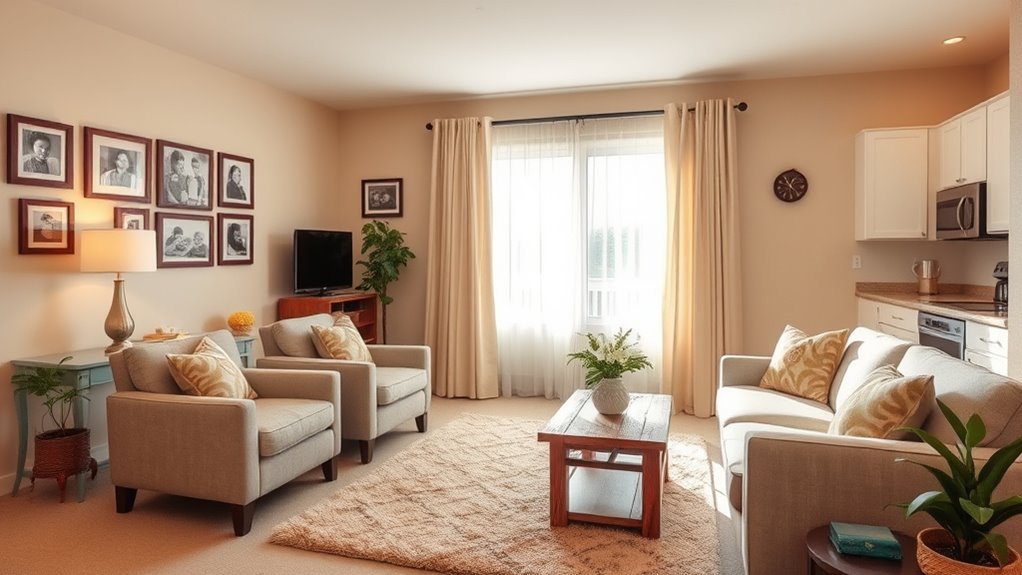
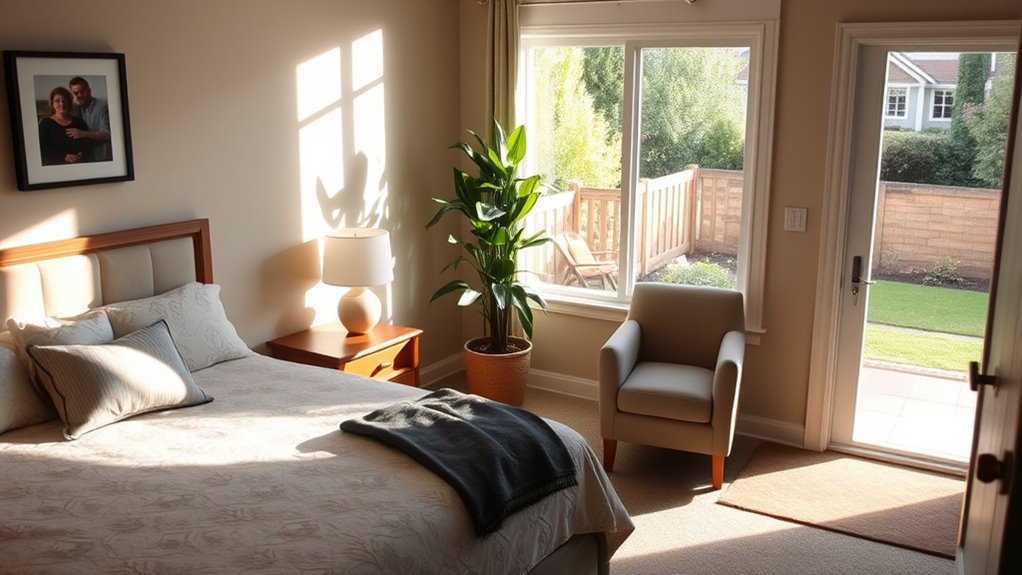
Creating an in-law suite can provide a comfortable, private space for family members while adding value to your home. When designing this space for aging parents, privacy design should be your top priority. You want to create a sense of independence, so consider how the suite’s layout can minimize disruptions. Position the entrance away from common areas or the main house to ensure your loved ones feel they have their own retreat. Incorporate soundproofing materials like insulation or thick doors to block noise, giving everyone peace and quiet. Use visual barriers such as privacy screens or strategically placed furniture to further enhance seclusion. These elements help your family members enjoy their space without feeling exposed or overlooked.
Prioritize privacy in your in-law suite with strategic layout, soundproofing, and visual barriers for a comfortable, independent space.
Accessibility features are equally essential in an in-law suite, especially when your parents’ mobility might change over time. Think about wide doorways that can accommodate wheelchairs or walkers, making it easy for them to move around comfortably. Install lever-style door handles instead of knobs, which are easier to operate for those with limited hand strength. Consider a step-free entry or a gentle ramp at the entrance to prevent tripping hazards. Inside, make sure the bathroom has grab bars, a walk-in shower with a bench, and a handheld showerhead for added safety and convenience. Kitchen counters should be at a comfortable height, and appliances should be easy to reach without straining. These features not only improve daily living but also prepare the space for future needs, reducing the need for frequent modifications. Additionally, incorporating self-watering plant pots into the suite can promote a calming environment and improve air quality.
Lighting is another critical aspect of accessibility and privacy design. Use ample natural light through large windows, but add window coverings like blinds or shades to allow for privacy when needed. Incorporate layered lighting—overhead fixtures, task lighting, and bedside lamps—to ensure the space is well-lit and adaptable to different times of day or activities. Bright, well-placed lighting enhances safety and helps prevent accidents, especially for those with visual impairments.
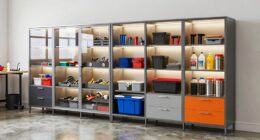
Finally, pay attention to the overall flow of the suite. Keep pathways clear of clutter and furniture arranged to facilitate easy navigation. Incorporate functional storage solutions that are accessible, so your parents can find what they need without difficulty. By combining thoughtful privacy design with accessible features, you create a space that’s safe, comfortable, and respectful of your loved ones’ independence. This thoughtful approach guarantees your in-law suite genuinely feels like a home away from home, providing peace of mind for everyone involved.
Frequently Asked Questions
What Is the Typical Cost of Building an In-Law Suite?
When you ask about the typical cost of building an in-law suite, you should consider a clear cost estimate to guide your budget planning. On average, expect to spend between $20,000 and $50,000, depending on size, finishes, and location. Keep in mind that factors like permits and utilities can add to expenses, so it’s wise to plan for some contingencies to guarantee your project stays within your budget.
How Do I Ensure Privacy for Both Families?
To guarantee privacy concerns are addressed, you should create distinct entrances and separate living areas within the suite. Use soundproofing materials and strategic layout to minimize noise from shared spaces. Installing privacy screens or doors helps provide personal boundaries. Clear communication about boundaries and respecting each other’s space is essential. These steps help both families feel comfortable, maintaining privacy even when sharing common areas.
Are There Specific Building Codes for In-Law Suites?
You need to check local zoning regulations to see if building an in-law suite is permitted on your property. Additionally, licensing requirements may apply, especially if you plan to rent it out or have utilities connected. Contact your city or county building department to get specific details. Ensuring compliance helps avoid legal issues and guarantees your space meets safety standards for aging parents or extended family members.
How Can I Make the Space Accessible for Mobility Issues?
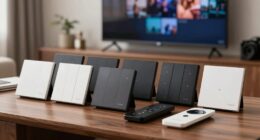
Imagine transforming your space into a haven where mobility challenges vanish. To do that, you’ll want to incorporate universal design features like wider doorways, slip-resistant floors, and lever-style handles. Think about adding home automation for ease—smart lighting, voice-activated devices—that make daily tasks effortless. These small but impactful changes create an accessible, comfortable environment, ensuring your loved ones feel safe and independent in their new space—making every moment worry-free and welcoming.
What Are the Best Design Tips for Aging-In-Place Features?
To incorporate aging-in-place features, focus on universal design principles that promote safety and accessibility. You should install non-slip flooring, lever handles, and wider doorways to accommodate mobility aids. Add safety enhancements like grab bars, good lighting, and easily reachable switches. These improvements help create a space that’s comfortable, safe, and functional for aging parents, ensuring they can live independently with confidence and ease.
Conclusion
Designing a delightful, durable in-law suite doesn’t have to be intimidating. Focus on functionality, feel, and flexibility to foster familiarity and freedom. By balancing beauty and practicality, you create a space where aging parents feel welcomed, comfortable, and cared for. Remember, a well-wrought, warm, and welcoming in-law suite builds bonds, boosts independence, and brings blissful balance to your busy household. With a bit of planning, your perfect practical paradise is only a few steps away.