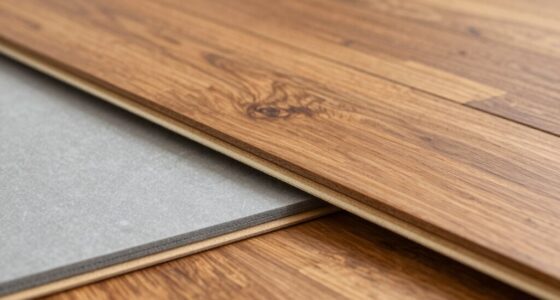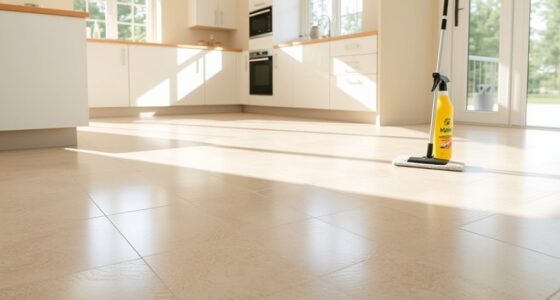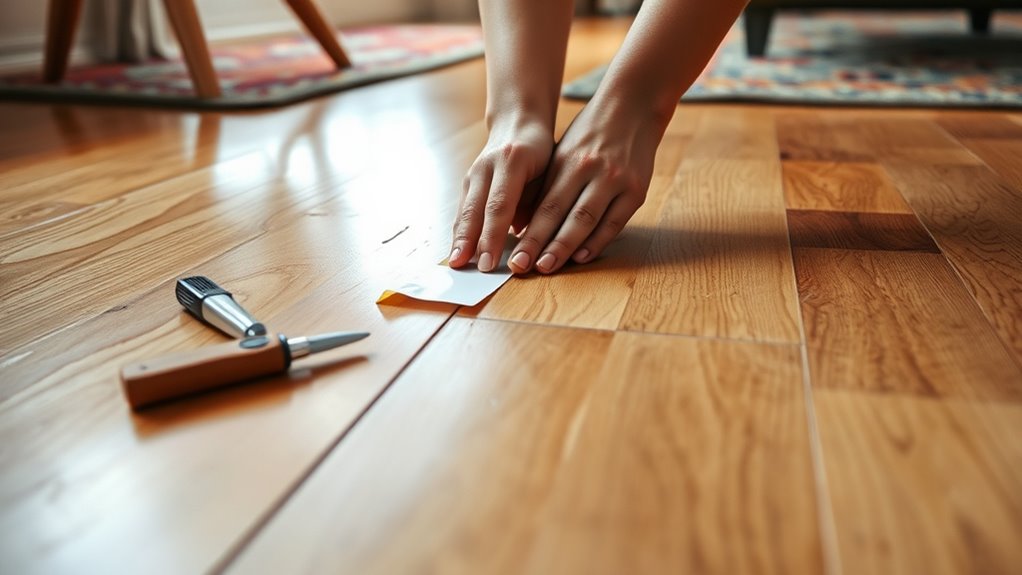

To fix slippery or uneven floors yourself, start by applying non-slip coatings like epoxy or acrylic with slip-resistant additives. Repair cracks or uneven areas using patching compounds or self-leveling mixes for a smooth surface. Add rugs or mats—especially in high-traffic or wet spots—to improve safety and comfort. Secure loose tiles or floorboards with adhesive or nails. For more tips on keeping your floors safe and secure, explore simple DIY solutions that really work.
Key Takeaways
- Apply non-slip coatings like epoxy or polyurethane to improve grip on slippery surfaces.
- Fill cracks and level uneven areas with self-leveling compounds or patching materials for a safer, smoother floor.
- Secure loose tiles or floorboards with adhesive, grout, or screws to prevent movement and tripping hazards.
- Use rugs, mats, and anti-slip pads in high-traffic or wet areas to enhance safety and prevent slips.
- Regularly clean and inspect floors, promptly repairing damage and maintaining dry, slip-resistant surfaces.

Stone Coat Countertops Epoxy Non-Skid Floor Additive, Medium Grit, 16 Oz
- Safety and Style Enhancement: Anti-slip additive for improved safety and style
- Customizable Skid Resistance: Adjustable skid resistance levels
- Ideal for High-Traffic Areas: Suitable for garages and workshops
As an affiliate, we earn on qualifying purchases.
As an affiliate, we earn on qualifying purchases.
How to Add Non-Slip Coatings to Your Floors

Adding a non-slip coating to your floors is a simple way to improve safety and prevent accidents. There are several types of non-slip coatings, such as epoxy, polyurethane, and acrylic-based products, each suited for different surfaces and environments. Before applying, clean the floor thoroughly to remove dust, grease, and debris. For DIY application, wear gloves and follow the manufacturer’s instructions carefully. Use a roller or brush for even coverage, and consider applying a slip-resistant additive mixed into the coating for extra grip. Make sure to work in well-ventilated areas and allow ample drying time between coats. Proper surface preparation ensures optimal adhesion and durability of the coating. Additionally, choosing a coating with anti-slip properties can significantly enhance safety in high-traffic or wet areas. Modern climate control systems can help maintain the ideal conditions for applying coatings and ensure better adhesion and curing. Proper floor maintenance can also extend the lifespan of the non-slip coating, keeping your floors safer for longer. Regular cleaning and inspections help maintain the effectiveness of non-slip surfaces, ensuring ongoing safety. With proper preparation and application, your floors will become safer without the need for professional help.
Repairing Cracks and Uneven Surfaces With DIY Methods

Cracks and uneven surfaces can compromise both the safety and appearance of your floors, but you don’t need to call in a professional to fix them. You can tackle small cracks with patching compounds or epoxy fillers, and level uneven spots with self-leveling compounds. Regular floor polishing can also improve the surface, making cracks less noticeable. For tiled floors, grout cleaning and re-grouting help restore smoothness and prevent further damage. Here’s a quick guide:
| Problem | DIY Solution | Tips |
|---|---|---|
| Small cracks | Fill with epoxy | Sand smooth after drying |
| Uneven patches | Self-leveling compound | Wait until set before polishing |
| Dirty grout | Grout cleaning | Use a brush and sealant |
| Dull surface | Floor polishing | Use appropriate polish for your floor type |
| Loosened tiles | Re-adhere with adhesive | Press firmly and dry thoroughly |
Additionally, choosing the right type of floor polish can help protect your surface and make future repairs easier. Incorporating proper surface preparation techniques is essential for achieving a durable repair.
Using Rugs and Mats to Enhance Safety and Comfort

After fixing cracks and uneven surfaces, the next step is to boost your floor’s safety and comfort with strategic use of rugs and mats. Area rugs can define spaces while protecting your floors from wear. Anti slip mats help prevent slips and falls, especially in high-traffic areas or near stairs. Place rugs at entrances to trap dirt and moisture, reducing hazards. Use textured or non-slip backing for extra grip. Layer rugs over problematic spots to add cushioning and warmth. Regularly check and secure edges to avoid tripping. Consider waterproof mats in kitchens or bathrooms for added safety. Incorporating safety features such as non-slip backing can even personalize your space, making it more inviting and tailored to your style. Additionally, maintaining emotional alignment can contribute to a peaceful home environment, enhancing overall safety and comfort. These simple additions enhance comfort while minimizing risks, making your home safer and cozier.
Applying Self-Leveling Compound for Smooth Surfaces
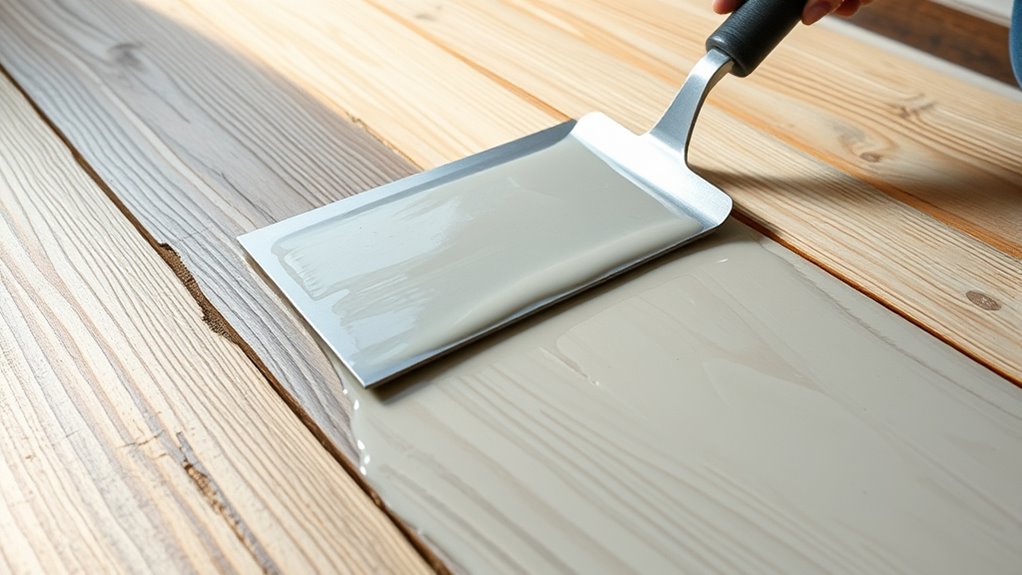
To achieve a perfectly smooth and level floor surface, applying a self-leveling compound is an effective solution. Start with thorough floor preparation by cleaning the area to remove dust, debris, and loose materials. This guarantees proper adhesion. When mixing, follow the manufacturer’s instructions carefully, using clean water and adding the compound gradually to prevent lumps. Use a paddle mixer or drill attachment to attain a smooth, homogeneous mixture. Pour the compound onto the prepared floor and spread it evenly with a trowel or gauge rake. Work quickly, as self-leveling compounds set fast. Tap the surface gently to release air bubbles and help the compound settle. Proper mixing techniques, preparation, and understanding air quality can help ensure optimal curing and finish. Additionally, controlling humidity levels during the curing process can prevent cracks and imperfections. Ensuring good ventilation during curing can also help achieve a better surface finish. Being aware of climate conditions in your area can influence the curing process and final outcome. With proper mixing techniques and preparation, you’ll create a smooth, even surface ready for finishing or flooring installation.
Securing Loose Tiles and Floorboards

When you notice tiles or floorboards that have become loose, addressing the issue promptly is essential to prevent further damage or safety hazards. Start by inspecting the affected area to determine if grout reinforcement or floor anchoring is needed. For loose tiles, apply a strong adhesive beneath and use grout reinforcement to secure them firmly. For floorboards, use screws or nails to re-anchor them, ensuring they’re flush with surrounding boards. You can also add additional adhesive or floor anchors for extra stability. Regularly check for movement and re-secure loose sections early. This proactive approach prevents further damage and keeps your floor safe. Incorporating home organization and mental wellbeing considerations can also help maintain focus and patience during repairs, ensuring a thorough and careful process. Being mindful of floor maintenance techniques can make future fixes easier and more effective. Additionally, understanding angel numbers can offer spiritual reassurance and guidance during your repair journey. Staying informed about end-of-life care principles can inspire patience and compassion as you work through home repairs, fostering a calm and supportive mindset.
Tips for Maintaining and Preventing Floor Hazards

Maintaining a safe and hazard-free floor requires regular attention and proactive measures. Start by keeping your floors clean through consistent floor cleaning, which removes dirt, spills, and debris that can cause slips and falls. Be mindful of furniture placement; avoid blocking walkways or placing furniture on uneven surfaces, as this can create tripping hazards. Use felt pads under heavy furniture to prevent scratches and shifts that might lead to instability. Regularly inspect your flooring for signs of wear, loose tiles, or creaking boards, and address issues promptly. Keep high-traffic areas well-maintained and dry, especially during wet weather. Additionally, understanding how self watering plant pots work can help in maintaining indoor humidity levels, which can indirectly contribute to safer, less slippery floors when moisture is properly managed. Proper floor maintenance techniques not only help prevent accidents but also extend your floor’s lifespan, creating a safer, more comfortable environment. Regular inspections and timely repairs are key components of floor safety practices, ensuring longevity and safety. Incorporating safe cleaning products can further reduce the risk of slips caused by residue or slippery substances on your floors. Moreover, being aware of headphone types and connections can prevent accidents that may occur from tangled cords or improper device usage, contributing to overall safety in your living space.
Frequently Asked Questions
What Are the Best Eco-Friendly Remedies for Slippery Floors?
When tackling slippery floors, you want eco-friendly cleaning solutions that are safe and effective. Use natural non-slip treatments like applying a mixture of vinegar and water to increase traction without harmful chemicals. You can also sprinkle coarse salt or sand on the surface for added grip. These eco-friendly cleaning methods and non-slip treatments help improve safety while protecting the environment, ensuring your floors remain both slip-resistant and eco-conscious.
How Can I Fix Squeaky Floorboards Myself?
To fix squeaky floorboards yourself, start by pinpointing where the creaking occurs. You can use a lubricant like talcum powder or graphite in the gaps to reduce squeak and improve squeak reduction. If needed, drive finishing nails into the joists to secure loose boards. For stubborn creaks, lifting and re-gluing the boards or adding shims can also help. These simple steps make your floors quieter and more stable.
Are There Temporary Solutions for Uneven Floors During Events?
You might worry about lasting fixes, but temporary patches can make your uneven floors manageable during events. Use sturdy event floor mats to create a smooth surface and prevent tripping hazards. These mats are quick to set up and affordable, giving you peace of mind. While they’re not permanent, they’re perfect for short-term needs, allowing your guests to enjoy the event without discomfort or safety concerns.
What Safety Precautions Should I Take Before Starting DIY Floor Repairs?
Before starting DIY floor repairs, you should prioritize safety. Wear protective gear like gloves, goggles, and a dust mask to shield yourself from debris and chemicals. Guarantee your workspace is well-ventilated and free of hazards, keeping tools organized to prevent accidents. Clear the area of obstructions, and work on a stable surface. Taking these precautions helps minimize risks and keeps your repair process safe and efficient.
Can DIY Floor Fixes Be Used on Hardwood and Laminate Floors?
You might think DIY fixes work on all floors, but that’s not always true. For laminate flooring and hardwood, DIY repairs can be effective if you choose the right methods. Minor scratches or uneven spots often respond well to simple solutions like sanding or applying repair kits. However, for extensive damage or structural issues, professional hardwood repair might be necessary. Always assess the damage to determine if a DIY approach suits your flooring type.
Conclusion
Taking these DIY steps can considerably improve your floor’s safety and appearance. Did you know that slip and fall accidents make up nearly 30% of home injuries? By adding non-slip coatings, repairing cracks, and securing loose tiles, you create a safer environment for everyone. Plus, regular maintenance helps prevent future hazards. With a little effort, you can transform your floors into a safer, more comfortable space—saving you time and money in the long run.