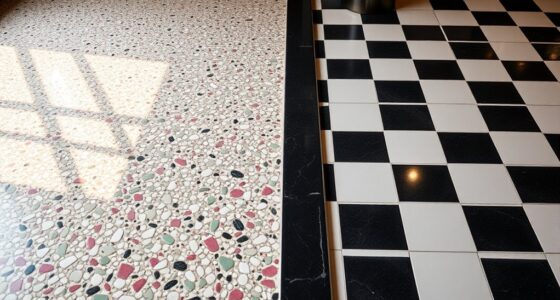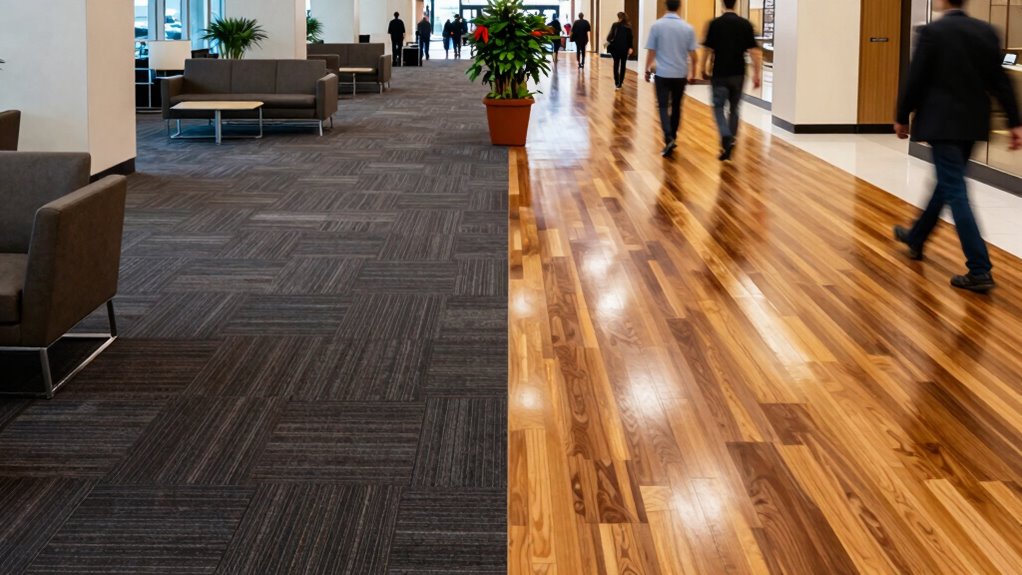

In busy spaces, soft flooring like carpet or rubber excels at absorbing noise and creating a cozy vibe, though it may need more repairs over time. Hard flooring such as hardwood or tile is more durable, easier to clean, and lasts longer, but it reflects sound and can be noisier. Your choice depends on your need for quiet, durability, and budget. If you want to discover what factors will best suit your space, keep exploring the details.

Get furniture and decor delivered free — and shop member deals
- Fast, free delivery on millions of items
- Access to Prime Big Deal Days deals on October 6–7
- Prime Video, Amazon Music and more included
Key Takeaways
- Soft flooring reduces noise and creates a cozy atmosphere, ideal for spaces with frequent foot traffic.
- Hard flooring offers durability, easier maintenance, and a sleek look suitable for high-traffic, busy environments.
- Initial installation costs for soft flooring are lower, but long-term durability often favors hard surfaces.
- Soft options may need more frequent repairs or replacements, increasing maintenance costs over time.
- Choice depends on space function, aesthetics, noise control needs, and long-term cost considerations.

When choosing flooring for busy spaces, understanding the differences between soft and hard options is essential. You need to evaluate how each type impacts noise absorption, durability, maintenance, and costs. Soft flooring, like carpet or rubber, excels at absorbing sound, making it a popular choice in environments where noise reduction is a priority. If your space experiences frequent foot traffic or loud activities, soft flooring can help dampen noise and create a more comfortable, quieter atmosphere. On the other hand, hard flooring such as hardwood, tile, or vinyl tends to reflect sound, which can increase noise levels and potentially cause disturbances. If reducing noise is critical, you might want to incorporate area rugs or mats over hard surfaces to improve sound absorption.
Installation costs also play a significant role in your decision-making. Generally, soft flooring options are less expensive to install upfront. Carpets, for example, are often quicker and easier to lay down, requiring less preparation and specialized tools. Rubber flooring, used in gyms or industrial spaces, can also be installed relatively easily and economically. However, keep in mind that soft flooring may require more frequent replacements or repairs over time, especially in high-traffic areas, which can increase maintenance costs down the line. Additionally, the durability of flooring materials varies widely depending on the type chosen, influencing both longevity and maintenance needs. It’s also important to consider installation complexity, as some flooring types require more specialized skills and tools, impacting overall costs and effort.
Hard flooring options tend to have higher initial installation costs. Laying hardwood or tile involves precise preparation, professional labor, and sometimes subfloor reinforcement, all of which add to the expense. But, these surfaces are highly durable, resistant to wear, and easier to clean, which can reduce ongoing maintenance costs. If your priority is longevity and low upkeep, investing in hard flooring might be more economical over the long term despite the higher initial investment. To make an informed choice, it’s important to consider long-term maintenance requirements and how they align with your budget.
You should also think about how each flooring type fits with your space’s overall function. Soft flooring creates a cozy, inviting environment, ideal for spaces like offices, retail stores, or healthcare facilities where comfort and noise control matter. Hard flooring, by contrast, offers a sleek, professional look and is often preferred in areas that require frequent cleaning or heavy equipment use. When weighing your options, consider how each flooring impacts noise absorption, installation costs, and your long-term budget. Balancing these factors will help you choose a surface that meets your needs for durability, comfort, and cost-effectiveness in busy spaces.
As an affiliate, we earn on qualifying purchases.
Frequently Asked Questions
How Does Flooring Affect Indoor Air Quality in Busy Areas?
Flooring markedly impacts indoor air quality in busy areas by influencing indoor allergen levels and airborne pollutants. Soft flooring like carpets can trap dust, pet dander, and mold spores, which may become airborne when disturbed, affecting those with allergies. Hard flooring, such as vinyl or wood, tends to release fewer airborne pollutants, making it easier to maintain cleaner air. Regular cleaning helps minimize indoor allergens, regardless of flooring type.
Are There Eco-Friendly Options for Soft and Hard Flooring?
Yes, you can choose eco-friendly flooring options. For soft flooring, look for carpets made from sustainable materials like wool or recycled fibers, produced through eco-conscious manufacturing. For hard flooring, options like bamboo, cork, and reclaimed hardwood are excellent choices, as they’re renewable and environmentally responsible. These choices help reduce your environmental impact while maintaining durability and style in busy spaces.
How Does Flooring Choice Impact Noise Levels in Commercial Spaces?
Your flooring choice can make or break the noise levels in your space! Hard floors like tiles or wood bounce sound everywhere, turning your busy environment into a noisy chaos. Soft floors like carpets absorb sound and provide acoustic insulation, transforming your space into a peaceful haven. By selecting the right flooring, you can reduce noise, improve comfort, and create a serene atmosphere that keeps everyone focused and relaxed.
What Maintenance Challenges Are Unique to Soft vs. Hard Flooring?
Soft flooring, like carpet, requires regular vacuuming and stain resistance treatments to keep it clean and fresh, especially in high-traffic areas. Durability testing shows it’s prone to wear and tear, leading to replacements over time. Hard flooring, such as vinyl or tile, demands less maintenance but needs periodic sealing or polishing to prevent scratches and stains. Both types challenge you to balance upkeep with their durability and stain resistance capabilities.
Can Flooring Materials Be Customized for Branding or Aesthetics?
Imagine transforming your space with flooring customization that reflects your brand. You can incorporate logos, patterns, or colors directly into the flooring material, enhancing branding potential. For example, a retail store might embed their logo into the tile design, creating a cohesive aesthetic. By customizing flooring materials, you not only boost visual appeal but also reinforce your brand identity seamlessly within your environment.
Conclusion
Ultimately, choosing between soft and hard flooring in busy spaces is about finding the perfect balance for your needs. Think of it as selecting the right dance partner—each has its own charm and rhythm. Soft flooring offers a cozy, forgiving touch, while hard surfaces bring durability and sleekness. By understanding your space’s personality and your daily rhythm, you can create an environment that feels just right—harmonious, practical, and welcoming.
Fall Picks
fall essentials
As an affiliate, we earn on qualifying purchases.