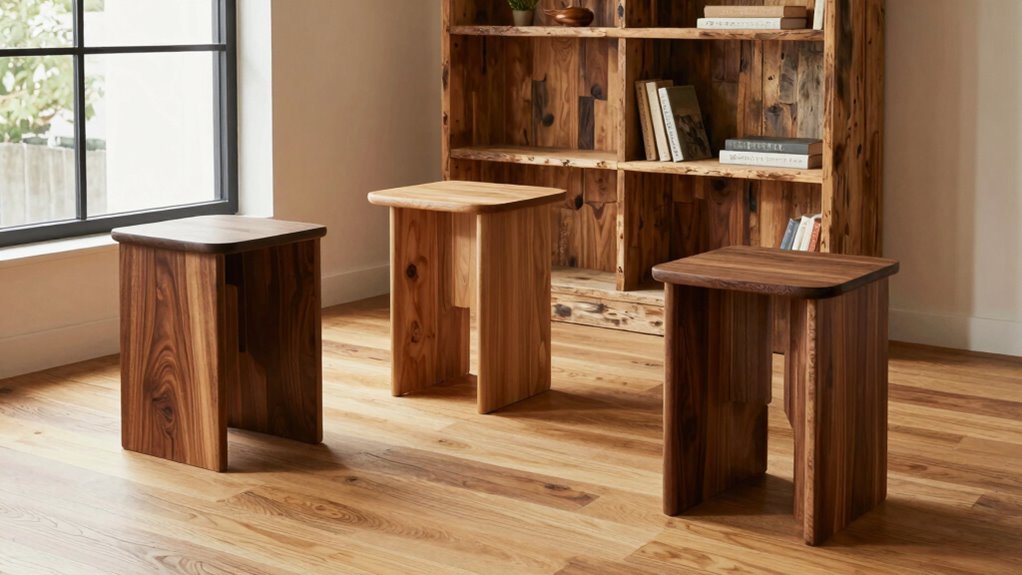

To mix wood tones without making your space feel mismatched, start by understanding their undertones—warm, cool, or neutral—and keep similar undertones together for harmony. Balance lighter and darker woods throughout the room and use accents like metallics or neutrals to create visual buffers. Distribute contrasting woods evenly and connect pieces with shared hues or patterns. Pay attention to placement to improve flow, and you’ll discover how subtle touches can make a stylish, cohesive room.

Get furniture and decor delivered free — and shop member deals
- Fast, free delivery on millions of items
- Access to Prime Big Deal Days deals on October 6–7
- Prime Video, Amazon Music and more included
Key Takeaways
- Match wood tones with similar undertones (warm, cool, neutral) for cohesive harmony.
- Distribute contrasting woods evenly throughout the room to create visual balance.
- Use neutral wall colors and accents to buffer and unify different wood finishes.
- Connect furniture and decor through shared hues or patterns to create visual links.
- Balance light and dark wood pieces to prevent overwhelming or disjointed spaces.
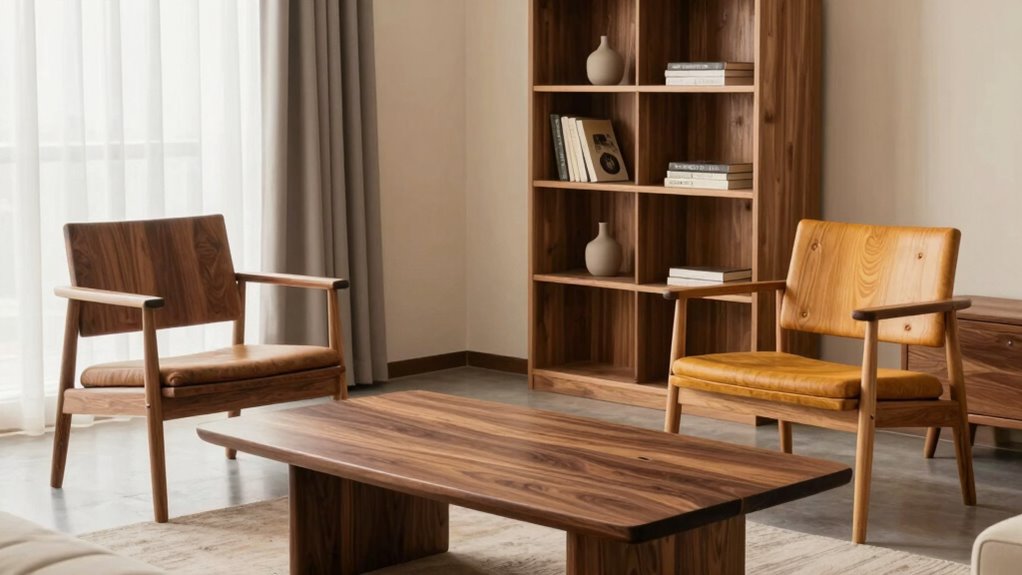
Are you unsure how to combine different wood tones in a way that feels cohesive and stylish? Mixing wood tones can seem tricky, but with a few simple principles, you can create a balanced and inviting space. The key lies in understanding color coordination and furniture placement. When selecting various wood finishes, aim for a mix that shares similar undertones—warm, cool, or neutral—to create harmony. For instance, pairing a honey-colored oak with a darker walnut can work well if both lean toward warm undertones. Conversely, combining a cool-toned ash with a warm cherry might clash unless you introduce complementary accents to tie them together.
Mix warm and cool wood tones with complementary accents for a balanced, harmonious space.
Color coordination plays a crucial role here. Think about your room’s overall palette, including wall colors, textiles, and accessories. If your walls are a neutral shade, you have more flexibility to experiment with contrasting wood tones. However, if your walls are bold or colorful, stick to wood finishes that won’t compete or clash. A good rule of thumb is to balance lighter and darker woods throughout the space, ensuring no single tone overwhelms the room. For example, place a light-colored wood coffee table near darker wood side tables or shelves to create visual interest without feeling mismatched.
Furniture placement also influences how different wood tones read in a room. Distributing contrasting woods evenly prevents one area from feeling too heavy or disjointed. When arranging furniture, try to connect pieces through nearby decor or textiles that share a common hue or pattern. This creates a visual link, making disparate tones feel intentional rather than accidental. For example, if you have a dark wood dining table, consider light wood chairs or a rug with warm undertones to bridge the gap between different finishes. Additionally, understanding biodiversity and sustainable materials can inspire choices that support environmentally friendly furniture options, enhancing both style and sustainability. Incorporating eco-friendly furniture can also introduce unique textures and finishes that complement a diverse range of wood tones.
Another effective strategy is to incorporate metallic or neutral elements, like brass fixtures or white upholstery, which act as neutral buffers between various wood tones. These accents help create a cohesive look and prevent the room from feeling chaotic. Paying attention to color harmony and how different elements interact can further help in achieving a balanced aesthetic. To further enhance your design, consider the role of visual weight in balancing different wood tones, ensuring that no single element dominates the space. Remember, the goal is to strike a balance: don’t match every piece exactly but instead aim for a layered, curated look where each element complements the others. By paying attention to color coordination and thoughtful furniture placement, you can mix wood tones confidently, ensuring your space feels harmonious and stylish rather than mismatched or chaotic.
wood tone color matching furniture
As an affiliate, we earn on qualifying purchases.
As an affiliate, we earn on qualifying purchases.
Frequently Asked Questions
Can I Mix Different Wood Finishes in the Same Room?
Yes, you can mix different wood finishes in the same room. To do so, focus on matching wood textures and contrasting wood grains, which creates visual interest without feeling mismatched. Use a consistent color palette and vary the finishes, like combining matte and glossy surfaces. Balance lighter and darker woods, and incorporate accessories that tie everything together, ensuring a cohesive and stylish space.
What Are the Best Wood Tones for Small Spaces?
For small spaces, light wood stain options work best, making the room feel more open and airy. Opt for soft oak, maple, or ash finishes to create furniture contrast without overwhelming the space. These tones reflect light and keep the room bright. Avoid dark, heavy woods, which can make a small area feel cramped. Instead, choose lighter shades for a fresh, spacious feel that still adds warmth and texture.
How Do I Balance Warm and Cool Wood Tones?
To balance warm and cool wood tones, start by matching similar shades to create harmony, whether you’re choosing laminate vs. real wood. Incorporate a mix of warm and cool tones thoughtfully, placing lighter and darker pieces strategically. Use accessories or textiles in neutral or complementary colors to soften shifts. This approach helps prevent mismatched looks, ensuring your space feels cohesive and inviting without overwhelming the senses.
Is There a Rule for Mixing Wood Grain Patterns?
There isn’t a strict rule for mixing wood grain patterns, but focusing on grain contrast and pattern variation helps create harmony. You should vary the grain direction and size, combining straight-grain with more textured or wavy patterns. Balance busy patterns with calmer ones, and avoid using too many similar grains. This approach adds visual interest while maintaining cohesion, making your space feel thoughtfully designed rather than mismatched.
How Do I Prevent Wood Tones From Clashing?
To prevent wood tones from clashing, focus on creating a balanced color contrast and texture variation. You can mix lighter and darker woods, ensuring they complement rather than compete with each other. Incorporate different textures, like smooth and rough finishes, to add visual interest. Stick to a cohesive color palette, and avoid using too many similar tones. This approach helps your room feel harmonious instead of mismatched.
Conclusion
Think of mixing wood tones like tending a garden. When you plant diverse flowers, they create a vibrant, harmonious landscape. Similarly, blending different wood shades with care brings warmth and character to your space. By balancing light and dark, you guarantee each piece complements the others, avoiding chaos. With patience and an eye for harmony, your room becomes a lush, inviting garden—an artful tapestry of wood tones that feels both intentional and inspiring.
Fall Picks
fall essentials
As an affiliate, we earn on qualifying purchases.