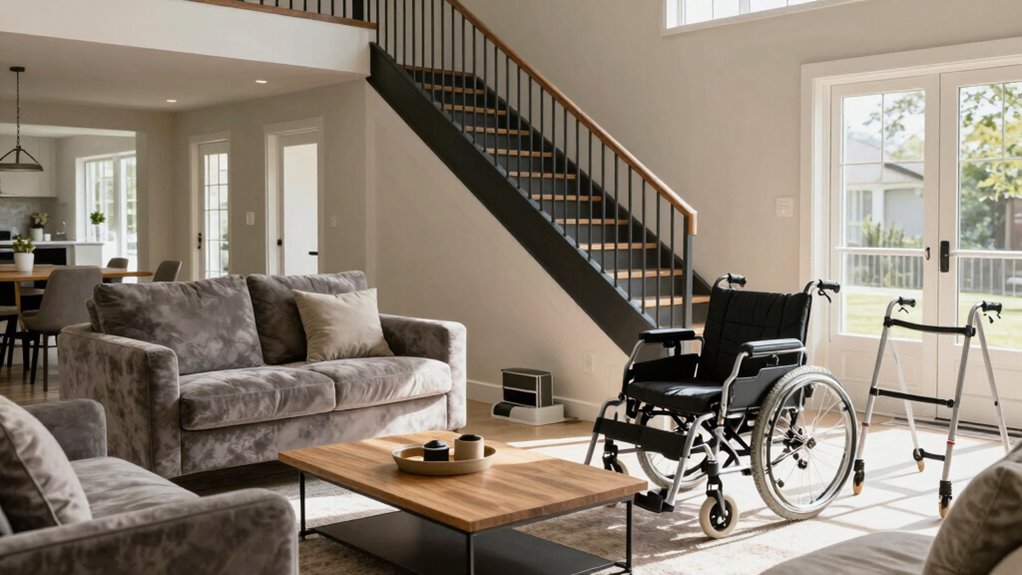
When your mobility needs change, start by focusing on high-risk areas like stairs, bathrooms, and entryways, and consider installing ramps, stairlifts, or non-slip flooring. Incorporate smart technology for safety and convenience, and choose support devices that blend with your decor. Prioritize solutions that are flexible and can be adapted over time, such as modular furniture or removable railings. By slowly updating these key areas, you’ll create a safe, stylish space that grows with your needs. Keep exploring for more ideas.

Get furniture and decor delivered free — and shop member deals
- Fast, free delivery on millions of items
- Access to Prime Big Deal Days deals on October 6–7
- Prime Video, Amazon Music and more included
Key Takeaways
- Identify and address high-risk areas like stairs and bathrooms first for immediate safety improvements.
- Incorporate adaptable solutions such as modular furniture and removable railings for future flexibility.
- Integrate smart technology to enhance safety, convenience, and home management as needs evolve.
- Choose design-friendly safety features that blend seamlessly with existing decor to maintain aesthetics.
- Plan renovations progressively, focusing on essential updates before expanding to less urgent modifications.

Upgrading your home and improving mobility go hand in hand, especially as your needs evolve over time. As you notice daily tasks becoming more challenging, it’s imperative to prioritize updates that enhance safety, accessibility, and comfort. One of the most effective ways to do this is by integrating smart technology into your living space. Smart home devices can automate lighting, control climate, and even monitor your health, all accessible through voice commands or smartphone apps. These innovations not only make your home more convenient but also allow you to manage your environment with ease, reducing the risk of accidents caused by poor lighting or temperature fluctuations.
When considering home updates, it’s essential to balance functionality with design aesthetics. You want modifications that blend seamlessly into your existing decor while providing the necessary support. For example, installing grab bars in bathrooms or replacing standard door handles with lever-style hardware can be both unobtrusive and practical. Opt for devices and fixtures with sleek finishes and minimalist designs to maintain the overall look of your space. This approach helps guarantee your home remains inviting and stylish, rather than feeling clinical or cluttered.
Prioritizing updates means evaluating your specific mobility challenges and addressing them strategically. Start by identifying high-traffic areas that pose the greatest risk—stairs, bathrooms, and entryways. Consider installing ramps or stairlifts where needed, but choose models that complement your home’s aesthetic. For example, modern stairlifts come in various colors and finishes, allowing you to select one that harmonizes with your decor. Similarly, upgrading flooring to non-slip surfaces enhances safety without compromising style. Use materials like luxury vinyl or textured tiles that are both durable and visually appealing. Additionally, exploring accessible design options can help you create a more inclusive environment that supports your independence.
Another key aspect is planning for future needs by choosing adaptable solutions. Modular furniture, adjustable-height counters, and removable railings can be easily modified as your mobility changes. Incorporating biodiversity-inspired design elements, such as natural textures or plant-friendly features, can also create a more soothing environment that supports well-being. Furthermore, considering the use of assistive technology can significantly enhance your daily life and safety. Selecting flexible home features ensures your space remains functional over time, accommodating changes effortlessly. Keep in mind that technology plays an important role here; voice-activated assistants can help you operate devices without physical strain, while smart lighting systems can be programmed to turn on automatically when you enter a room. These features not only improve day-to-day comfort but also help you maintain independence longer.
Ultimately, your goal should be creating a home environment that’s safe, functional, and aesthetically pleasing. By thoughtfully integrating smart technology and design aesthetics into your updates, you can guarantee your home evolves with your needs rather than against them. Prioritize changes that provide the greatest safety benefits, fit your style, and offer flexibility for future modifications. This proactive approach helps you enjoy your space fully while confidently managing your mobility challenges.
Frequently Asked Questions
How Can I Budget for Home Modifications Over Time?
You should start by evaluating your home equity and setting aside a budget for future modifications. Consider how much value your home holds and explore financing options if needed. Additionally, check your insurance coverage to see if it includes modifications or upgrades. Prioritize essential updates first, and plan for smaller projects over time to manage costs effectively, ensuring your home adapts to your changing mobility needs without financial strain.
Are There Specific Brands Recommended for Mobility-Friendly Home Products?
They say, “The proof of the pudding is in the eating,” and when choosing mobility-friendly products, look for trusted brands like Drive Medical, Medline, and Vive. These brands offer reliable mobility aids and accessibility technology that cater to various needs. Prioritize quality and safety, and read reviews to guarantee you get products that are durable, user-friendly, and tailored to your evolving mobility requirements.
How Do I Involve Family Members in Home Update Decisions?
You involve family members in home update decisions by fostering open family communication. Start by discussing your mobility needs and asking for their input. Make sure everyone feels heard by actively listening and encouraging honest feedback. Use a collaborative decision-making process, weighing each person’s preferences and concerns. This approach helps prioritize updates effectively while making sure everyone feels included and supported in creating a safe, accessible home environment.
What Are Temporary Solutions for Mobility Challenges During Renovations?
Imagine your home as a castle, and you’re temporarily adding drawbridges and guardrails. You can use temporary ramps and portable grab bars to ease mobility challenges during renovations. These solutions are flexible, easy to install, and remove when no longer needed. They provide immediate safety and accessibility, allowing you to move freely while planning long-term updates. Prioritize safety first, so your home remains a comfortable sanctuary.
How Do I Ensure Home Updates Comply With Local Building Codes?
To guarantee your home updates comply with local building codes, start by checking with your city or county building department for necessary permits. Obtain all required building permits before beginning work. Also, review safety regulations related to accessibility, such as ramps or bathroom modifications. Hiring licensed contractors can help guarantee your updates meet all codes and safety standards, avoiding costly fines or necessary rework later.
Conclusion
Prioritizing home updates as your mobility needs change might seem overwhelming, but taking small, focused steps can make a big difference. Imagine walking through your home confidently, knowing safety features like grab bars or non-slip flooring are in place without feeling like a complete overhaul. Remember, you don’t have to do everything at once. Prioritize what feels most urgent, and gradually make your space safer and more comfortable—your future self will thank you for the investment.
Fall Picks
fall essentials
As an affiliate, we earn on qualifying purchases.