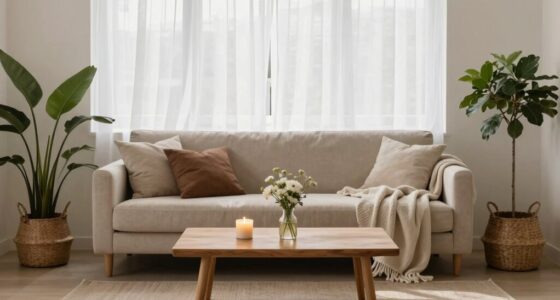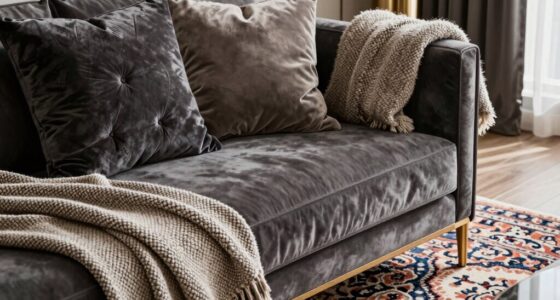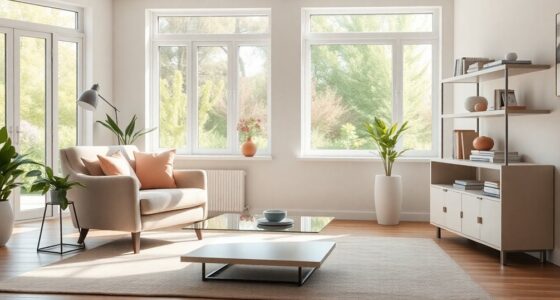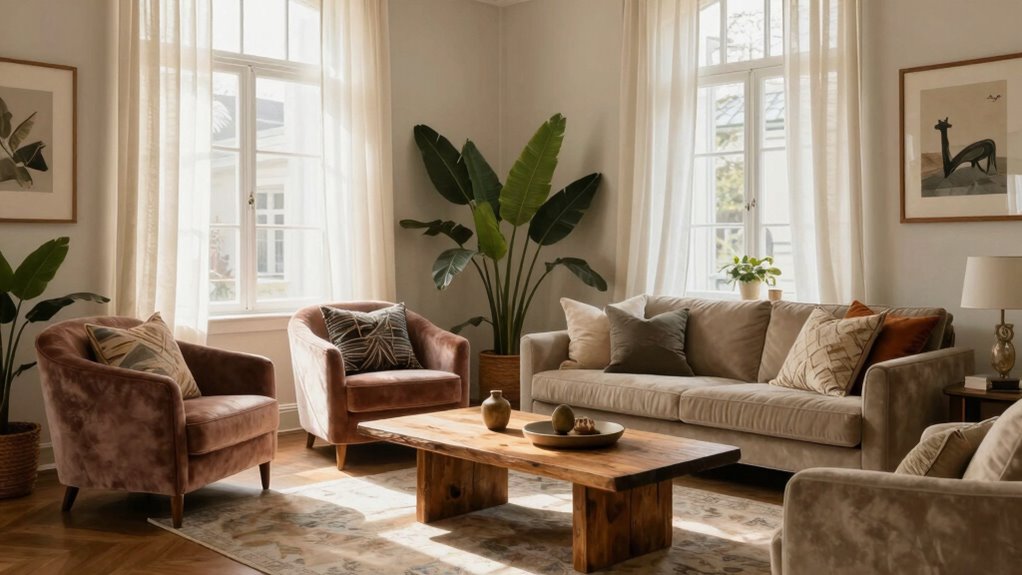

To analyze a room like a designer, start by observing the colors and how they affect the mood—warm tones energize while cool shades promote calmness. Check the flow by noting how easily you can move around and whether furniture arrangement feels natural. Identify focal points and assess proportions to see if the space feels balanced or cluttered. Understanding these elements helps you decide what to keep or change. Keep exploring to discover how these insights can transform your space effectively.
Key Takeaways
- Observe the room’s color palette to assess emotional tone and identify areas needing mood adjustment.
- Evaluate space flow by noting movement patterns and identifying blocked or confusing pathways.
- Analyze proportions and balance, focusing on focal points and areas that feel overcrowded or empty.
- Review the layout to understand how furniture and features work together to create harmony or chaos.
- Listen to the room’s silent signals, such as lighting and spatial cues, to gauge its underlying energy and vibe.

Have you ever walked into a room and immediately sensed its vibe without knowing why? It’s as if the space speaks to you, revealing its mood and energy through subtle cues. As a designer, learning to read a room starts with tuning into these unspoken signals. One of the most powerful tools at your disposal is understanding color psychology. Colors influence emotions and behaviors more than you might realize. Warm tones like reds and oranges tend to energize and stimulate, perfect for lively gatherings or creative spaces. Cooler shades such as blues and greens promote calm and relaxation, making them ideal for bedrooms or quiet corners. By observing the existing colors and how they interact, you can gauge whether a room feels inviting, chaotic, or sterile. This insight helps you decide what to preserve and what to change when redesigning.
Another critical aspect is space flow, which refers to how people naturally move through a room. When you enter a space, do your eyes lead you effortlessly from one area to another? Or do you feel blocked or confused about where to go? Good space flow feels intuitive; furniture placement and architectural elements guide movement smoothly. Cluttered or poorly arranged areas disrupt this flow, creating a sense of chaos or discomfort. Recognizing these patterns allows you to identify areas that need adjusting. Perhaps a sofa is blocking a doorway, or a table is crammed into a corner, restricting movement. When you improve space flow, the room becomes more functional and welcoming, encouraging free movement and interaction. Spatial proportions also play a vital role in how a room feels, as balanced proportions create harmony and comfort. Paying attention to the room’s layout helps you understand how all these elements work together to shape the overall atmosphere.
Reading a room also involves paying attention to spatial proportions and balance. Is the space too crowded or too sparse? Are there focal points that draw your eye naturally, like artwork, a fireplace, or a large window? These elements set the tone and help you understand the room’s personality. As you observe, take note of areas that feel off or out of sync. Sometimes, a simple change in furniture arrangement or a splash of a different color can restore harmony. The goal is to create an environment that aligns with the purpose of the space and the mood you want to evoke.
Ultimately, reading a room like a designer means listening to its silent language. Incorporate color psychology to understand emotional undercurrents, and analyze space flow to see how movement and function coexist. When you master these skills, you’re better equipped to transform a space thoughtfully and effectively—making changes that feel natural and resonate with those who use it.
As an affiliate, we earn on qualifying purchases.
Frequently Asked Questions
How Do I Identify the Current Mood of a Space Quickly?
To identify the mood quickly, observe the room’s color psychology—warm tones create energy, while cool hues promote calm. Notice furniture placement: tight arrangements can feel congested, while open layouts seem relaxed. Pay attention to lighting, textures, and overall flow. These cues reveal the space’s emotional tone, helping you decide whether to energize, soothe, or transform it. Trust your instincts and these design principles to gauge the current vibe.
What Tools Can Help Analyze a Room’s Design Elements Effectively?
Think of tools as your design compass, guiding your eye through the room. Use color theory to understand how hues influence mood and space perception, and observe furniture placement to see how it directs flow and interaction. A digital color analyzer or mood board can help visualize these elements. These tools help you analyze a room’s design elements effectively, much like a painter assesses light and composition before creating their masterpiece.
How Can I Gauge the Preferences of Multiple Room Users?
You can gauge the preferences of multiple room users by observing their reactions to different elements like color psychology and furniture arrangement. Ask open-ended questions to understand their favorite colors and styles, and notice how they respond to various setups. Pay attention to their body language and comments when they see different arrangements. This helps you identify shared tastes and individual preferences, guiding you to create a space everyone feels comfortable in.
What Are Common Mistakes When Interpreting a Room’s Vibe?
Think of interpreting a room’s vibe like tuning a radio — if you focus too much on static, you miss the music. Common mistakes include ignoring lighting ambiance, which sets the mood, or over-relying on color psychology without considering context. You might misjudge energy levels or misunderstand the subtle cues. Remember, a room’s true vibe combines lighting, colors, and the unspoken feelings of its occupants.
How Long Should I Observe a Room Before Making Changes?
You should observe the room for at least 10-15 minutes to understand its vibe. Pay attention to color psychology and how furniture placement influences the space’s energy. Notice how people interact with the environment, how natural light hits different areas, and how the room makes you feel. This observation helps you identify what to change first, ensuring your updates enhance the room’s overall harmony and functionality.
Conclusion
Remember, reading a room like a designer is your secret weapon, much like a painter stepping back to see the full canvas before making a stroke. Trust your instincts, observe subtle cues, and envision the space’s potential. With every glance and gesture, you’re channeling your inner artist—transforming chaos into harmony. So go ahead, channel that creative eye, and turn every room into a masterpiece worth admiring.