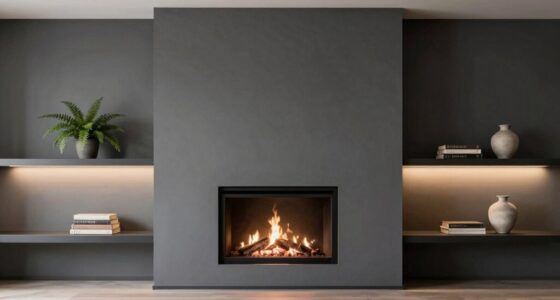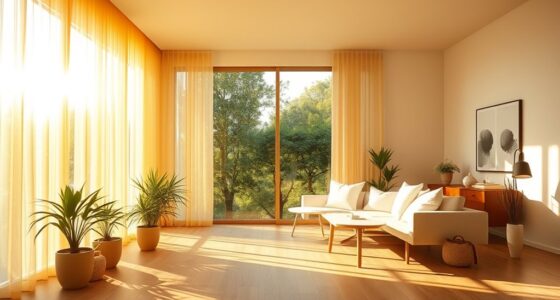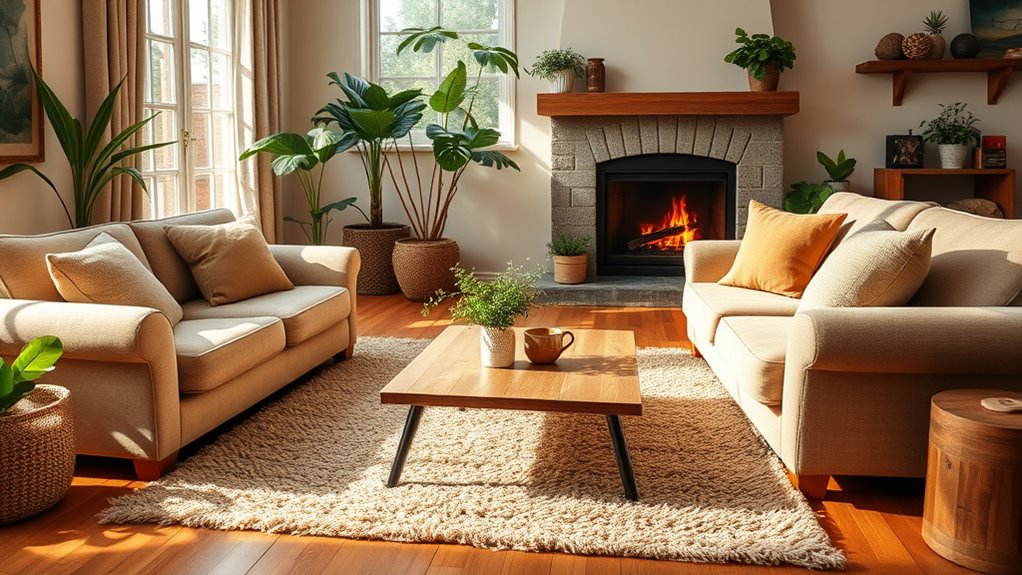

To create a cozy, stress-free home, focus on combining ergonomic furniture that supports your comfort with soft, calming colors like muted blues and warm beiges. Arrange your space thoughtfully to promote easy movement and accessibility while keeping clutter at bay. Add plush textures and warm lighting to foster relaxation. Personal touches, such as artwork or photos, make your space feel uniquely yours. Keep exploring these design secrets to craft a sanctuary that truly nurtures your well-being.
Key Takeaways
- Incorporate ergonomic furniture to support good posture and reduce physical strain.
- Use soft, muted color palettes combined with natural light for a calming atmosphere.
- Arrange spaces thoughtfully to ensure flow, accessibility, and clutter-free surfaces for stress reduction.
- Add warm lighting, textured textiles, and personal decor to enhance coziness and emotional comfort.
- Create private retreat zones with soundproofing and personalized touches for relaxation and well-being.

Creating a comfortable interior design isn’t just about choosing pretty furniture; it’s about crafting a space that feels welcoming and relaxing. To achieve this, start by focusing on ergonomic furniture. When your furniture is designed with comfort and support in mind, it reduces strain and makes everyday activities more enjoyable. Think of an office chair that contours to your body, or a sofa with cushions that offer just the right amount of firmness. Ergonomic pieces ensure that your home isn’t just stylish but also promotes good posture and physical well-being. Incorporating these elements shows you care about your comfort, turning your house into a sanctuary where you can unwind without discomfort.
Next, pay attention to your color choices. Soft color palettes are a game-changer in creating a calming environment. Gentle hues like muted blues, warm beiges, or soft greys can instantly make a room feel more inviting. These colors don’t overwhelm your senses; instead, they promote tranquility and ease. When you combine soft palettes with natural light, your space becomes even more soothing. Avoid harsh, bright colors that can induce stress or overstimulation. Instead, opt for tones that soothe and foster relaxation. This subtle approach to color helps you unwind after a long day and encourages a peaceful atmosphere throughout your home.
In addition to furniture and color, consider how your space is arranged. Prioritize flow and accessibility, making it easy to move around without feeling cramped. A clutter-free environment enhances comfort and reduces stress, so keep surfaces tidy and storage accessible. Use soft textiles like plush rugs, cozy throws, and cushioned pillows to add layers of comfort. These textures invite touch and make your space feel more lived-in and warm. Lighting also plays an essential role—use warm, ambient lighting to create a cozy glow that relaxes your mind and body. Dimmable lights or lamps with warm bulbs can transform a room from functional to soothing in seconds.
Furthermore, incorporating privacy and quiet elements can significantly enhance your sense of comfort, providing a peaceful retreat from external noise and distractions. Finally, don’t forget the importance of personalization. Your home should reflect your personality and preferences, which makes it feel truly yours. Incorporate personal touches—favorite artwork, cherished photographs, or meaningful decor—that bring joy and comfort. By combining ergonomic furniture, soft color palettes, thoughtful layout, and personal touches, you craft a home that’s not only visually appealing but also deeply comforting. Every element works together to create a space where you can truly relax, recharge, and enjoy a stress-free lifestyle.
Frequently Asked Questions
How Can I Incorporate Personal Touches Without Cluttering Space?
You can incorporate personal touches by displaying cherished personal mementos and decorative accents thoughtfully. Choose a few meaningful items and place them on shelves or in shadow boxes to avoid clutter. Rotate these pieces periodically to keep your space fresh and interesting. Keep surfaces tidy and use storage solutions to hide excess items. This way, your home reflects your personality without feeling overwhelming or cluttered, creating a cozy, inviting atmosphere.
What Are the Best Lighting Options for a Relaxing Atmosphere?
Did you know that 90% of our time is spent indoors, emphasizing the importance of good lighting? For a relaxing atmosphere, incorporate ambient lighting like soft, warm lamps and fixtures. Maximize natural sunlight by using sheer curtains or strategically placing mirrors. This combination creates a soothing environment, reduces stress, and makes your space feel cozy. You’ll love how the right lighting transforms your home into a peaceful retreat.
How Do I Choose Furniture That Balances Comfort and Style?
When choosing furniture, prioritize ergonomic support to keep you comfortable during long periods of use. Look for pieces that combine style with functionality, such as multifunctional furniture that saves space and adds versatility. Trust your instincts by selecting items that reflect your taste while providing the necessary comfort. Balance aesthetics with practicality, ensuring each piece enhances your home’s cozy vibe without sacrificing support or design appeal.
Are There Eco-Friendly Materials That Enhance Coziness?
Think of eco-friendly materials as a warm hug from nature itself. Yes, sustainable textiles like organic cotton and hemp can add cozy textures, while natural insulation such as wool or cellulose keeps your home warm and inviting. These materials not only enhance comfort but also reduce environmental impact. By choosing eco-friendly options, you create a space that feels nurturing and sustainable, blending coziness with conscious living effortlessly.
How Can Soundproofing Improve Overall Home Comfort?
Soundproofing benefits your home by creating a quieter, more peaceful environment, making it easier to relax and focus. With effective noise reduction techniques like acoustic panels, double-glazed windows, and heavy curtains, you can block out external sounds and reduce interior noise. This not only minimizes stress but also enhances overall comfort, helping you enjoy a cozy, stress-free space where tranquility reigns and your well-being improves daily.
Conclusion
Creating a cozy space isn’t just about plush cushions or warm lighting—it’s about crafting a sanctuary where stress melts away. As you blend comfort with style, remember that simplicity often brings the most peace. So, embrace your imperfections and let your home reflect who you are. After all, in a world full of chaos, your sanctuary should be a calm, inviting refuge—where comfort meets your unique story.