
TL;DR

Get furniture and decor delivered free with Prime
- Fast, free delivery on millions of items
- Prime Video, Amazon Music and more included
- Member-only deals all year
A House Beautiful report says designers are bringing the music-first atmosphere of Japan’s Jazz Kissa cafés into residential spaces as listening rooms. Designers describe the rooms as places to focus on music and unwind, using comfortable seating, soft materials and warm lighting; a dedicated room is not required.
Designers are bringing listening rooms—spaces arranged for focused music listening—into residential projects, drawing inspiration from Japan’s Jazz Kissa cafés, according to a House Beautiful report. The rooms are presented as a screen-light alternative for unwinding at home, combining audio equipment with comfortable seating and an atmosphere designed around listening rather than television or conversation.
The report describes a listening room as more than a place to store a record player or speakers. Designers say its layout and mood are intended to help people sit still and pay attention to music. Sebastian Salvadó of RIOS calls the rooms sensory spaces, while Ome Dezin designers Joelle Kutner and Jesse Rudolph describe them as places to pause without distraction. Those descriptions are designers’ perspectives, not evidence that the rooms produce a particular health or wellbeing outcome.
Typical design choices include upholstered seating, rugs, wood and other soft materials, along with warm, indirect lighting. These materials can soften a room visually and may help absorb sound, the report says. Designers also recommend centering the seating and audio setup for listening, rather than treating equipment as an afterthought. Some examples include record storage and a wet bar, but the article does not suggest these are necessary features.
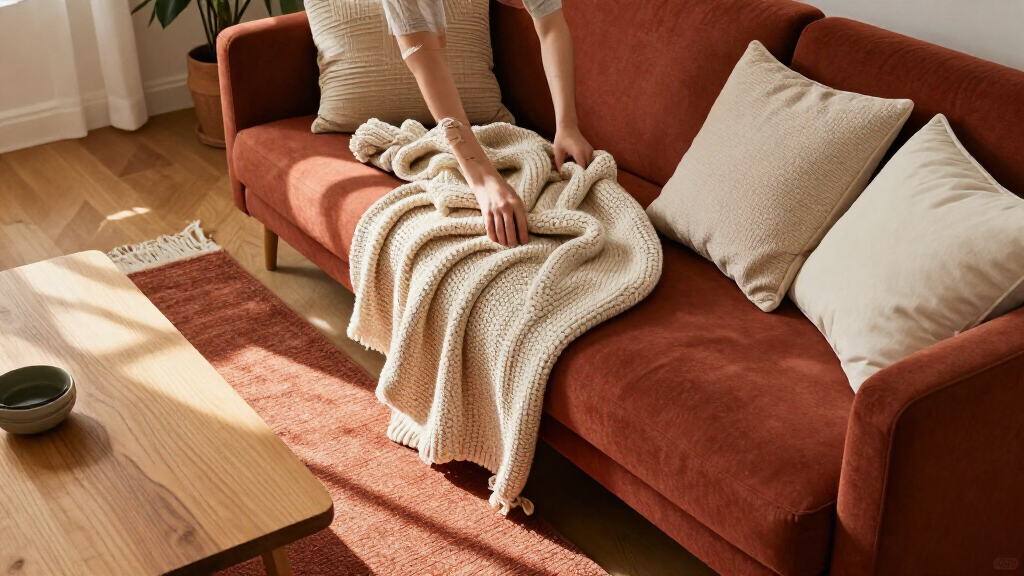
A listening room does not have to occupy an entire room. Salvadó recommends starting with comfortable furniture and the best stereo equipment a homeowner can invest in, arranged for listening. Kutner suggests tactile materials such as wool, velvet, wood or cork, and saturated colors such as deep red or oxblood. Christian Schulz of Studio Collective recommends layered rugs and ambient wall sconces. The shared advice is to prioritize comfort, sound and atmosphere instead of crowding the space with decorative objects.
A Screen-Light Place to Listen
The appeal designers describe is a shift in how a home can be used: a room or corner devoted to one activity, rather than a television-led space or a background for other tasks. For homeowners who want a more deliberate way to listen to music, the approach offers a design framework that can work at different scales, from a dedicated room to a living-room corner.
The trend also connects residential interiors with music-focused nightlife venues, where seating, sound and atmosphere are organized around listening. The report presents this as a design movement visible on moodboards and in projects, but supplies no survey, sales figures or other measurements establishing how widespread it is. Its practical relevance is in the adaptable design advice, not a quantified claim about popularity.
high quality stereo system for listening room
As an affiliate, we earn on qualifying purchases.
As an affiliate, we earn on qualifying purchases.
From Jazz Kissa to Home
The concept takes inspiration from Japan’s Jazz Kissa cafés, where people historically gathered to listen to vinyl. The House Beautiful report says some nightlife venues are also exploring music-first environments, emphasizing sound quality and comfortable seating rather than dance floors alone. Designers see a connection between that atmosphere and homes where people want a dedicated place for music.
The article contrasts listening rooms with media rooms built around televisions. Instead of requiring a particular format or costly renovation, the central idea is to arrange a space intentionally for listening. Some designers are also exploring outdoor “listening gardens,” pairing audio with landscaping, though the report does not provide details on specific projects or how common they are.
““The idea of listening to an album all the way through, the way the artist actually intended for us to hear it, is a welcome respite.””
— Adam Goldstein, Studio Collective
How Widespread Is the Trend?
The report characterizes listening rooms as increasingly visible in designers’ work, but it gives no dates, market data, project counts or survey results to show the scale or pace of growth. It also does not establish that the design reliably makes every home feel more relaxing; that is a subjective aim expressed by designers, not a measured outcome. Costs, acoustic performance and the best equipment for particular rooms will vary, and the article does not provide product comparisons or technical specifications.
Start With One Listening Corner
The report offers no formal launch, industry deadline or next milestone. For homeowners interested in the idea, its recommendations point to a modest first step: choose comfortable seating, position speakers and furniture for listening, and use soft materials and warm lighting to make the area feel distinct. A dedicated renovation is not presented as necessary. Whether the concept gains broader traction will require further reporting, including dated examples and evidence beyond designers’ observations.
Key Questions
What is a listening room?
It is a space arranged to encourage focused music listening, typically with comfortable seating, an audio setup and an atmosphere intended to limit distractions.
Do I need a separate room?
No. The designers quoted in the report say a living-room or den corner can serve as a listening space if the seating and audio are arranged intentionally.
What design choices do designers recommend?
They recommend comfortable furniture, rugs or other soft materials, warm indirect lighting and a layout centered on listening. Specific colors and materials are optional suggestions, not requirements.
Is there evidence that listening rooms are becoming more popular?
The report says the concept is appearing on designers’ moodboards and in residential design, but it includes no figures or survey data measuring its prevalence.
Source: rss
Columbus Day / Indigenous Peoples' Day Picks
long weekend sales
As an affiliate, we earn on qualifying purchases.