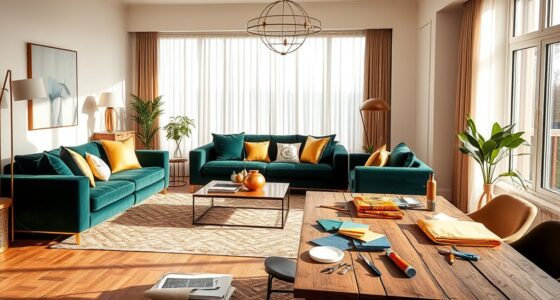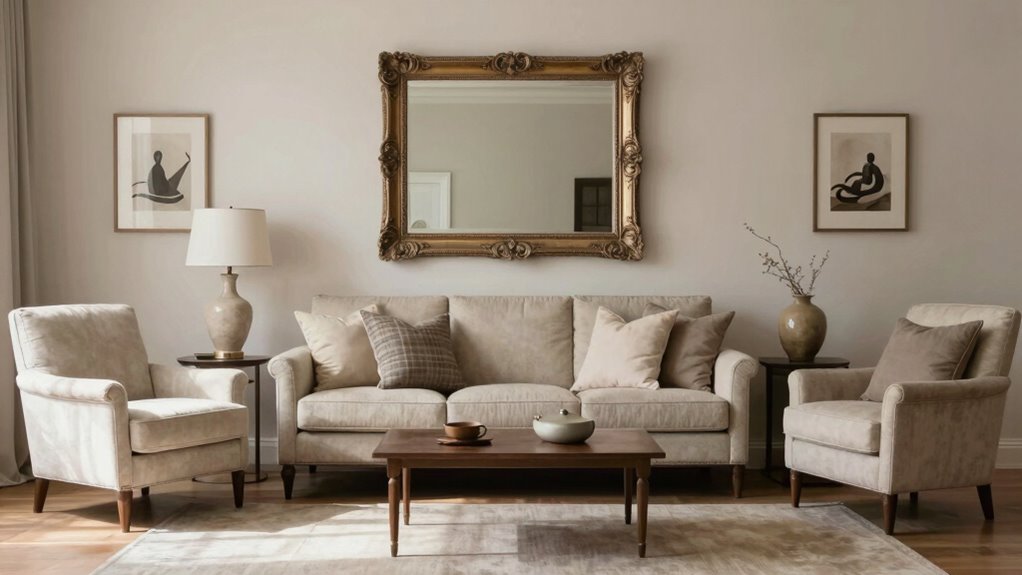
Many homes overlook the importance of visual balance, which is key to creating a harmonious and inviting space. When furniture, décor, and focal points aren’t thoughtfully arranged, the room can feel chaotic or uneven. Achieving balance involves distributing visual weight through symmetrical layouts, proportional furniture, and careful placement of art and accessories. If you want to transform your space into a calm, cohesive environment, understanding and applying this principle is essential—continue exploring to learn how you can master it.
Key Takeaways
- Many homes neglect proper distribution of visual weight, creating cluttered or unbalanced spaces.
- Achieving symmetry and proportional furniture placement is often overlooked, disrupting harmony.
- Overloading surfaces with decor or misplacing focal points causes imbalance.
- Small accessories and lighting are underused to offset heavy furniture and create visual equilibrium.
- Failing to consider focal points’ placement and scale leads to disorganized, visually unappealing rooms.
Understanding Visual Balance: Why It’s the Secret to a Harmonious Home
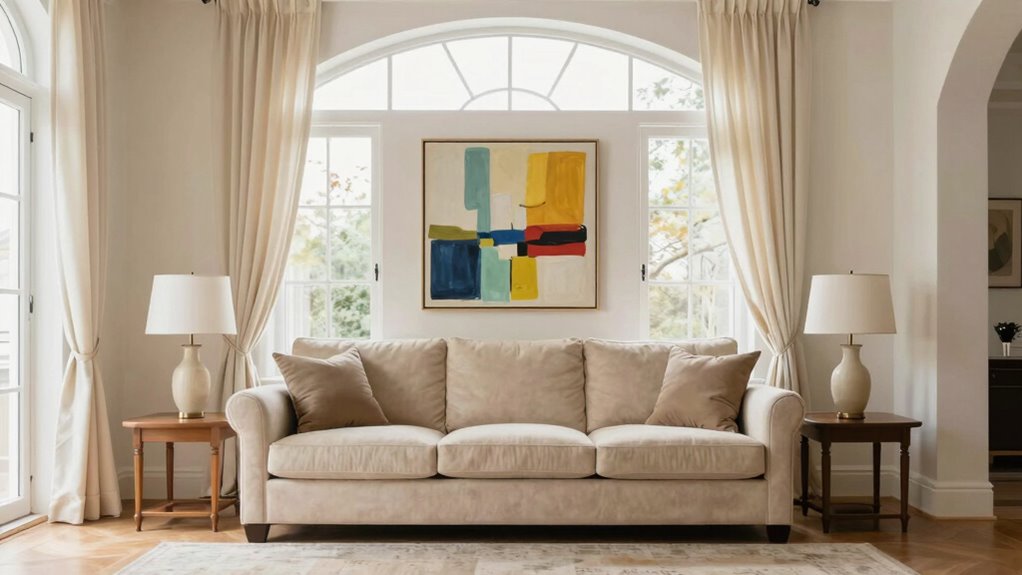
Have you ever walked into a room and immediately felt at ease? That’s the power of visual balance. It’s the secret to creating a harmonious home where everything feels just right. Focal points play a key role—they draw your eye and anchor the space, guiding the flow of the room. Symmetry patterns further enhance this balance, creating mirror-like arrangements that feel orderly and pleasing. When these elements are in harmony, your space naturally feels inviting and comfortable. You don’t need to overdo it; subtle use of focal points combined with balanced symmetry makes a big difference. This balance isn’t just aesthetic; it influences how you experience your home every day, making it more restful and welcoming. Incorporating visual harmony through thoughtful design choices can transform your living environment into a truly serene space.
A well-considered approach to spatial arrangement can also help you achieve this balance, making your home feel more cohesive and peaceful.
How Can You Spot Imbalance in Your Space? Signs and Mistakes to Watch For
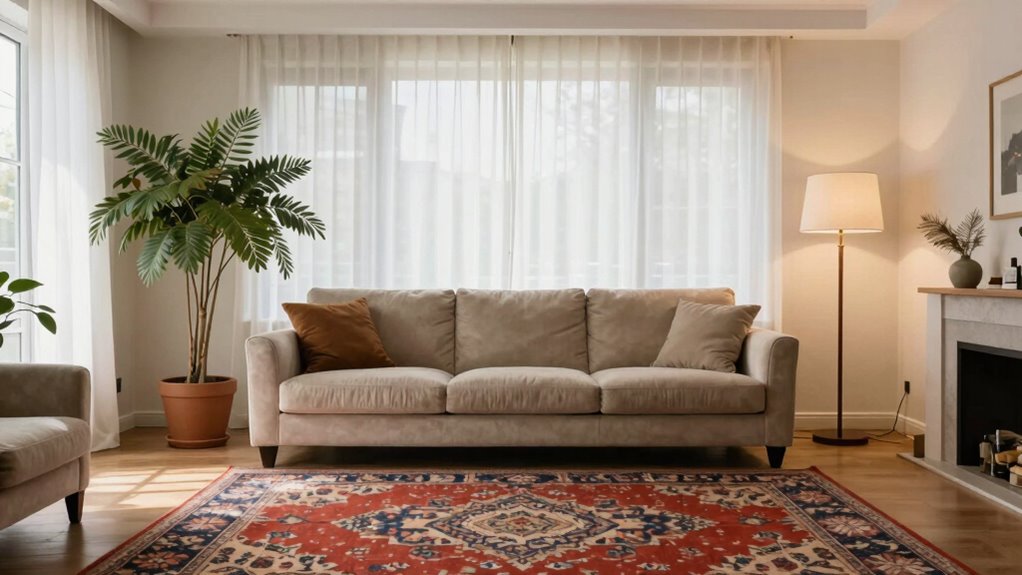
You might notice visual clutter piling up or objects feeling out of place, which can throw off your room’s balance. Pay attention to areas that seem uneven or crowded, as these are common signs of imbalance. Recognizing these subtle mistakes helps you create a more harmonious and inviting space.
Recognizing Visual Clutter
Visual clutter often signals an imbalance in your space, making it feel chaotic or overwhelming. Spotting this clutter is key to clutter reduction and restoring visual balance. Look for areas where objects pile up or seem out of place, creating a sense of disorder. Signs include a crowded tabletop, scattered decor, or excessive accessories that draw attention away from the room’s flow. To better understand, consider this table:
| Clutter Type | Common Signs | How It Affects Space |
|---|---|---|
| Visual Clutter | Overfilled shelves or surfaces | Creates chaos and distraction |
| Decorative Overload | Too many small decor pieces | Overwhelms the eye |
| Untidy Cables | Tangled cords and wires | Disrupts clean lines |
| Excess Furniture | Unnecessary or bulky pieces | Clutters and reduces space |
Identifying these signs helps you target clutter for reduction, improving your home’s visual balance. Recognizing home theater setup clutter can also prevent interference with your viewing experience. Additionally, understanding AI-powered home organization solutions can assist in maintaining a clutter-free environment.
Balance Disrupting Placement
Imbalance in your space often becomes apparent through the placement of furniture and decor. Artistic asymmetry can create visual interest, but when misplaced, it disrupts equilibrium. Look for uneven weight distribution—such as a large sofa on one side without enough supporting elements on the other. Focal point placement is essential; if your main feature, like a fireplace or artwork, isn’t centered or balanced with surrounding furniture, the entire room feels off. Avoid cluttering one side or placing heavy pieces too close to walls without considering their visual weight. These mistakes can throw off the harmony of your space, making it feel unsteady. Paying attention to visual weight and how your furniture and decor are arranged can help you identify and correct balance-disrupting placements, ultimately achieving a cohesive, inviting room that feels comfortable and well-designed. Recognizing subtle cues of imbalance can help you create a more harmonious environment that feels both functional and aesthetically pleasing. Additionally, understanding visual balance principles can guide you in making intentional choices that enhance your space’s overall harmony.
The Key Principles of Achieving Visual Balance in Any Room
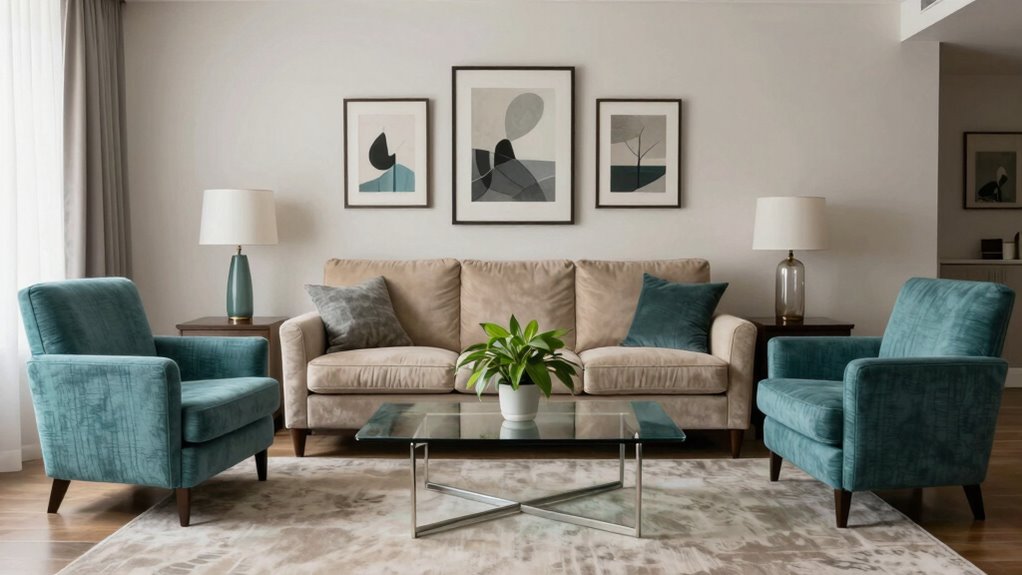
Achieving visual balance in a room is essential for creating a harmonious and inviting space. To do this effectively, focus on symmetry principles and focal points. First, identify the room’s focal point—like a fireplace or artwork—and build around it. Second, arrange furniture and decor so that visual weight is evenly distributed, creating a sense of harmony. Third, consider balancing large elements with smaller accessories, ensuring neither side feels heavier. Use symmetry principles by mirroring objects or furniture across a central line, which naturally guides the eye and stabilizes the space. Additionally, paying attention to visual weight considerations ensures all elements contribute to the room’s overall harmony. Incorporating elements like essential oils can subtly influence the ambiance, enhancing the room’s balance and mood. A methodical approach to arranging items can further help achieve a balanced environment. By anchoring your design around a focal point and maintaining balanced proportions, you create a room that feels cohesive and comfortable. Incorporating these principles from interior design helps achieve a truly balanced and pleasing environment.
Using Furniture and Decor to Create a Balanced, Cohesive Look
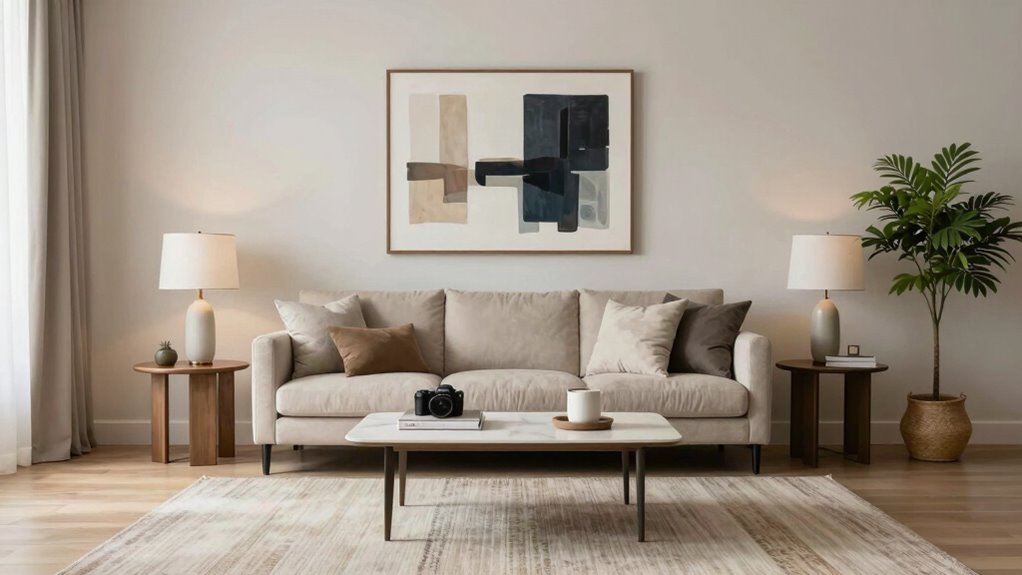
To create a balanced, cohesive look with furniture and decor, you need to think carefully about placement and proportion. Start by establishing clear focal points, such as a statement sofa or artwork, to draw attention and anchor the space. Use symmetry patterns to create harmony; for example, place matching side tables or lamps on either side of a central piece. Balance larger furniture with smaller decor items to avoid visual heaviness or emptiness. Keep proportions in mind by ensuring that furniture sizes complement each other and the room’s dimensions. Additionally, paying attention to visual balance helps you achieve a sense of order and unity that makes your space feel inviting and well-designed.
Balancing Color, Scale, and Texture for a Beautiful Home
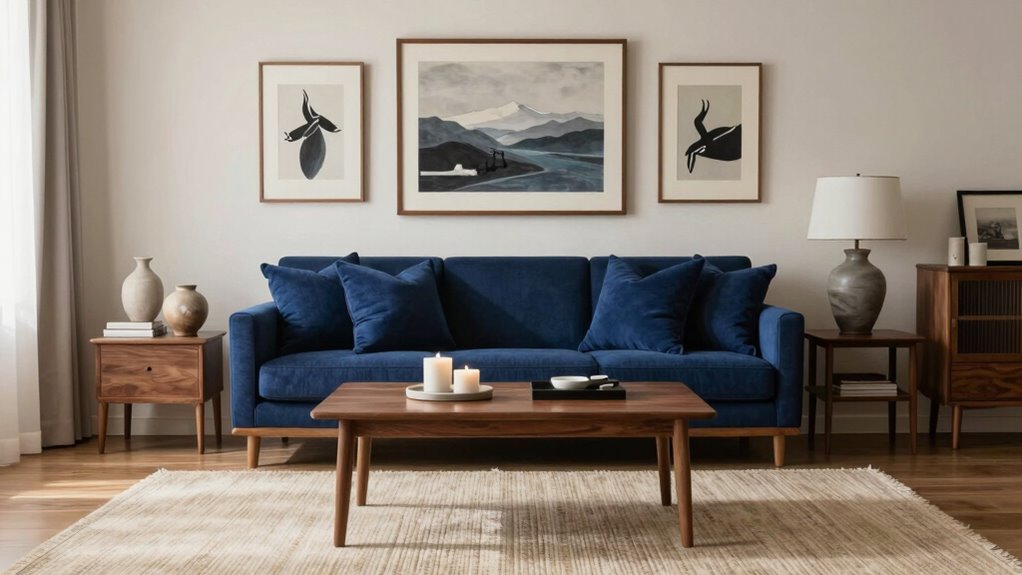
To create a stunning home, you need to balance color schemes, scale, and texture effectively. When you harmonize these elements, your space feels cohesive and inviting. Paying attention to proportions and variation helps you achieve a beautifully designed environment.
Harmonizing Color Schemes
Harmonizing color schemes in your home involves more than just choosing pretty hues; it requires balancing color, scale, and texture to create a cohesive and inviting space. Focus on achieving color harmony by selecting a unified palette that ties different rooms together. Consider these steps:
- Visualize a soft, muted base color flowing seamlessly across walls and furniture, establishing a calming backdrop.
- Add accent pieces in complementary shades that pop without overwhelming, maintaining palette coordination.
- Layer textures like plush throws, sleek ceramics, or rough wood to deepen visual interest and balance the overall color scheme.
Managing Scale Proportions
Balancing scale in your home guarantees that every element feels harmonious and visually appealing. Achieving scale harmony involves paying attention to how different pieces relate in size and proportion. Use proportion techniques to create a sense of balance, such as pairing large furniture with smaller accessories or vice versa. Consistent scale ensures that no single element overwhelms the space or appears insignificant. When you consider scale, you’re mindful of how visual weight is distributed, which helps guide the eye smoothly around the room. Adjusting the size of decor, furniture, and architectural details is key to creating a cohesive look. Incorporating visual weight considerations helps you fine-tune the overall harmony of your space. By managing scale proportions carefully, you make your space feel thoughtfully designed and inviting, with each component supporting the overall harmony.
Combining Texture Variations
Incorporating a variety of textures into your home can dramatically enhance its visual interest and depth. Texture mixing creates tactile contrast, making spaces feel richer and more inviting. To achieve this, consider these elements:
- Layer soft, plush fabrics like velvet cushions against rough woven rugs, highlighting tactile contrast.
- Combine sleek, glossy surfaces with matte finishes on furniture or decor for visual dynamism.
- Introduce natural materials such as wood or stone alongside smooth metals to balance tactile variety.
Balancing texture variations isn’t just about mixing different materials—it’s about creating harmony that guides the eye and invites touch. When done thoughtfully, your home will exude tactile richness, making every space more engaging and visually balanced.
Practical Tips to Fix Visual Imbalance and Improve Your Space
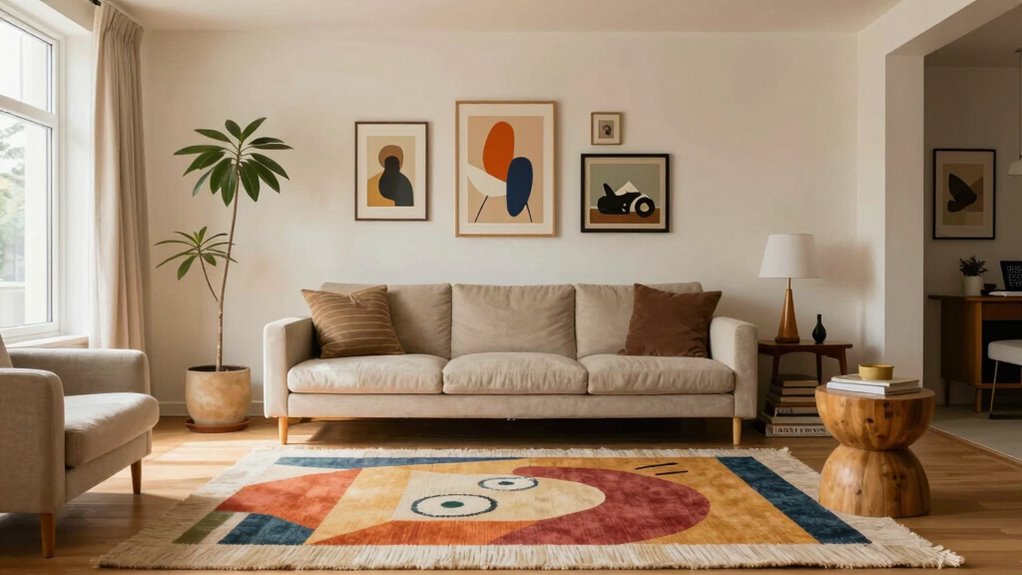
Have you ever felt that a room looks off or uninviting because certain elements seem out of place? To fix this, start with lighting techniques—use a mix of ambient, task, and accent lighting to create a balanced glow that highlights key features. Proper artwork placement also makes a big difference; hang pieces at eye level and group them thoughtfully to distribute visual weight evenly. Avoid overcrowding one side of the room or placing large furniture against just one wall. Instead, balance heavier elements with smaller accessories or lighting fixtures. Small adjustments like repositioning lamps or rearranging artwork can dramatically improve harmony. Remember, your goal is to create a cohesive space where every element complements the others, making your room feel inviting and well-balanced.
Real Homes With Perfect Visual Balance: and What You Can Learn From Them

Looking at real homes with perfect visual balance offers valuable insights into how thoughtful design can transform a space. Notice how they use lighting effects to highlight focal points, creating harmony and depth. Observe how furniture placement is carefully arranged:
- Heavy pieces are balanced with lighter accents to prevent visual weight overload.
- Symmetrical layouts draw attention evenly across the room.
- Plants or art are strategically placed to anchor the space and guide your eye naturally.
These homes don’t rely on clutter or randomness; every element contributes to a cohesive flow. By paying attention to lighting effects and furniture placement, you can create a balanced environment that feels inviting and well-composed. These real-world examples show what’s possible when visual balance is thoughtfully achieved.
Troubleshooting Common Balance Problems in Your Home
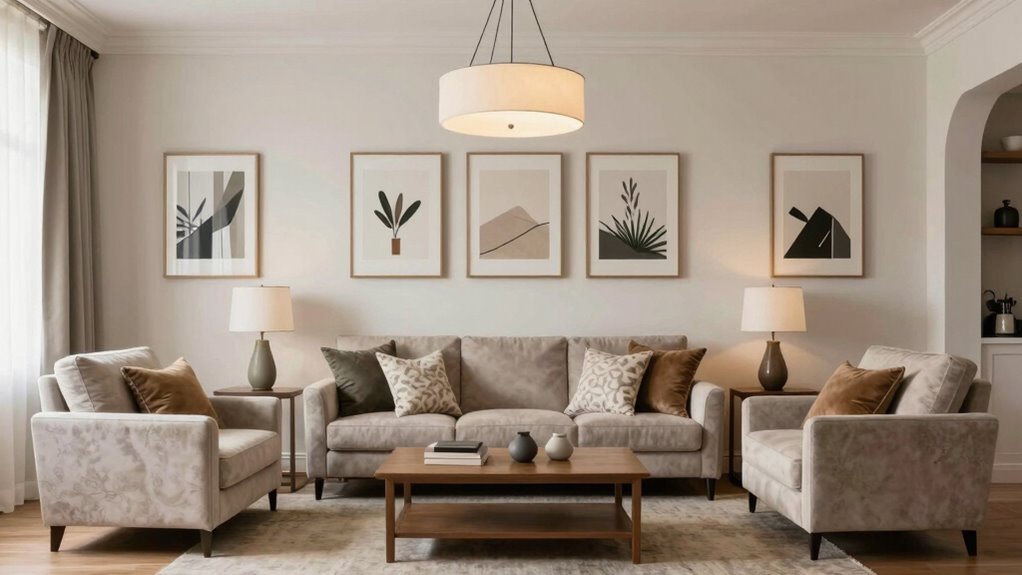
Balancing a room can be challenging, especially when certain elements dominate or feel out of place. To troubleshoot common balance problems, start by evaluating the room’s Feng Shui principles—ensure furniture placement promotes flow and harmony. Use symmetry techniques, like mirroring objects on either side of a central point, to create visual stability. If a heavy piece feels overpowering, balance it with lighter accessories or plants nearby. Avoid clutter that disrupts the room’s equilibrium, and consider repositioning dominant items to achieve better harmony. Pay attention to visual weight: larger, darker items tend to draw attention, so offset them with smaller, brighter accents. Additionally, understanding the role of visual weight can help you better understand how different elements influence the room’s overall balance. Incorporating paint application techniques can also enhance the room’s aesthetic by emphasizing focal points and creating depth. Using reflective surfaces or incorporating floating on water concepts, such as open, airy arrangements, can add a sense of lightness and serenity to the space. Exploring furniture placement strategies rooted in design principles can further improve harmony. Small adjustments with these strategies can profoundly improve your room’s overall balance and flow.
Frequently Asked Questions
Can Small Spaces Achieve Visual Balance Effectively?
Yes, small spaces can achieve visual balance effectively by paying attention to scale proportion and color harmony. You should choose furniture and decor that fit the room’s size, avoiding overcrowding. Use a consistent color palette to create unity, and balance larger pieces with smaller accents. These techniques help create a sense of harmony, making even tiny rooms feel well-designed and welcoming without overwhelming the space.
How Does Lighting Influence Visual Balance in a Room?
Lighting can make or break your room’s visual balance, so don’t overlook its power. You see, lighting effects and shadow play create depth and harmony, guiding your eye smoothly across the space. Well-placed lighting highlights focal points and balances dark corners, preventing chaos. By controlling light sources, you guarantee your room feels cohesive and inviting, proving that a little light goes a long way in achieving perfect visual balance.
Is Minimalism Better for Achieving Balance Than Clutter?
Minimalism is better for achieving balance because it simplifies furniture arrangement and enhances color coordination. By reducing clutter, you create a clean, harmonious space that feels more organized and visually appealing. Carefully selecting essential furniture pieces and sticking to a cohesive color palette prevents chaos. This deliberate approach helps you maintain a balanced room, making it easier to focus on the overall aesthetic without the distraction of unnecessary items.
How Do Personal Tastes Affect Visual Balance Principles?
Your personal tastes truly shape visual balance in your home, making it feel uniquely yours. If you love bold colors, you might prefer asymmetry for excitement, while subtle shades call for harmony. Color preferences influence how you perceive balance, and your style choices can turn an ordinary space into a masterpiece. Trust your instincts—your home should reflect what you love most, even if it defies traditional rules.
Can Outdoor Elements Impact Indoor Visual Harmony?
Outdoor elements like outdoor decor and garden layouts can profoundly impact indoor visual harmony. When your outdoor space complements your home’s interior style, it creates a seamless flow that enhances overall balance. Incorporate outdoor decor that echoes inside colors or textures, and design garden layouts that mirror interior proportions. This connection fosters a harmonious environment, making your home feel more unified and visually appealing from both inside and out.
Conclusion
So, next time your living room feels off, remember—visual balance isn’t just a fancy term; it’s the secret sauce for a home that actually feels good. Skip the chaos, embrace harmony, and watch your space transform from “meh” to “wow.” Who knew that a little attention to scale, color, and placement could make such a difference? After all, your home deserves to look as balanced as your life *pretends* to be.