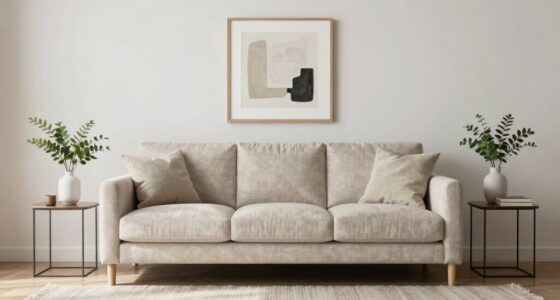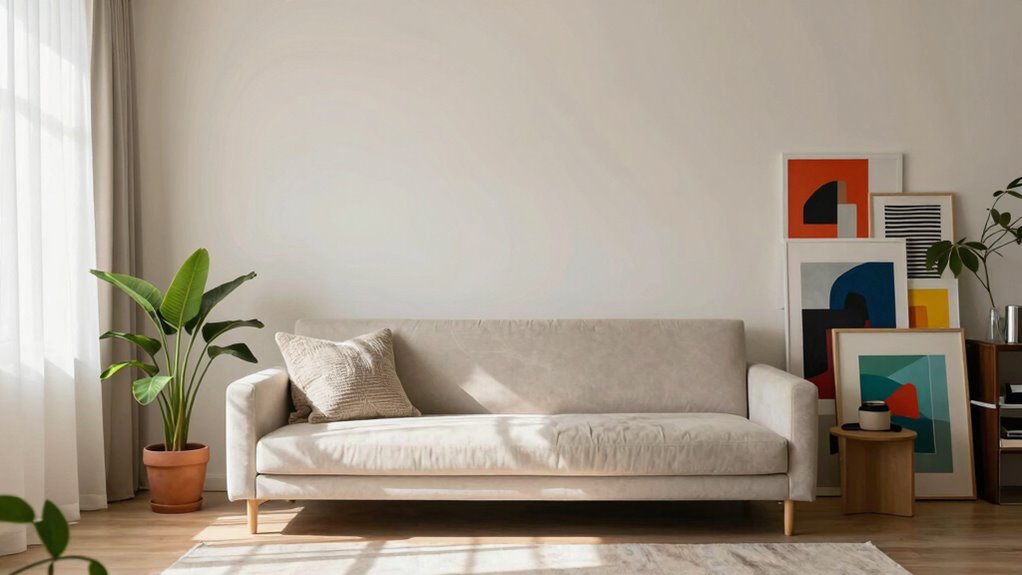

A home feels calm when you use cohesive, soft colors, keep surfaces clutter-free, and balance your lighting and furnishings to create a harmonious atmosphere. Minimizing clutter helps prevent visual noise, while consistent color schemes guide the eye smoothly through the space. Good lighting and thoughtful design elements add warmth and tranquility. Pay attention to these details, and you’ll create a peaceful environment where your mind can relax—there’s more to discover to make your space even more calming.

Get furniture and decor delivered free — and shop member deals
- Fast, free delivery on millions of items
- Access to Prime Big Deal Days deals on October 6–7
- Prime Video, Amazon Music and more included
Key Takeaways
- Use a cohesive, neutral color palette to create unity and prevent visual overstimulation.
- Maintain clutter-free surfaces and organized storage to promote a sense of calm.
- Incorporate soft, warm lighting to enhance tranquility and visual comfort.
- Ensure visual balance by evenly distributing design elements throughout the space.
- Focus on small details and thoughtful arrangements to foster harmony and serenity.
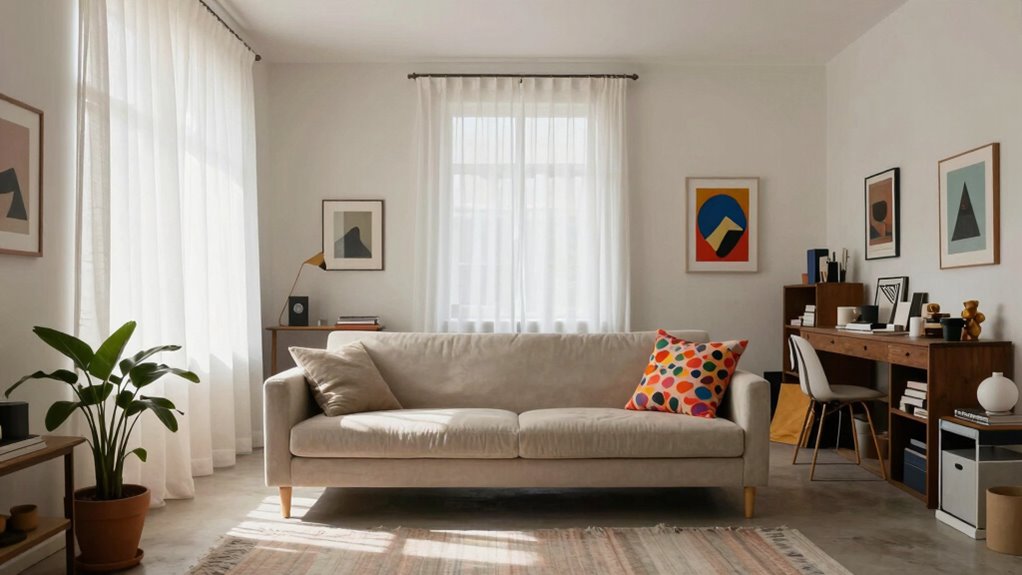
Have you ever walked into two homes and felt instantly at ease in one, yet overwhelmed in the other? It’s a subtle difference, often rooted in how the space is organized and designed. When a home feels calm and inviting, it’s usually because of thoughtful choices in color harmony and clutter reduction. You might not even realize it, but these elements work together to create a sense of balance that soothes your mind and eyes.
Color harmony plays a major role in setting a peaceful tone. When colors complement each other well, your eye isn’t constantly darting around trying to find a focal point or make sense of conflicting hues. Soft, neutral tones like beige, gray, or pastels tend to promote calm, especially when used consistently across walls, furniture, and decor. Conversely, a room filled with jarring or clashing colors can create visual noise that leaves you feeling overstimulated. You want your home to have a cohesive palette that flows naturally, guiding your eye smoothly from one area to another. This doesn’t mean everything has to be monochrome, but choosing colors that work together creates a sense of unity and tranquility.
Clutter reduction is equally essential. When surfaces are clear and storage spaces are well-organized, your mind naturally feels more at ease. Clutter acts like visual noise, making it harder to relax and focus. If your space is packed with miscellaneous items, it’s easy to feel overwhelmed, even if the colors are calming. You can start by decluttering regularly, keeping only what you truly need or love. Use smart storage solutions to hide away excess belongings, so surfaces remain clean and simple. This doesn’t mean you have to live in a sterile environment, but a clutter-free space makes your home look more orderly and peaceful. Proper organization also plays a crucial role in maintaining this sense of calm and can help prevent clutter from accumulating over time. Incorporating well-designed lighting can also enhance this sense of tranquility by softening shadows and creating a warm, inviting atmosphere. Additionally, paying attention to visual balance ensures that no single area overwhelms the space, which is essential because consistent design elements can further reinforce the feeling of harmony. Creating a harmonious environment involves paying attention to these details, as they significantly influence the overall ambiance of your home. When your environment is visually balanced and free of chaos, your brain perceives it as restful and welcoming. It’s about creating a space where your eye can rest, your mind can breathe, and your spirit feels at home. Remember, it’s the small details—like choosing soothing colors and keeping things tidy—that make a big difference. When you pay attention to these elements, you turn your home into a sanctuary that promotes calmness instead of chaos.
neutral color palette wall paint
As an affiliate, we earn on qualifying purchases.
As an affiliate, we earn on qualifying purchases.
Frequently Asked Questions
How Does Lighting Influence a Home’s Visual Calmness?
Lighting influences your home’s calmness by creating a soothing atmosphere. You should maximize natural light, which brightens spaces softly and lifts your mood, avoiding harsh shadows. Incorporate ambient lighting, like warm lamps or dimmable fixtures, to add gentle illumination without overwhelming the senses. This combination helps your home feel tranquil and inviting, reducing visual clutter and promoting a serene environment that calms your mind and body.
Can Furniture Arrangement Affect the Perception of Clutter?
Your furniture arrangement acts like a well-orchestrated dance, guiding the eye smoothly across the room. When decor placement is intentional and clutter is hidden with smart storage solutions, the space feels serene rather than chaotic. Keep furniture spaced out to avoid overcrowding, and use storage to tuck away unnecessary items. This harmony in layout transforms your home into a tranquil sanctuary, free from the visual noise of clutter.
What Role Do Textures Play in Creating a Calm Environment?
Textures play a essential role in creating a calm environment by fostering material harmony and tactile serenity. You can choose soft, smooth fabrics and natural materials that feel soothing under your fingertips, reducing visual noise. When textures complement each other, they help your space look cohesive and peaceful. Avoid overly busy patterns, and instead, opt for subtle variations that add depth without overwhelming your senses, making your home feel more tranquil.
How Does Color Contrast Impact Visual Busyness?
Color contrast profoundly impacts visual busyness by creating stark differences that draw your eye and create energy or confusion. When you use strong contrasts, it disrupts color harmony and reduces visual balance, making a space feel busier. To achieve calmness, opt for subtle contrasts and harmonious tones that promote a sense of cohesion. This balance helps your eyes rest and creates a peaceful, visually calm environment.
Does the Size of a Room Affect Perceived Calmness?
In a spacious room, architectural symmetry and natural elements like plants or sunlight create a sense of calm, making the space feel open and balanced. When a room is larger, your mind perceives less clutter, reducing busyness. You can easily focus on calming details—like symmetrical furniture arrangements or a view of nature—helping the room feel peaceful. So, the size combined with these design choices directly influences your sense of tranquility.
Conclusion
So, don’t worry if your home feels a bit chaotic now—creating a calm space doesn’t mean everything has to be perfect. It’s about finding balance and embracing your personal style while simplifying clutter. Remember, even small changes, like organizing a shelf or choosing a soothing color, can make a big difference. With patience and a little effort, your home will become a peaceful retreat you love coming back to every day.
Fall Picks
fall essentials
As an affiliate, we earn on qualifying purchases.