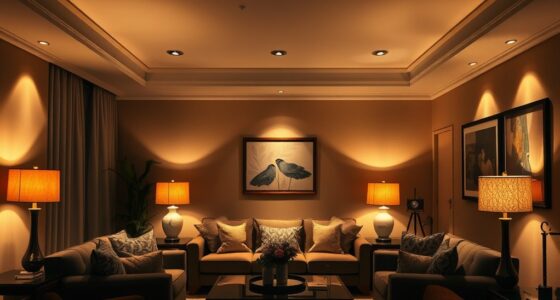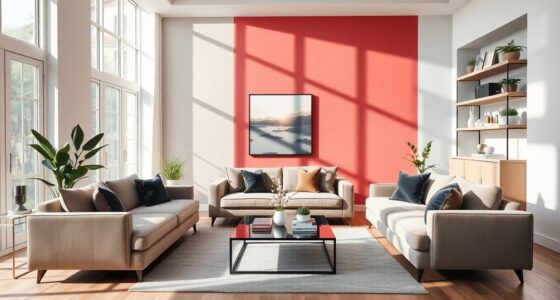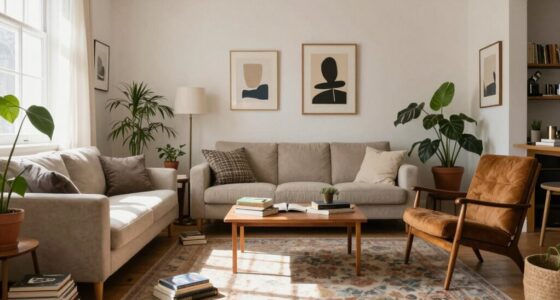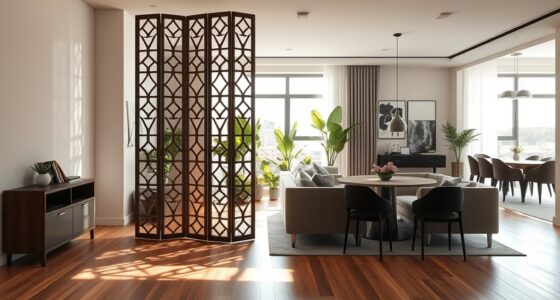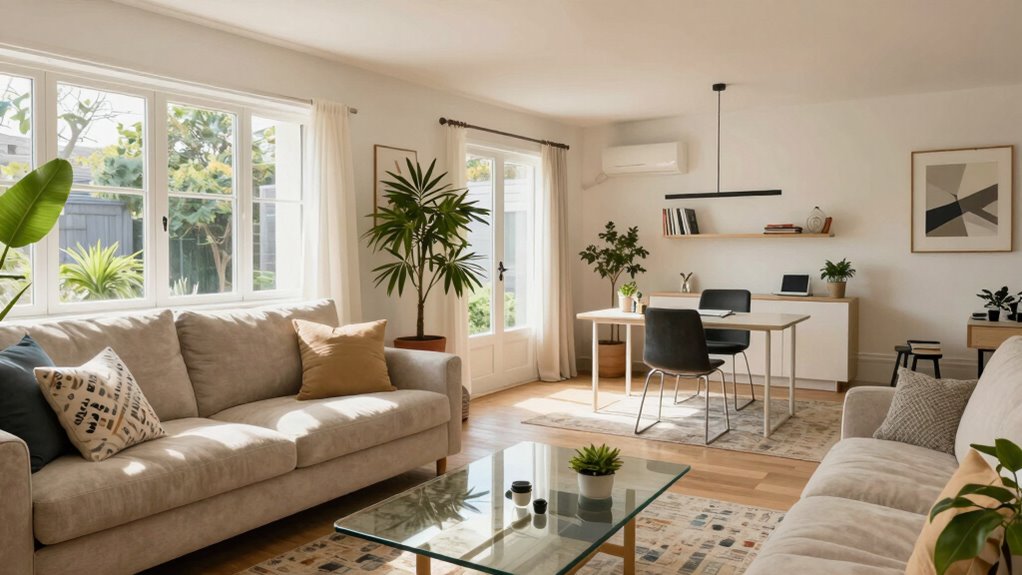

To create better zones in open spaces, use furniture placement to signal different functions, like sofas for lounging or desks for work. Choose distinct color schemes and textures for each area to help visually separate them. Incorporate lighting with varied intensities to strengthen boundaries and set the mood. Incorporate multifunctional pieces that serve both practical and aesthetic purposes, and layer decor with rugs and accessories. Keep exploring how these tips can turn your space into a well-defined, inviting environment.
Key Takeaways
- Use furniture placement and styles to visually define and separate different functional zones.
- Apply distinct color schemes and accent decor to differentiate areas naturally.
- Incorporate varied textures and patterns to create visual cues for each zone.
- Utilize targeted lighting to highlight and delineate specific spaces.
- Balance aesthetics and function by choosing furniture and colors that suit each zone’s purpose.
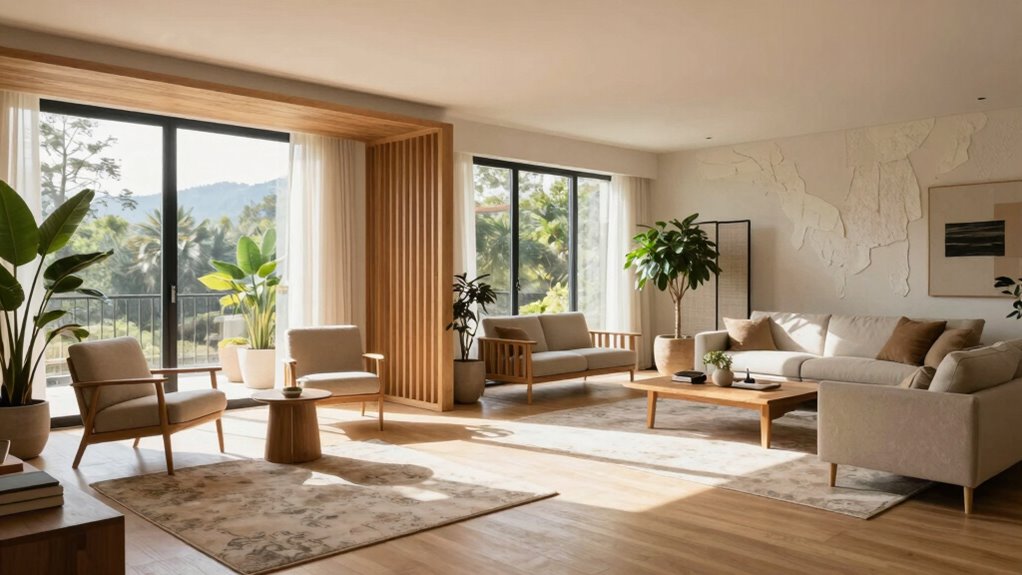
Designing open spaces with distinct zones can transform a generic area into a versatile and welcoming environment. When you carefully consider how to define each zone, you create areas that serve specific functions while maintaining a cohesive overall look. One of the key ways to achieve this is through thoughtful furnishing choices. For example, placing a comfortable sofa and a coffee table can signal a cozy sitting area, perfect for conversations or relaxation. In contrast, a dining zone benefits from a sturdy table and matching chairs that visually set it apart. Using furniture with different styles, heights, or textures helps delineate each space without the need for walls or barriers. You can also incorporate multifunctional pieces, like storage ottomans or fold-away tables, to maximize space and flexibility.
Creating distinct zones with furniture defines function and enhances harmony in open spaces.
Color schemes play an equally vital role in establishing zones that feel intentional and harmonious. By selecting distinct color palettes for each area, you help your eyes naturally differentiate between spaces, even when they share an open layout. For example, you might choose warm, inviting tones such as earthy browns and soft reds in the lounge area to promote relaxation. Meanwhile, cooler shades like blues or greens in a work or study zone can foster focus and calm. Conversely, you can use a consistent color scheme throughout the entire space but vary the hues or intensity to create subtle distinctions. Accent walls, area rugs, or decorative accessories in different colors reinforce the separation and add visual interest. Additionally, understanding how furnishing choices influence space definition can help you craft a more intentional layout. Incorporating visual cues such as varied textures or patterns further enhances the clarity of each zone. Incorporating lighting techniques can also strengthen the boundaries and ambiance of each area.
In the end, creating better zones in open spaces is about balancing function with aesthetics. Your furnishing choices and color schemes should complement each other and reflect how you want to experience each area. By intentionally selecting furniture and colors that define and enhance each zone, you craft a space that’s not only beautiful but also highly practical and inviting. This approach allows your open layout to feel organized, dynamic, and uniquely tailored to your lifestyle, turning a simple open space into a well-designed, versatile environment.

DUMOS 43 Inch Folding Storage Ottoman Bench, Large Ottoman with Storage
- Heavy-Duty Support: Supports up to 660 lbs with sturdy MDF panels
- Comfortable Seating: Thick foam padded cushioned top
- Large Storage Capacity: Holds up to 35 gallons of items
As an affiliate, we earn on qualifying purchases.
As an affiliate, we earn on qualifying purchases.
Frequently Asked Questions
How Can I Maximize Natural Light in Open Concept Zones?
You can maximize natural light in open concept zones by strategically placing decorative screens that don’t block light but add visual interest. Use lighting techniques like placing mirrors opposite windows to reflect sunlight and enhancing brightness. Keep window treatments minimal or light-colored to let in more light. Combining these approaches helps you create a bright, inviting space that feels open yet well-defined, making the most of your natural light.
What Are Affordable Ways to Define Different Areas?
A penny saved is a penny earned, so start by using affordable solutions to define your areas. You can layer area rugs to visually separate spaces without much expense, and decorative screens are a stylish, budget-friendly way to add privacy and create distinct zones. You don’t need costly renovations—smart furniture placement and clever accessories can transform your open space into functional, inviting areas, all while keeping costs low.
How Do I Choose the Right Furniture for Zone Separation?
You should choose furniture that naturally defines each zone through placement and style. Use furniture placement to create clear boundaries, such as a sofa to separate the living area from the dining space. Incorporate decorative accents like rugs, curtains, or screens to enhance separation visually. Opt for versatile pieces that complement the overall design, ensuring each zone feels distinct yet cohesive within the open plan.
Can Color Schemes Help Distinguish Zones Effectively?
Imagine walking through your space, each zone whispering its own story. Yes, color schemes can effectively distinguish zones; paint accents in shades rooted in color psychology to evoke specific moods. Use warm tones for inviting dining areas and cool hues for calming lounges. This visual cue guides your eye effortlessly, creating a sense of order and harmony while making each zone feel intentional and cozy.
How Do I Ensure Privacy Without Losing Openness?
You can guarantee privacy without losing openness by using privacy screens and acoustic panels strategically. Privacy screens create visual separation without blocking light, while acoustic panels reduce noise, making each zone more private and comfortable. Place these elements thoughtfully around seating areas or workspaces to maintain an open feel while still offering personal space. This approach balances openness with privacy, enhancing functionality without sacrificing the airy atmosphere.
Conclusion
By thoughtfully creating distinct zones, you turn your open space into a well-orchestrated symphony rather than a noisy crowd. Use rugs, furniture, and lighting to carve out areas that serve different functions, making your home feel both spacious and cozy. Remember, a well-zoned space is like a good playlist—every part plays its role perfectly, creating harmony and flow. With a little planning, your open concept can become a beautiful dance floor for everyday life.