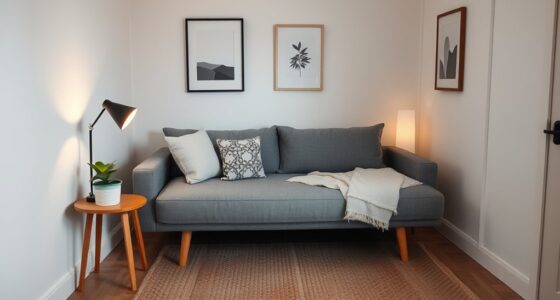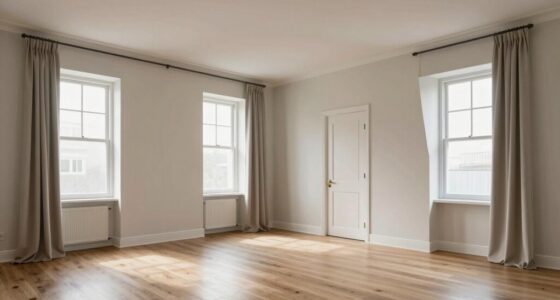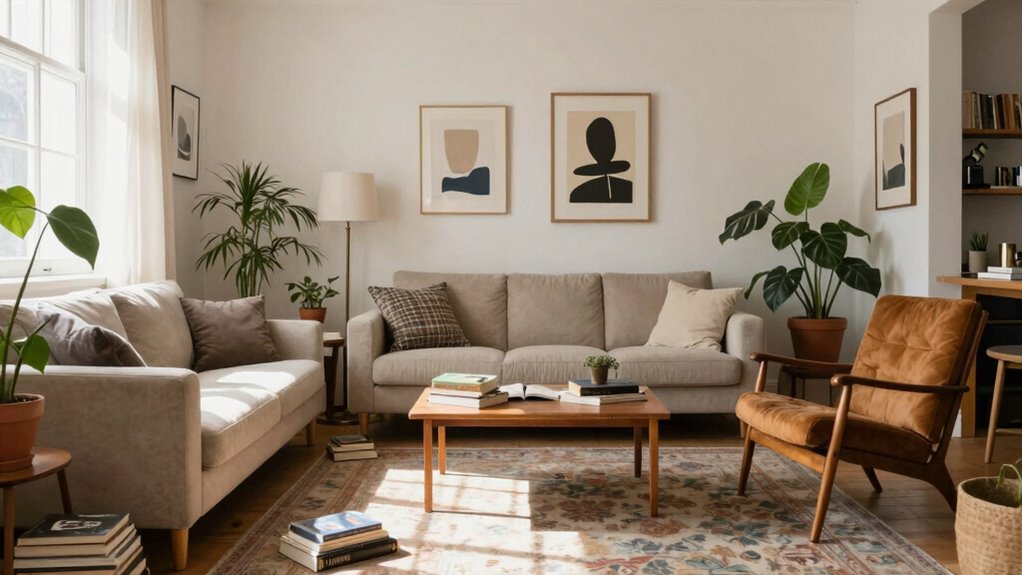

If your room lacks an obvious focal point, start by creating one with strategic furniture placement that guides the eye toward a natural area, like a fireplace or window. Incorporate bold colors or artwork to draw attention, and use lighting to highlight key spots. Add decorative objects thoughtfully to create interest, while keeping the layout simple and balanced. Explore these techniques further to transform your space into a visually appealing room with a clear focus.

Get furniture and decor delivered free — and shop member deals
- Fast, free delivery on millions of items
- Access to Prime Big Deal Days deals on October 6–7
- Prime Video, Amazon Music and more included
Key Takeaways
- Create a designated focal point by adding a statement piece like artwork, a fireplace, or an accent wall.
- Arrange furniture to naturally direct attention toward a specific area or feature.
- Use bold colors or contrasting accessories around a central element to draw focus.
- Incorporate strategic lighting such as spotlights or lamps to highlight a particular zone.
- Keep the layout simple and balanced, removing clutter to allow natural visual anchors to emerge.
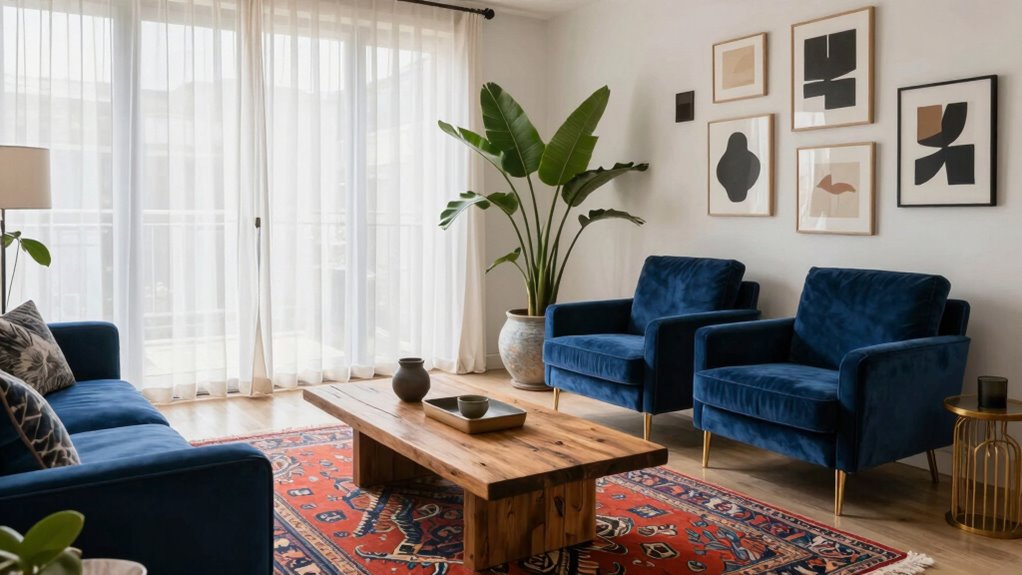
When a room lacks an obvious focal point, it can feel unbalanced and visually confusing. You might notice that your eyes move aimlessly across the space without settling on anything in particular. To fix this, start by creating a clear visual anchor. One effective way is through deliberate furniture arrangement. Position your main pieces—like the sofa, coffee table, or bed—in a way that naturally directs attention. For instance, arranging seating to face a fireplace or a large window immediately draws the eye to that area. Keep the furniture proportionate to the room’s size, avoiding clutter that distracts or dilutes the focal area.
Color coordination also plays a crucial role in establishing a visual center. Use color intentionally to highlight a specific part of the room. For example, if you want a particular piece of art or a decorative feature to stand out, choose complementary or contrasting colors around it. You could paint an accent wall behind a key piece of furniture or add bold accessories that match or complement that element. Bright, vibrant colors naturally attract attention, so consider incorporating these into pillows, rugs, or curtains near your focal point. Additionally, incorporating visual balance helps ensure your space feels cohesive and inviting, making it easier for you to relax and enjoy the environment you’ve created.
To further enhance the room’s balance, think about lighting. Proper lighting can emphasize your focal area and create a cozy ambiance. Use a combination of ambient, task, and accent lighting to highlight specific zones or features. A well-placed lamp or spotlight can make a particular corner or decorative element pop, guiding your eye directly to the intended focal point.
In addition to furniture and color, accessories matter. Strategically placing artwork, mirrors, or decorative objects can help draw attention. For example, a large mirror opposite a window not only reflects light but also creates a natural point of interest. Similarly, a statement piece of art on an empty wall can serve as an instant visual anchor. Thoughtful placement of decorative objects can also enhance the overall harmony of the space.
Lastly, keep the overall layout simple and intentional. Avoid overcrowding the space with too many competing elements. By thoughtfully arranging furniture, coordinating colors to highlight key features, and using lighting and accessories effectively, you’ll transform a confusing, unbalanced room into one with a clear, inviting focal point.
statement wall art for living room
As an affiliate, we earn on qualifying purchases.
As an affiliate, we earn on qualifying purchases.
Frequently Asked Questions
How Can Color Influence the Room’s Focus?
Color influences your room’s focus through color psychology and contrast. Bright, bold hues draw attention and create a focal point, while softer shades recede into the background. Using color contrast—like pairing a vibrant wall with neutral furniture—directs the eye naturally to specific areas. You can emphasize a feature or create balance by strategically choosing colors, making the room feel cohesive and intentionally designed, even without an obvious focal point.
Should I Add a Statement Piece or Keep It Minimal?
A statement piece can transform a room, especially if you prefer a minimalist approach. Did you know that 60% of people find a room more inviting when it has a focal point? Adding one bold item, like a vibrant artwork or unique furniture, draws attention without overwhelming the space. If you like simplicity, keep it minimal—just make sure your statement piece has enough impact to serve as a focal point and guide the eye.
How Do Furniture Arrangements Affect the Focal Point?
Furniture placement plays a crucial role in creating focal emphasis in your room. By arranging furniture around a central piece or in a way that naturally guides the eye, you establish a clear focal point. Strategic placement, like positioning a sofa to face a fireplace or artwork, directs attention and enhances the room’s overall harmony. Thoughtful furniture arrangement guarantees the space feels intentional, balanced, and visually appealing.
Can Artwork Help Create a Visual Anchor?
Yes, artwork can definitely create a visual anchor. By choosing a striking piece, you draw the eye instantly. Pair it with decorative accessories and consider wall treatments like bold paint or textured wallpaper to enhance the focus. Think of the artwork as the cherry on top—it ties all elements together and pulls the room into harmony, turning a scattered space into a cohesive, inviting environment.
What Lighting Techniques Highlight Specific Areas?
You should use a combination of ambient lighting and accent illumination to highlight specific areas. Start with soft ambient lighting to set a warm, even glow across the room. Then, add accent lights like spotlights or track lighting to draw attention to focal points such as artwork or architectural features. This layered approach creates visual interest, guides the eye, and emphasizes key areas, making the room feel more cohesive and inviting.
Conclusion
So, when a room feels empty of focus, remember that absence can be a canvas for creativity. Instead of stressing over a missing focal point, embrace the space’s potential—like silence that makes music richer. Sometimes, the emptiness invites you to find your own meaning, turning an overlooked room into a sanctuary of possibilities. After all, it’s not about what’s missing, but what you choose to create within that openness.
Fall Picks
fall essentials
As an affiliate, we earn on qualifying purchases.