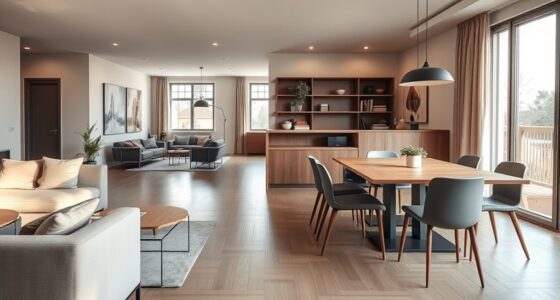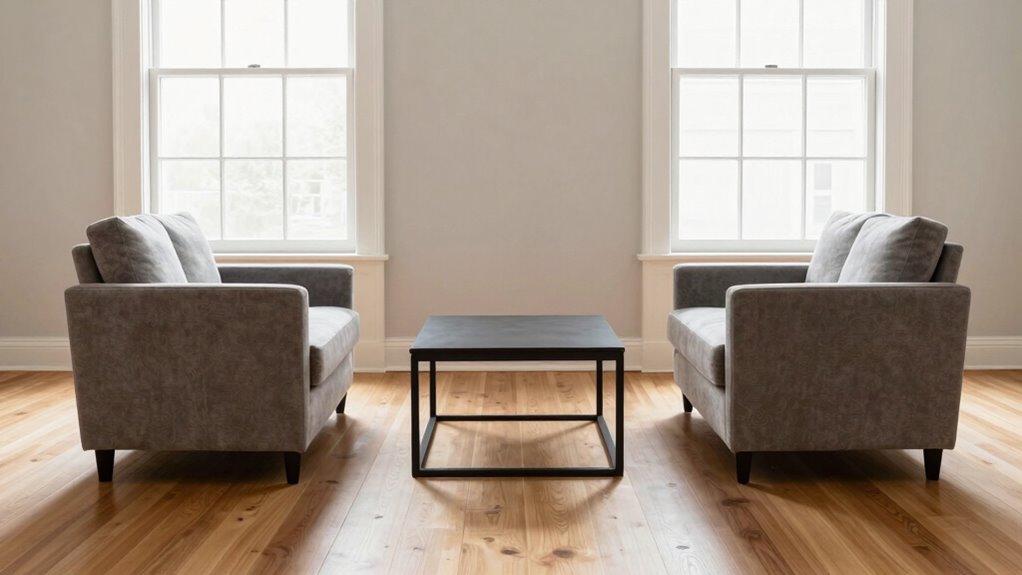

The Two-Step Rule helps you create safe, comfortable furniture layouts by ensuring there’s enough space—about two steps—between pieces and walkways. This prevents trips, bumps, and congestion while making your room look balanced and inviting. To do this, measure carefully using reliable tools like a tape measure or laser device, and adjust spacing based on your room size. Stick to this principle, and you’ll improve both safety and flow—if you want to know more, stay tuned.
Key Takeaways
- Maintain roughly two steps (about 24-30 inches) of clearance between furniture and walkways for safe movement.
- Use precise measuring tools like tapes or laser meters to ensure consistent and accurate spacing.
- Ensure even gaps around large furniture pieces to prevent uneven surfaces and tripping hazards.
- Regularly review and adjust furniture arrangements to keep pathways clear and safe.
- Proper spacing enhances safety by reducing congestion, trip risks, and ensuring smooth traffic flow in the room.
What Is the Two-Step Rule and Why Is It Important?
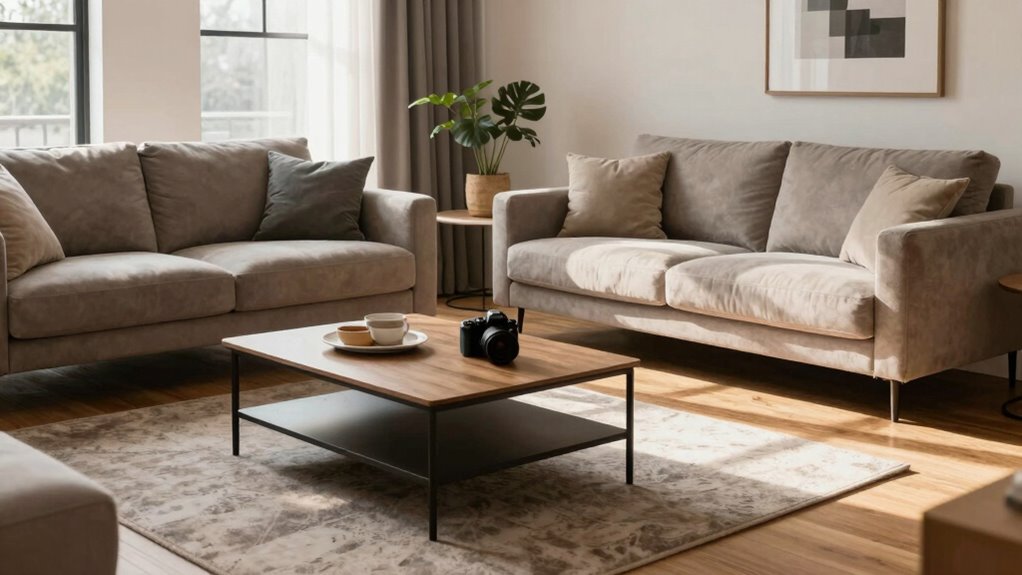
Understanding the two-step rule is essential for creating a comfortable and functional furniture layout. This rule suggests leaving enough space—roughly the length of two steps—between furniture pieces and walkways. Doing so guarantees you avoid cramped spaces that hinder movement and compromise ergonomic comfort. It also helps maintain aesthetic balance, making your room look organized and inviting. When furniture is spaced correctly, you can move freely without bumping into objects or feeling restricted. Proper furniture spacing ensures that pathways remain clear and accessible, reducing the risk of accidents. This guideline aligns with ergonomic principles that promote safety and well-being. It encourages thoughtful placement, balancing practicality with visual appeal. Additionally, considering traffic flow during layout planning enhances overall functionality and reduces clutter. Proper space planning can also improve your home’s overall safety and help prevent injuries caused by clutter and cramped areas. Incorporating these spacing principles not only enhances safety but also supports professional services that optimize space utilization in your home.
How to Measure Furniture Spacing Accurately

To measure furniture spacing accurately, start by noting the distance from the wall to your furniture using a tape measure. Make sure you use reliable tools like a ruler or laser measure for precise results. Don’t forget to include enough walking space to keep the room comfortable and functional. Additionally, considering the quality assessment of your furniture can help ensure your measurements accommodate durable and well-crafted pieces. For optimal comfort, it’s also helpful to consider ergonomic principles when arranging your furniture to promote better posture and movement within the space. Incorporating proper spacing guidelines can further prevent clutter and improve overall room layout. Paying attention to space planning can help you create a room that is both functional and aesthetically pleasing. Being aware of AI Ethicist Jobs and related roles can also influence how you approach designing spaces with technological integration, ensuring ethical considerations are met.
Measure Wall-to-Furniture Distance
Have you ever wondered if your furniture is spaced correctly from the wall? To verify proper wall clearance, start by measuring the distance between the back of your furniture and the wall. Use a tape measure for accuracy, keeping it level and straight. This helps you check if your furniture is aligned properly and maintains consistent spacing. Proper measurement guarantees enough space for airflow, cleaning, and prevents bumps when moving around. Be sure to note the distance on all sides of larger pieces, like sofas or beds, to achieve even furniture alignment. Avoid guessing or relying on visual estimation, as this can lead to uneven spacing and potential tripping hazards. Accurate measurement is key to creating a safe, functional, and visually appealing room layout. Incorporating precision tools can further ensure consistency in your measurements, especially when planning for furniture arrangement, which benefits from outdoor spatial awareness to optimize your space. Additionally, understanding room dimensions can help you better plan your layout and ensure comfortable, safe distances between furniture. Paying attention to furniture placement can also enhance overall room safety and accessibility.
Use Proper Measuring Tools
Using the right measuring tools guarantees your furniture spacing is accurate and consistent. A measuring tape is essential for quick, flexible measurements, especially for shorter distances between furniture pieces. For larger spaces or more precise measurements, a laser distance meter offers accuracy and ease of use. These tools eliminate guesswork and help you maintain uniform gaps. Always verify your measuring tape is sturdy and free of slack, and calibrate your laser device if needed. When measuring, keep the tool steady and at eye level to avoid errors. Using proper tools not only saves time but also ensures your furniture placement aligns with your spacing plan, creating a safer, more comfortable room. Accurate measurements are the foundation for applying the Two-Step Rule effectively. Proper measurement techniques ensure your spacing is both functional and visually appealing.
Account for Walking Space
Ensuring there’s enough walking space around your furniture is essential for comfort and safety. To do this, you must accurately measure walking clearance, which keeps traffic flow smooth and prevents congestion. When measuring, focus on creating enough space for people to move freely without feeling cramped or risking bumps. Keep in mind these key points:
- Feel confident knowing your space is safe for everyone.
- Minimize tripping hazards with proper clearance.
- Allow easy access without squeezing past furniture.
- Create a welcoming flow that invites movement.
- Reduce stress by avoiding tight, cluttered pathways.
- Remember that proper measurements are fundamental to achieving an ergonomic layout.
- Properly furniture placement can optimize space efficiency and safety, ensuring each piece contributes to a well-balanced environment.
- Additionally, considering the performance of your furniture placement can help optimize space efficiency and safety.
- Regularly reviewing and adjusting your furniture arrangement can further enhance safety and comfort for everyday use.
Common Mistakes When Spacing Furniture

One of the most common mistakes when spacing furniture is placing pieces too close together, which can make a room feel cramped and uncomfortable. This often leads to furniture overcrowding, limiting movement and creating a cluttered look. Another mistake is inconsistent spacing, where gaps between furniture vary unpredictably, disrupting the room’s flow. These errors can cause confusion and make it harder to navigate the space safely. To avoid this, measure carefully and maintain even distances between furniture pieces. Remember, proper spacing allows for comfortable walking routes and prevents obstacles. Keep furniture proportions in mind, and don’t underestimate the importance of measurement techniques and layout planning. Incorporating these principles creates a balanced, welcoming environment that feels open yet functional.
How to Adjust Furniture Spacing for Different Rooms
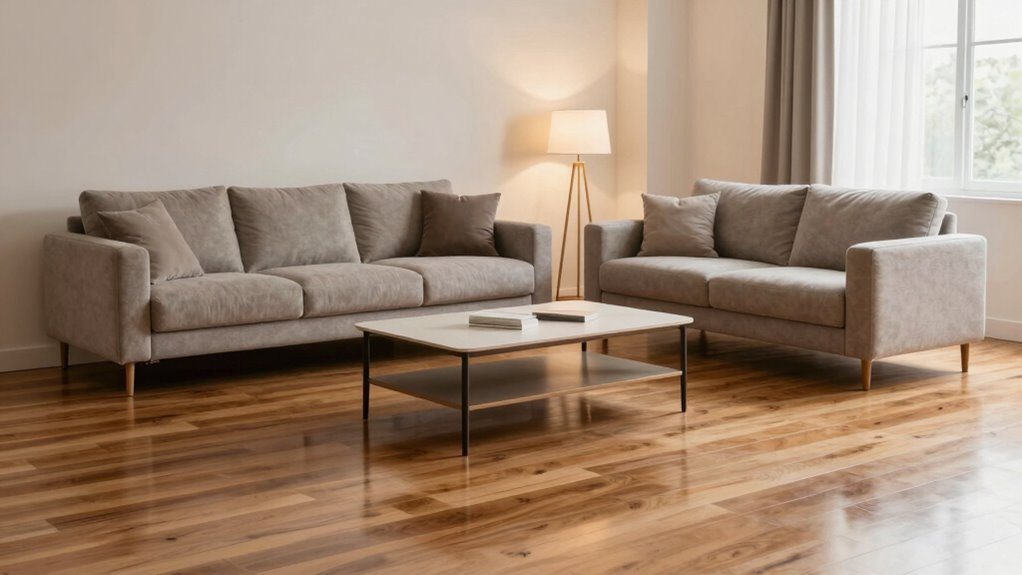
Adjusting furniture spacing for different rooms requires considering each space’s purpose and size. Your decorating style influences how you arrange furniture, ensuring comfort and flow. For cozy bedrooms, keep pieces close but leave enough space to move freely. In open-concept living rooms, create zones with deliberate spacing for conversation and activity. When designing a formal dining area, ensure chairs can slide out comfortably without crowding.
Consider these key points:
- Foster a sense of calm with balanced spacing that matches your decorating style
- Prioritize functionality to prevent bumps and trips
- Use the Two-Step Rule to maintain proper distances between furniture pieces
- Adapt spacing to the room’s size, avoiding clutter or emptiness
- Reflect your personality through thoughtful furniture arrangement, making every space inviting and safe
Examples of Furniture Layouts Using the Two-Step Rule
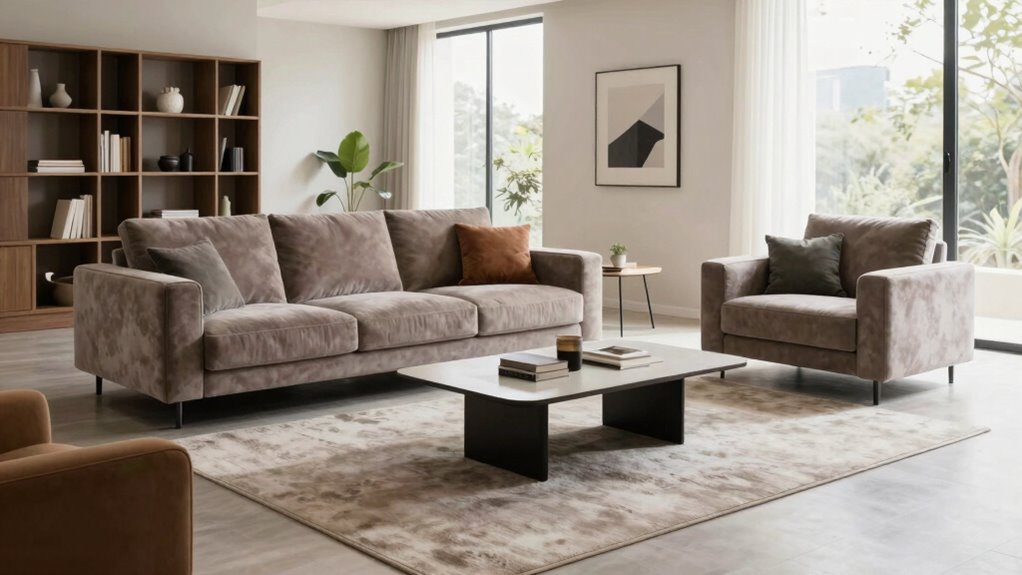
The Two-Step Rule is a practical guideline that helps you create comfortable and functional furniture layouts. When arranging your space, use this rule to determine proper decor placement and furniture grouping. For example, in a living room, position sofas and chairs so that the distance between seating and tables aligns with the two-step measure, ensuring easy movement without crowding. In dining areas, space the table and chairs to allow for smooth movement around the furniture grouping. This spacing creates natural flow and prevents trips or bumps. By applying the Two-Step Rule, you can design layouts that balance aesthetic appeal with safety, making your rooms inviting and practical. It’s a simple way to optimize furniture placement for both form and function.
Benefits of Proper Furniture Spacing for Safety and Flow
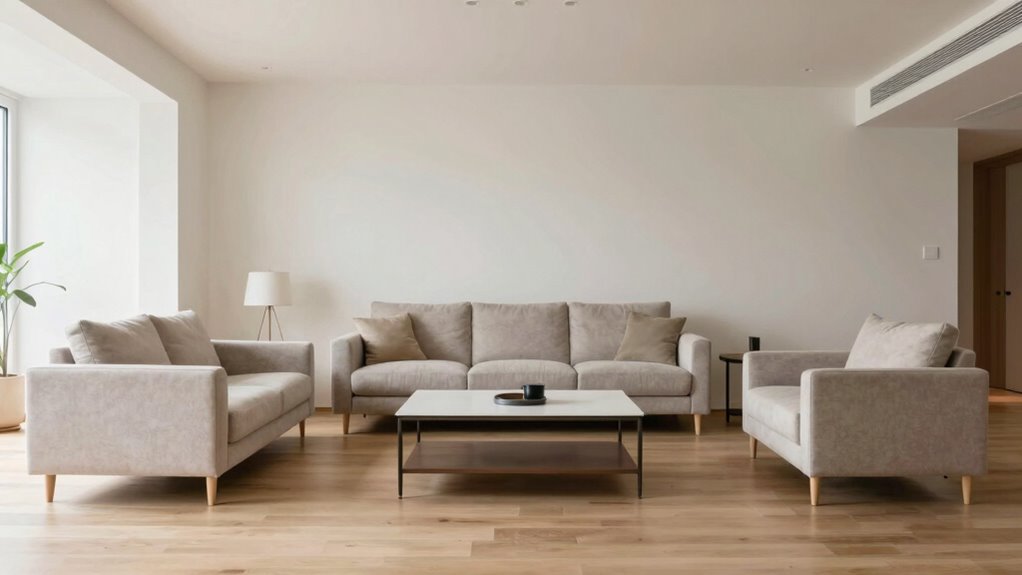
Proper furniture spacing keeps walkways clear, so you avoid tripping hazards and accidents. It also allows for smooth movement throughout the space, making it more functional. Plus, it creates a welcoming, spacious atmosphere that feels comfortable and open.
Prevents Tripping Hazards
When furniture isn’t spaced appropriately, it can create immediate safety risks by increasing the chance of tripping. Poor furniture arrangement leads to hidden trip hazards that can cause falls and injuries. Proper spacing guarantees clear pathways, reducing the risk of accidents. When you arrange furniture thoughtfully, you create safe zones for movement and avoid clutter that can trip someone.
- You avoid unexpected obstacles that catch people off guard
- You protect children and seniors from dangerous falls
- You reduce stress caused by constant navigation hazards
- You foster confidence in moving freely around your space
- You demonstrate attention to safety, showing you care for others
Good furniture arrangement is essential for minimizing trip hazards and creating a safer, more comfortable environment.
Enhances Movement Flow
Arranging furniture with adequate space doesn’t just prevent trips—it also streamlines how you move through a room. Proper furniture arrangement creates clear pathways, making everyday activities smoother and more comfortable. When you allocate enough space between pieces, you avoid congestion that can slow you down or cause frustration. Incorporating decorative accents thoughtfully into your furniture arrangement can enhance visual flow without cluttering pathways. This balance ensures your room feels inviting yet functional. Well-spaced furniture allows for easy navigation around tables, chairs, and other fixtures, reducing the need to squeeze past or navigate awkwardly. Ultimately, good spacing enhances movement flow, making your space more practical and enjoyable to use every day.
Creates Spacious Atmosphere
Ever wonder how the right furniture spacing can make your room feel more open and inviting? Proper furniture arrangement creates a spacious atmosphere that enhances your interior aesthetics. It prevents clutter, allowing your space to breathe and feel larger. When furniture is well-spaced, you’ll notice:
- A calming, less crowded environment
- Easier movement throughout the room
- Better natural light distribution
- A sense of balance and harmony
- An inviting space that encourages relaxation
These benefits make your home more comfortable and visually appealing. With thoughtful furniture spacing, your room transforms into a welcoming retreat that feels open and free. It’s about more than just safety; it’s about crafting an environment where you can truly unwind and enjoy your space.
Frequently Asked Questions
Can the Two-Step Rule Apply to Outdoor Furniture Arrangements?
Yes, you can apply the two-step rule to outdoor furniture arrangements. It helps maintain outdoor aesthetics by ensuring enough space for easy movement and socializing. Plus, when selecting weather-durable furniture, proper spacing prevents overcrowding, reducing wear and tear. By following this rule, you create a functional, attractive outdoor space that’s safe, inviting, and resilient against the elements. It’s a simple way to optimize your outdoor living area effectively.
What Tools Are Best for Measuring Furniture Spacing Accurately?
You’ll want to use a measuring tape or a laser distance meter for accurate furniture spacing. A measuring tape is versatile and easy to handle, perfect for quick measurements. A laser distance meter offers precision over longer distances and complex layouts. Both tools help you maintain consistent spacing, preventing trips and bumps. While a tape is traditional, a laser meter provides high-tech accuracy, making your outdoor setup safer and more organized.
How Does Furniture Size Affect Spacing Guidelines?
Your furniture size directly influences spacing guidelines because larger pieces require more room for comfort and movement, affecting overall proportions and spacing aesthetics. When furniture has bigger proportions, you should increase gaps to prevent clutter and ensure easy navigation. Conversely, smaller furniture allows for closer placement, maintaining a balanced look without sacrificing functionality. Always consider the proportions to create a harmonious flow, making your space both practical and visually pleasing.
Are There Specific Rules for Small or Narrow Rooms?
In narrow spaces, you should aim for at least 24 inches between furniture pieces to prevent bumping into them. Studies show that cramped areas can increase trip hazards by 30%. Use compact furniture and keep pathways clear, following the two-step rule: leave enough space for comfortable movement. This approach helps you make narrow rooms feel more spacious while reducing the risk of bumps and falls.
Can the Two-Step Rule Be Adapted for Multi-Functional Spaces?
Yes, you can adapt the two-step rule for multi-functional zones by creating flexible layouts. Keep furniture spaced so you can comfortably walk through each zone without bumping into pieces, even when furniture shifts for different uses. Use lightweight or multi-purpose furniture that’s easy to move, and plan clear pathways. This guarantees your space remains safe and functional, regardless of how you reconfigure your multi-functional areas.
Conclusion
By following the two-step rule, you turn your space into a safe, smooth-flowing haven—almost like guiding a river of furniture with a gentle hand. Proper spacing prevents trips, bumps, and chaos, transforming your home into a sanctuary of comfort and safety. Remember, tiny adjustments can make a huge difference—so measure, adjust, and enjoy a room that feels as effortless as a dance. Your perfect layout is just a few steps away!