TL;DR

Get furniture and decor delivered free with Prime
- Fast, free delivery on millions of items
- Prime Video, Amazon Music and more included
- Member-only deals all year
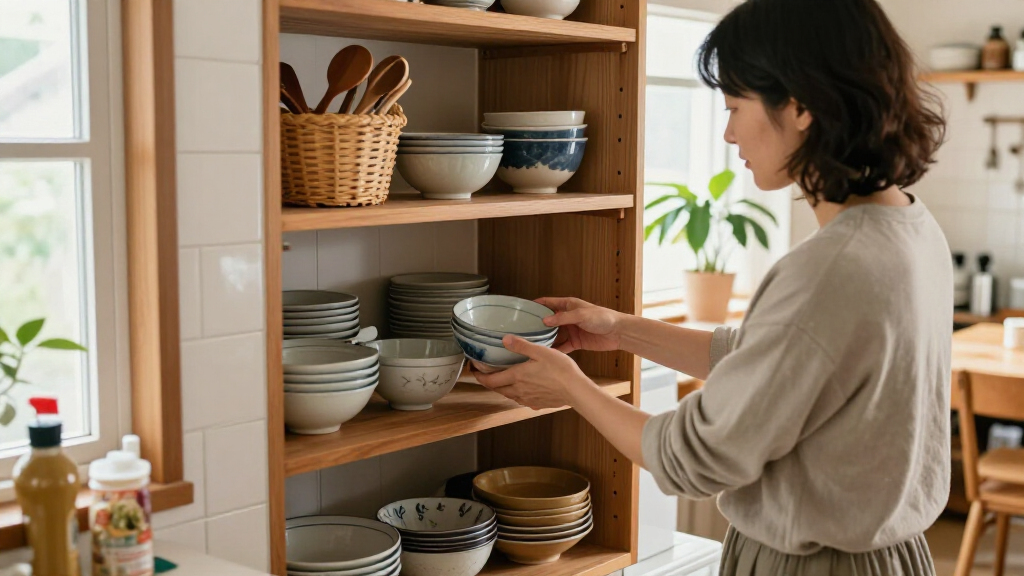
A Livingetc report outlines five storage principles drawn from Japanese kitchens: declutter before buying organizers, match containers to their contents, keep frequently used items easy to reach, choose cookware that can also serve food, and leave counters for useful, presentable objects. The advice is attributed to interior designer Yoko Kloeden and Nakagawa executive vice president Tasuku Ogino; it is practical guidance, not a measured study of Japanese households.
Livingetc has published five kitchen-storage lessons associated with Japanese design, including clearing out unused items before buying organizers and keeping everyday cooking tools within easy reach. The report draws on comments from London-based interior designer Yoko Kloeden and Tasuku Ogino, an executive vice president at Japanese home-goods company Nakagawa, offering readers practical ideas rather than research findings about all Japanese kitchens.
The first principle is to declutter before adding storage. Kloeden advises taking one shelf at a time and asking what each item is for, rather than responding to crowded cabinets by purchasing more containers. That approach can reveal unused items and may prevent spending money on organizers that do not address the underlying clutter.
The report also recommends choosing containers according to their contents and use. Kloeden says dried goods and tea can be stored in paulownia wood boxes, while clear containers are useful when seeing what is inside matters. Salt and sugar, which can clump, are described as better suited to ceramic jars. For frequently opened ingredients, the report emphasizes a lid that can be operated easily, rather than matching containers for appearance alone.
Two further lessons focus on use and placement. Cookware that can move from cooking to the table can reduce the need to transfer food between vessels, Kloeden says. On counters, she recommends keeping items that are used daily and visually appealing, while storing less attractive packaging away. The report presents this selective approach as a way to balance convenience with a less cluttered appearance.
Storage Choices That Reduce Clutter
The recommendations address a common kitchen problem: storage products can take up space without resolving why cupboards and counters feel crowded. Starting with a review of belongings puts what a household actually uses ahead of buying more equipment. It also makes the next decisions—what to keep visible, what to contain, and what cookware serves more than one role—more specific.
For readers with limited cabinets or counters, the ideas offer ways to make daily cooking easier without requiring a renovation. Keeping often-used tools accessible can reduce repeated searching, while choosing serving-capable cookware may mean fewer dishes and transfers. Those are practical possibilities described in the report, not quantified outcomes or guarantees; the best arrangement will depend on a household’s habits and available space.
Japanese style kitchen storage containers
As an affiliate, we earn on qualifying purchases.
As an affiliate, we earn on qualifying purchases.
The Advice Behind the Five Lessons
The supplied Livingetc report frames the recommendations as lessons from Japanese kitchen storage and links them to the demands of cooking in compact spaces. Kloeden, whose London architecture and interior design studio blends Japanese aesthetics with natural elements, is the source for most of the specific storage advice. The article does not provide measurements of kitchen sizes or a survey establishing how common each practice is.
Ogino is cited on merihari, translated in the report as deliberate contrast, in connection with keeping counters visually ordered. The report also refers to ichibutsu tayō, or one object with many uses, to explain cookware that stores, reheats, or serves food. These terms are presented as design ideas relevant to the advice, not as rules followed uniformly by Japanese households.
“Before you add storage, take one shelf and ask what each thing on it is for.”
— Yoko Kloeden, interior designer, as quoted by Livingetc
How Widely These Practices Apply
The supplied report does not specify its publication date, cite research, or establish how representative the examples are of kitchens across Japan. Its advice comes primarily from Kloeden’s professional perspective and should be understood as design guidance, not a universal cultural standard. It also does not compare the proposed methods with other storage systems or measure their effects on cost, cooking time, or clutter.
Some material-specific statements, including the properties of paulownia wood and its use for particular stored goods, are presented through Kloeden’s comments; the source provides no independent testing or additional expert review. Readers should also check that any container is suitable for its intended food and conditions rather than assuming that every material works for every ingredient.
Applying the Ideas at Home
The next step for readers is to assess one shelf or work area before changing the kitchen. Identify items used regularly, remove or relocate those that are not needed there, then choose containers based on visibility, handling and the needs of the contents. The report offers no follow-up study or scheduled next development; its suggestions are intended for readers to adapt to their own kitchens.
Before leaving anything on a counter, the report’s two-part test is whether it is used daily and has visual appeal. Cookware choices can be assessed in the same practical way: whether one vessel can safely perform the cooking and serving tasks a household needs. These steps keep the focus on use and available space rather than buying products as a first response.
Key Questions
What are the five kitchen-storage lessons in the report?
Declutter first, choose containers for their function, keep frequently used cooking items convenient, use cookware that can also serve food, and leave counters clear except for useful, presentable items.
Does the report say all Japanese kitchens follow these rules?
No. Livingetc presents the ideas as lessons associated with Japanese kitchen storage and attributes much of the advice to designer Yoko Kloeden. It does not provide evidence that every Japanese household uses these practices.
Why does the advice recommend decluttering before buying organizers?
Reviewing what is already on a shelf can identify items that are not needed. The report argues that this should come before adding storage, which may otherwise take up space without addressing the clutter.
What should stay on a kitchen counter?
Kloeden’s test, as quoted by Livingetc, is whether an item is used daily and has visual presence. The report suggests storing branded packaging and other less attractive items elsewhere.
What does one object, many uses mean in this advice?
The report uses the idea to describe vessels that can serve more than one role, such as cookware that goes from cooking to the table. Kloeden says this can reduce transfers and washing, though the article does not quantify those effects.
Source: rss
Halloween Picks
halloween
As an affiliate, we earn on qualifying purchases.