For most homes, the Winix 5510 is my best overall air purifier for wildfire smoke because it pairs app support with a large-room focus, while the Coway Mighty AP-1512HH is a strong alternative for buyers who value a familiar, straightforward design. For washable-filter convenience, I’d also look at the Levoit Vital 100S-P. The main tradeoffs are room coverage, filtration and odor-control needs, ongoing filter upkeep, and how much noise you’ll tolerate while running a unit continuously. A large advertised room size does not automatically mean fast smoke cleanup, so matching performance to your actual room matters. Read on for the full comparison and picks by buyer type.

Get furniture and decor delivered free with Prime
- Fast, free delivery on millions of items
- Prime Video, Amazon Music and more included
- Member-only deals all year
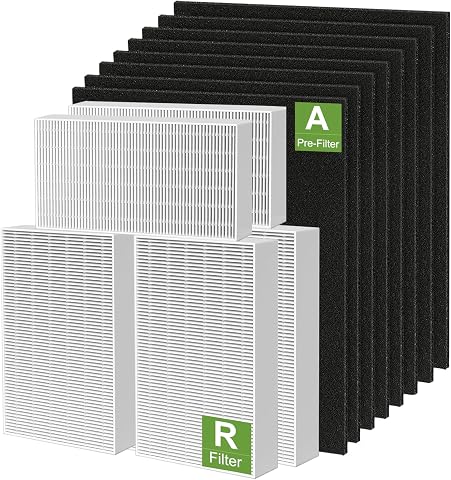
Complete the kit


Key Takeaways
- The Winix 5510 leads for a blend of large-room intent and app support; buyers who want simpler controls may prefer the Coway Mighty instead.
- The Coway Mighty and Levoit Vital 100S-P stand out for more established, practical feature sets; the Levoit’s washable pre-filter is useful for catching larger debris but does not replace its main filter.
- Several picks emphasize broad room coverage, including the WESTHEY AP02 and large Medify models; compare coverage claims carefully against room size and the speed of air cleaning you need.
- Multi-unit bundles such as the two H13 HEPA options and PuroAir 240 two-pack can serve separate rooms; they are less useful if you need one powerful unit in a single large space.
- Filter design and upkeep separate these options as much as smart features do; check replacement availability, cleaning instructions, and whether the product addresses smoke odors as well as particles.
| MOOKA H13 HEPA Air Purifier for Large Rooms, Black |  | Best for Quiet Bedrooms | Model: AP-S0610L | Filtration: Pre-filter, H13 HEPA, activated carbon | Maximum coverage: Up to 1,300 sq. ft. | VIEW ON AMAZON | See Our Full Breakdown |
| MOOKA E-300L H13 HEPA Air Purifier for Large Rooms, Black |  | Best for Large Shared Spaces | Model: E-300L | Filtration: Pre-filter, H13 True HEPA, activated carbon | Maximum coverage: Up to 2,000 sq. ft. | VIEW ON AMAZON | See Our Full Breakdown |
| WESTHEY AP02 H13 HEPA Air Purifier for Rooms up to 1,650 Sq Ft |  | Best for Air-Quality Feedback | Model: AP02 | Filter: H13 HEPA | Particle capture: Manufacturer states 99.98% of 0.3-micron particles | VIEW ON AMAZON | See Our Full Breakdown |
| KNKA APH4000 Air Purifier for Home, Black |  | Best for Smoke-Focused Room Sizing | Model: APH4000 | Smoke/dust/PM2.5 CADR: 226 CFM (384 m³/h) | Pollen CADR: 244 CFM (415 m³/h) | VIEW ON AMAZON | See Our Full Breakdown |
| 2-Pack Air Purifiers with H13 True HEPA Filters |  | Best for Two Separate Rooms | Pack size: 2 air purifiers | Filtration: Pre-filter, H13 True HEPA, activated carbon | Particle capture: Manufacturer states 99.97% of particles as small as 0.3 μm | VIEW ON AMAZON | See Our Full Breakdown |
| AZEUS Air Purifier for Large Rooms |  | Best for Broad, Sensor-Led Coverage | Filtration: 5-in-1 system with pre-filter, HEPA, activated carbon, and ionizer | Particle filtration: Claims 99.97% capture of particles down to 0.3 µm | Coverage: Up to 1,080 sq ft in 45 minutes; 2,160 sq ft in 90 minutes | VIEW ON AMAZON | See Our Full Breakdown |
| SwitchBot Smart Air Purifier for Large Rooms |  | Best for Smart-Home and Pet Households | Coverage: Up to 3,620 sq ft per hour | Bedroom purification: 433 sq ft in 7.2 minutes | Filtration: Three-stage filtration system | VIEW ON AMAZON | See Our Full Breakdown |
| Levoit Vital 100S-P Air Purifier with Washable Pre-Filter |  | Best for Quiet Bedroom Use | Model: Vital 100S-P | Filtration: Three-stage system with washable pre-filter and activated carbon | Maximum floor area: 1,073 sq ft | VIEW ON AMAZON | See Our Full Breakdown |
| Coway Mighty AP-1512HH(W) Air Purifier, White |  | Best for Straightforward Auto and Eco Operation | Model: AP-1512HH(W) | Coverage: Up to 1,748 sq ft in 60 minutes | Filtration: Four-stage system with washable pre-filter, deodorization filter, bipolar device, and HEPA filter | VIEW ON AMAZON | See Our Full Breakdown |
| Winix 5510 Air Purifier with App Support for Large Rooms |  | Best Overall for Large-Room Wildfire Smoke | Model: 5510 | Room coverage: Up to 1,882 sq ft in 1 hour | Filtration: Four-stage system with True HEPA, carbon filter, and washable pre-filter | VIEW ON AMAZON | See Our Full Breakdown |
| Medify MA-40 Air Purifier with H13 HEPA Filter, White |  | Best for Smoke-Sensitive Households | Filter: H13 HEPA | Particle size: Down to 0.1 micron | Particle removal: 99.9% | VIEW ON AMAZON | See Our Full Breakdown |
| Pureborne PB6866 HEPA Air Purifier for Large Rooms, 3-Sided Intake, PM2.5 Sensor, Auto and Sleep Modes, White |  | Best for Very Large Spaces | Filter: Three-layer H13 True HEPA with pre-filter and activated carbon | Particle filtration: Captures 99.97% of micro-particles | Coverage: Up to 3,600 sq ft per hour | VIEW ON AMAZON | See Our Full Breakdown |
| Medify MA-50 Air Purifier with H13 HEPA Filter |  | Best for Higher Airflow | Filter: H13 HEPA | Particle filtration: Down to 0.1 microns | CADR: 598 | VIEW ON AMAZON | See Our Full Breakdown |
| PuroAir 240 HEPA Air Purifier for Home, Black, 2-Pack |  | Best for Two-Room Coverage | Pack size: 2 | Filtration: Pre-filter, HEPA filter, and activated carbon | Pollutant filtration: Up to 99.9% | VIEW ON AMAZON | See Our Full Breakdown |
| Shark NeverChange Air Purifier HP152, Charcoal |  | Best for Low-Maintenance Use | Model: HP152 | Coverage: Up to 650 sq ft in one hour | Particle filtration: Captures 99.98% of particles from 0.1 to 0.2 microns | VIEW ON AMAZON | See Our Full Breakdown |
| air purifier for wildfire smoke | Filtration | Coverage | Model |
|---|---|---|---|
| MOOKA H13 HEPA Air Purifier fo | Pre-filter, H13 HEPA, activated carbon | — | AP-S0610L |
| MOOKA E-300L H13 HEPA Air Puri | Pre-filter, H13 True HEPA, activated carbon | — | E-300L |
| WESTHEY AP02 H13 HEPA Air Puri | — | — | AP02 |
| KNKA APH4000 Air Purifier for | Dual three-stage filters with washable pre-filters, high-efficiency filters, and activated carbon | — | APH4000 |
| 2-Pack Air Purifiers with H13 | Pre-filter, H13 True HEPA, activated carbon | Up to 270 sq. ft. per unit | — |
| AZEUS Air Purifier for Large R | 5-in-1 system with pre-filter, HEPA, activated carbon, and ionizer | Up to 1,080 sq ft in 45 minutes; 2,160 sq ft in 90 minutes | — |
| SwitchBot Smart Air Purifier f | Three-stage filtration system | Up to 3,620 sq ft per hour | — |
| Levoit Vital 100S-P Air Purifi | Three-stage system with washable pre-filter and activated carbon | — | Vital 100S-P |
| Coway Mighty AP-1512HH(W) Air | Four-stage system with washable pre-filter, deodorization filter, bipolar device, and HEPA filter | Up to 1,748 sq ft in 60 minutes | AP-1512HH(W) |
| Winix 5510 Air Purifier with A | Four-stage system with True HEPA, carbon filter, and washable pre-filter | — | 5510 |
| Medify MA-40 Air Purifier with | — | 896 sq ft in 30 minutes; 1,793 sq ft in one hour | — |
| Pureborne PB6866 HEPA Air Puri | — | Up to 3,600 sq ft per hour | — |
| Medify MA-50 Air Purifier with | — | Up to 2,640 sq ft per hour | — |
| PuroAir 240 HEPA Air Purifier | Pre-filter, HEPA filter, and activated carbon | Up to 1,000 sq ft in one hour | — |
| Shark NeverChange Air Purifier | — | Up to 650 sq ft in one hour | HP152 |
More Details on Our Top Picks
MOOKA H13 HEPA Air Purifier for Large Rooms, Black
For wildfire smoke in a bedroom or home office, I’d choose the MOOKA AP-S0610L when low-noise operation and straightforward controls matter more than sensor-driven automation. Its pre-filter, H13 HEPA, and activated carbon combination targets airborne particles and some smoke odors, while the manufacturer lists operation as low as 13 dB. That quiet setting may make it easier to keep the unit running overnight. The key limitation is room sizing: its four air changes per hour are specified for 325 sq. ft., not the full 1,300 sq. ft. headline coverage. Compared with the KNKA APH4000, it has fewer operating modes and no listed real-time air-quality display, but it adds a child lock, night light, and aromatherapy pad. I’d treat it as a focused room purifier, not a whole-home smoke solution.
Pros:- Three-stage filtration includes an H13 HEPA filter and activated carbon for particles and odors.
- Listed noise level starts as low as 13 dB, suited to quiet rooms.
- Child lock, timer settings, and filter replacement reminder simplify routine use.
- Night light and aromatherapy pad provide optional bedroom-oriented features.
Cons:- The four-air-changes-per-hour specification applies to 325 sq. ft., far below the maximum coverage claim.
- No real-time air-quality display or automatic fan adjustment is listed.
- The manufacturer recommends replacement filters, adding an ongoing maintenance requirement.
Best for: People who want a quiet purifier for a bedroom or smaller enclosed room and value simple controls, a child lock, and a night light.
Not ideal for: Buyers expecting frequent smoke-air turnover across a large open-plan area, since the four-air-changes-per-hour figure applies to 325 sq. ft.
- Model:AP-S0610L
- Filtration:Pre-filter, H13 HEPA, activated carbon
- Maximum coverage:Up to 1,300 sq. ft.
- Air changes:4 per hour in 325 sq. ft.
- Noise level:As low as 13 dB
- Fan speeds:3
- Additional features:Aromatherapy pad, night light, child lock, filter replacement reminder
- Ozone:Non-ozone
Our verdict“Choose this MOOKA for a quiet, feature-rich bedroom purifier, but not as your main unit for rapid smoke cleanup across a large room.”
MOOKA E-300L H13 HEPA Air Purifier for Large Rooms, Black
The MOOKA E-300L makes the strongest large-room case in this group when its air-change figures are read alongside its coverage claims. It specifies 6 air changes per hour in 350 sq. ft., 3 in 700 sq. ft., and 2 in 1,000 sq. ft., giving smoke-conscious buyers a clearer guide than a maximum-area number alone. Its H13 True HEPA and activated-carbon stages target particles and odors, while the lights-off option can keep a shared room darker at night. Compared with the MOOKA AP-S0610L, it offers faster stated circulation in a larger room, though its minimum listed noise is 20 dB rather than 13 dB. The 2,000 sq. ft. maximum should not be read as rapid smoke removal: the listed air-change rate falls as room size rises. It also lacks a listed air-quality sensor or auto mode.
Pros:- Three-stage filtration combines a pre-filter, H13 True HEPA, and activated carbon.
- Air-change rates are specified at several room sizes, including 6 per hour in 350 sq. ft.
- Lights-off option, child lock, and timer settings support shared-room use.
- Low-speed power consumption is listed at 16 W.
Cons:- Air changes per hour fall as room size increases, so the 2,000 sq. ft. maximum is not a rapid-cleanup rating.
- No air-quality sensor or automatic fan mode is listed.
- Filter replacement timing relies on the filter indicator rather than a stated fixed interval.
Best for: Households seeking one purifier for a large living area and willing to use the air-change figures to match the unit to the room.
Not ideal for: Buyers who need automatic smoke-responsive fan control or fast air turnover throughout a very large open room.
- Model:E-300L
- Filtration:Pre-filter, H13 True HEPA, activated carbon
- Maximum coverage:Up to 2,000 sq. ft.
- Air changes:6 per hour in 350 sq. ft.; 3 per hour in 700 sq. ft.; 2 per hour in 1,000 sq. ft.
- Noise level:As low as 20 dB
- Power consumption:16 W at low fan speed
- Fan speeds:Low, medium, high
- Controls and safety:2-, 4-, or 8-hour timer, child lock, filter indicator, display lights-off option
- Ozone and UV-C:Non-ozone; does not use UV-C light
Our verdict“Pick the E-300L for a large shared room when its stated air-change rate fits your actual space, not simply because of its maximum coverage figure.”
WESTHEY AP02 H13 HEPA Air Purifier for Rooms up to 1,650 Sq Ft
If I wanted visible feedback while indoor smoke conditions change, the WESTHEY AP02 would be my pick from this batch. Its PM2.5 display uses color indicators, and Auto mode adjusts fan speed based on detected air quality, reducing the need to keep changing settings by hand. The manufacturer states that its H13 HEPA filter captures 99.98% of 0.3-micron particles, while a 360-degree intake draws air from around the unit. Its strongest stated air-change figure is 6 per hour in 275 sq. ft., so the 1,650 sq. ft. maximum is a much slower-use claim, not a guide to quick smoke clearance in that full area. Compared with the MOOKA E-300L, the AP02 adds sensor-based control and a display, but the E-300L provides air-change figures at more room sizes. Filter replacement is recommended every 3–6 months.
Pros:- PM2.5 display with color indicators gives at-a-glance air-quality feedback.
- Auto mode adjusts fan speed based on detected air quality.
- 360-degree intake and H13 HEPA filtration target fine airborne particles.
- Sleep mode is listed as low as 15 dB.
Cons:- Six air changes per hour applies to 275 sq. ft., not the 1,650 sq. ft. maximum.
- Recommended filter replacement every 3–6 months creates recurring maintenance.
- The listed filtration is H13 HEPA; no activated-carbon stage is specified in the product data.
Best for: People in smaller rooms who want a PM2.5 readout and automatic fan changes during variable smoke conditions.
Not ideal for: Buyers who need rapid smoke filtration in a large open-plan room or prefer a clearly stated longer filter interval.
- Model:AP02
- Filter:H13 HEPA
- Particle capture:Manufacturer states 99.98% of 0.3-micron particles
- Coverage area:Up to 1,650 sq. ft.
- Air changes:6 per hour in 275 sq. ft.
- Air intake:360°
- Display and control:PM2.5 display with color indicators; automatic fan mode
- Sleep mode noise:As low as 15 dB
- Filter replacement:Recommended every 3–6 months
Our verdict“Choose the AP02 for sensor feedback and automatic control in a modest-sized room, rather than for fast purification across its maximum stated area.”
KNKA APH4000 Air Purifier for Home, Black
The KNKA APH4000 is the most straightforward choice here for matching a purifier to a smoke-affected room: its stated smoke/dust/PM2.5 CADR is 226 CFM, and it lists 4.8 air changes per hour in 350 sq. ft. That room-specific figure is more useful for wildfire-smoke decisions than a broad maximum-area claim. Dual three-stage filters pair washable pre-filters with high-efficiency filters and activated carbon, so the washable layer can catch larger debris before it reaches the replaceable stages. Auto, Pet, and Eco modes add flexibility, and the real-time AQI display makes air changes visible. Compared with the WESTHEY AP02, it offers a stated smoke CADR and dual filters, though its Sleep Mode is louder at 22–24 dB and the 1,695 sq. ft. figure means only one air change per hour. Filter replacement is recommended every 3–6 months.
Pros:- Smoke/dust/PM2.5 CADR is specified at 226 CFM.
- Provides 4.8 air changes per hour in rooms up to 350 sq. ft.
- Dual filters include washable pre-filters and activated carbon.
- Real-time AQI display and Auto mode help users monitor and respond to changing air.
Cons:- The 1,695 sq. ft. maximum coverage provides only one air change per hour.
- Sleep Mode noise is listed at 22–24 dB, higher than the MOOKA AP-S0610L and WESTHEY AP02 minimums.
- Filter replacement is recommended every 3–6 months.
Best for: Buyers prioritizing stated smoke/PM2.5 CADR, washable pre-filters, and frequent air turnover in a room around 350 sq. ft.
Not ideal for: People relying on the maximum 1,695 sq. ft. figure for frequent smoke removal, or those needing the quietest listed sleep setting.
- Model:APH4000
- Smoke/dust/PM2.5 CADR:226 CFM (384 m³/h)
- Pollen CADR:244 CFM (415 m³/h)
- Room coverage and air changes:Up to 350 sq. ft. at 4.8 air changes per hour; up to 1,695 sq. ft. at 1 air change per hour
- Filtration:Dual three-stage filters with washable pre-filters, high-efficiency filters, and activated carbon
- Modes:Sleep, Auto, Pet, Eco
- Fan speeds:4
- Sleep noise:22–24 dB
- Filter replacement:Recommended every 3–6 months
Our verdict“Choose the APH4000 for a smoke-focused room around 350 sq. ft. where its CADR and 4.8 air changes per hour matter more than maximum-area coverage.”
2-Pack Air Purifiers with H13 True HEPA Filters
For a household that wants to tackle smoke in two closed rooms, I’d favor this two-pack over buying one larger unit and expecting it to clean distant rooms. Each purifier is rated for up to 270 sq. ft., with 360-degree intake and three-stage filtration that includes H13 True HEPA and activated carbon. The manufacturer states 99.97% capture of particles as small as 0.3 μm; that supports fine-particle filtration, while the carbon stage targets some odors. Compared with the KNKA APH4000, these units offer room-by-room placement rather than dual filters and a stated smoke CADR in one machine. The tradeoff is capacity: each unit is intended for a smaller space, and no air-change rate or CADR is provided here to clarify smoke-cleaning speed. Their 2000-hour filter reminder and recommended 3–6-month replacement interval also mean ongoing filter upkeep.
Pros:- Two units allow separate placement in different rooms.
- Three-stage filtration includes H13 True HEPA and activated carbon.
- Manufacturer states capture of 99.97% of particles as small as 0.3 μm.
- Each unit includes a child lock, timer, and quiet sleep mode.
Cons:- Coverage is limited to 270 sq. ft. per unit.
- No CADR or air-change rate is provided in the product data.
- Filter replacement is recommended every 3–6 months.
Best for: Households that need separate compact purifiers for two bedrooms or other enclosed rooms, each no larger than the stated coverage.
Not ideal for: People seeking one high-capacity unit for an open-plan living area or buyers who require a listed CADR or air-change rate to compare smoke-cleaning speed.
- Pack size:2 air purifiers
- Filtration:Pre-filter, H13 True HEPA, activated carbon
- Particle capture:Manufacturer states 99.97% of particles as small as 0.3 μm
- Coverage:Up to 270 sq. ft. per unit
- Air intake:360°
- Sleep mode noise:24 dB
- Controls:3 fan speeds; 2-, 4-, 8-, or 12-hour timer; child lock
- Filter reminder:2,000 hours
- Certifications:ETL Listed, CARB Certified, FCC SDoC compliant
Our verdict“Choose the two-pack to place one compact purifier in each of two smaller rooms, not to clean a large shared space with a single unit.”
AZEUS Air Purifier for Large Rooms
The AZEUS suits buyers who want a purifier to respond to changing air quality across a large shared space. Its HEPA and activated-carbon stages target fine particles such as smoke alongside odors, while the sensor and auto mode can adjust fan speed as conditions change. The stated coverage reaches 2,160 square feet in 90 minutes, so that figure signals broad reach, not rapid smoke cleanup in a room that size. Compared with the Winix 5510, AZEUS lists a larger area over a longer period, while Winix specifies coverage in one hour and adds app control. The AZEUS also includes an ionizer, a meaningful drawback for anyone who prefers filtration without ionization. I’d choose it for large, open areas where automatic adjustment matters more than fast, timed air turnover.
Pros:- HEPA and activated carbon target smoke particles and odors.
- Air-quality sensor and auto mode adjust fan speed to changing conditions.
- Sleep mode offers a quieter setting for nighttime use.
- Published coverage includes both 1,080 square feet in 45 minutes and 2,160 square feet in 90 minutes.
Cons:- The largest stated coverage takes 90 minutes, which may be slow during heavy smoke events.
- The built-in ionizer may not suit buyers who prefer not to use ionization.
- No app or smart-home connectivity is listed.
Best for: Households with large open-plan rooms that want sensor-based fan adjustment and particle-and-odor filtration.
Not ideal for: Buyers who need faster documented air turnover across a very large room or want to avoid ionizer-equipped appliances.
- Filtration:5-in-1 system with pre-filter, HEPA, activated carbon, and ionizer
- Particle filtration:Claims 99.97% capture of particles down to 0.3 µm
- Coverage:Up to 1,080 sq ft in 45 minutes; 2,160 sq ft in 90 minutes
- Power:60 W on high speed
- Controls:Air-quality display, smart sensor, and auto mode
- Sleep mode:Quiet sleep mode
- Color:White
Our verdict“Choose the AZEUS for sensor-led operation in a large open space, but look to the Winix 5510 if faster stated turnover or app control matters more.”
SwitchBot Smart Air Purifier for Large Rooms
The SwitchBot is the connectivity pick in this group, pairing Matter support with Alexa, Apple Home, and Google Home. For wildfire smoke, its three-stage filtration and odor sensor are relevant, but the supplied data does not specify a particle-capture percentage or identify a HEPA grade, so I would not rank it ahead of the Winix 5510 or Levoit Vital 100S-P on documented fine-particle filtration. Its washable pre-filter and Pet Mode make it more tailored to homes where fur and smoke share the air, and the pet-safe grille adds a household-safety angle. The stated reach of 3,620 square feet per hour is broad, though it should not be read as a promise of rapid cleanup during a severe smoke episode. It also needs 2.4 GHz Wi-Fi for connected features.
Pros:- Supports Matter, Alexa, Apple Home, and Google Home.
- Washable pre-filter helps catch larger debris such as pet hair before it reaches later filter stages.
- Pet Mode and a pet-safe grille address homes with animals.
- Includes an odor sensor and air-quality indicator.
Cons:- The supplied product data does not state a HEPA grade or fine-particle capture percentage.
- Connected operation requires 2.4 GHz Wi-Fi.
- Odor and pet-hair performance figures are based on test conditions and may not match every home.
Best for: Smart-home households with pets that want Matter-compatible controls, washable pre-filter maintenance, and smoke-and-odor filtration.
Not ideal for: Buyers prioritizing a clearly stated HEPA-grade particle-capture claim for wildfire smoke, or homes without 2.4 GHz Wi-Fi.
- Coverage:Up to 3,620 sq ft per hour
- Bedroom purification:433 sq ft in 7.2 minutes
- Filtration:Three-stage filtration system
- Connectivity:Matter, Alexa, Apple Home, and Google Home; 2.4 GHz Wi-Fi
- Pre-filter:Washable
- Odor reduction:98.18% within 30 minutes under test conditions
- Airborne pet-hair capture:Up to 93.45% in 30 minutes under test conditions
- Safety features:Child lock, pet-safe grille, and low-voltage bite-resistant cord
Our verdict“Pick the SwitchBot if smart-home integration and pet-focused features lead your list, but choose the Winix 5510 or Levoit Vital 100S-P for more explicit fine-particle filtration claims.”
Levoit Vital 100S-P Air Purifier with Washable Pre-Filter
For a bedroom or a smaller room that needs steady smoke-particle filtration overnight, the Levoit Vital 100S-P combines a stated 99.97% capture rate for 0.1–0.3 micrometer particles with a sleep setting as quiet as 25 dB. Its washable pre-filter can catch larger debris, while activated carbon helps address odors and fumes that a particle filter alone would not target. The tradeoff is room turnover: the purifier is rated for one air change per hour at its maximum 1,073-square-foot area, so I would not use that number as evidence of fast smoke cleanup in a large room. The Winix 5510 lists coverage in one hour and a lower minimum noise figure, while the Levoit offers a clearly stated quiet sleep mode and app scheduling. This is the more bedroom-focused choice, not the broadest smoke-response option.
Pros:- Claims 99.97% filtration for particles sized 0.1–0.3 micrometers.
- Sleep mode operates as quietly as 25 dB.
- Washable pre-filter helps catch larger particles and pet fur.
- App control, scheduling, and voice-assistant support add operating flexibility.
Cons:- At the maximum stated area, air is cleaned once per hour rather than several times per hour.
- The manufacturer recommends genuine Levoit replacement filters.
- Its stated maximum coverage is smaller than the SwitchBot’s per-hour area figure.
Best for: Light sleepers who want app scheduling and quiet, ongoing filtration in a bedroom or smaller smoke-affected room.
Not ideal for: Buyers who need multiple air changes per hour across a large room during a heavy wildfire-smoke event.
- Model:Vital 100S-P
- Filtration:Three-stage system with washable pre-filter and activated carbon
- Maximum floor area:1,073 sq ft
- Air changes:4.8 times per hour in rooms up to 222 sq ft; once per hour up to 1,073 sq ft
- Particle filtration:Claims 99.97% capture for particles sized 0.1–0.3 micrometers
- Sleep-mode noise:As low as 25 dB
- Power:42 W
- Controls:VeSync app, buttons, Amazon Alexa, and Google Assistant
Our verdict“Choose the Vital 100S-P for quiet, scheduled bedroom filtration, but select a faster-turnover model if you need to clear smoke from a large space quickly.”
Coway Mighty AP-1512HH(W) Air Purifier, White
The Coway Mighty is a practical pick for buyers who prefer automatic operation and simple maintenance cues over app-based control. Its four-stage system combines a washable pre-filter, deodorization filter, HEPA filter, and bipolar device, while the air-quality monitor can adjust fan operation in Auto mode. For wildfire smoke, the HEPA claim is relevant, but the stated 99.97% reduction of 0.3-micron particles is specified at speed level 1, so I would not assume the same result at every setting. Its coverage figure reaches 1,748 square feet in 60 minutes; the Winix 5510 lists a somewhat larger area in the same period and adds app control. Coway counters with Eco mode, a light-off option, and a three-year warranty. The bipolar device may also be a drawback for people avoiding ionization-related technology.
Pros:- Four-stage filtration includes a HEPA filter and deodorization filter.
- Auto mode responds to monitored air quality.
- Washable pre-filter and filter indicator support routine upkeep.
- Eco mode, timer, and light-off option offer straightforward controls.
Cons:- The 99.97% particle-reduction claim is specified for speed level 1.
- Coverage and filtration results can vary with room and environmental conditions.
- The bipolar device may not suit buyers who prefer to avoid ionization-related features.
Best for: Buyers who want an air-quality monitor, automatic fan adjustment, and simple filter-maintenance indicators without relying on an app.
Not ideal for: People seeking a clearly documented smoke-capture result across all fan speeds or who prefer to avoid bipolar or ionizing features.
- Model:AP-1512HH(W)
- Coverage:Up to 1,748 sq ft in 60 minutes
- Filtration:Four-stage system with washable pre-filter, deodorization filter, bipolar device, and HEPA filter
- Particle filtration:Claims 99.97% reduction of 0.3-micron particles at speed level 1
- Modes:Auto and Eco
- Features:Air-quality monitor, timer, filter indicator, and light-off option
- Warranty:3 years
- Color:White
Our verdict“Choose the Coway Mighty for monitored, mostly hands-off operation, but favor the Winix 5510 if app control and a larger stated one-hour coverage area are priorities.”
Winix 5510 Air Purifier with App Support for Large Rooms
The Winix 5510 earns the lead here because it pairs a clear large-room rating with a stated True HEPA capture claim, carbon filtration, and automatic sensing. Its listed coverage is up to 1,882 square feet in one hour, giving smoke-affected households a more useful time frame than the AZEUS’s 2,160-square-foot figure, which takes 90 minutes. The washable pre-filter catches larger debris before it reaches the other stages, while app control lets buyers adjust operation without standing beside the unit. A low-speed noise rating of 23.5 dB and a sleep mode that responds when the room gets dark also suit overnight use. The main caveat is that performance claims depend on test conditions, and app features need a compatible device and connection. I’d favor this over the Coway Mighty for its stated coverage and app support.
Pros:- Lists coverage up to 1,882 sq ft in one hour.
- True HEPA claim covers 99.99% of airborne allergens as small as 0.01 microns.
- Air-quality sensors, Auto Mode, and app control support hands-off adjustments.
- Low-speed operation is rated at 23.5 dB, with automated Sleep Mode.
Cons:- Filtration and coverage figures depend on stated test conditions.
- App-based controls require a compatible device and connection.
- The supplied data does not state a specific carbon-filter odor-reduction rate.
Best for: Households needing a large-room purifier with documented fine-particle capture, automatic fan adjustment, and app control during smoke season.
Not ideal for: Buyers who do not want connected-device requirements or who need performance guarantees beyond the stated test conditions.
- Model:5510
- Room coverage:Up to 1,882 sq ft in 1 hour
- Filtration:Four-stage system with True HEPA, carbon filter, and washable pre-filter
- True HEPA capture:Claims 99.99% capture of airborne allergens as small as 0.01 microns
- Lowest-speed noise:23.5 dB
- Controls and sensors:Air-quality indicator, smart sensors, Auto Mode, and app control
- Sleep mode:Automated mode activates when the room gets dark
- Certifications:AHAM Verified and UL Certified
Our verdict“Choose the Winix 5510 for a strong balance of stated large-room turnover, fine-particle filtration, and automatic controls, provided connected features suit your household.”
Medify MA-40 Air Purifier with H13 HEPA Filter, White
The MA-40 is a strong fit when fine-particle filtration is the priority: its H13 HEPA filter is specified to capture 99.9% of particles down to 0.1 microns, a useful target for wildfire smoke. Its CADR of 406 and stated coverage of 896 square feet in 30 minutes give buyers more actionable guidance than a one-hour coverage figure alone. Compared with the Medify MA-50, it has lower listed airflow capacity, but may suit a smaller open area without stepping up to the larger unit. The tradeoff is upkeep: the filter is due after about six months, and maximum operation reaches 66 dB, which may be disruptive nearby. Sleep mode, a timer, and child lock add practical household controls, though the listed dimensions call for dedicated floor space.
Pros:- H13 HEPA filtration is specified for particles down to 0.1 microns
- CADR of 406 and stated coverage for both 30-minute and one-hour periods
- Sleep mode, timer, filter indicator, and child lock
- CARB and ETL certifications
Cons:- Replacement filter life is about six months or 3,000 hours
- Maximum noise level reaches 66 dB
- Large listed dimensions may be awkward in compact rooms
Best for: Households seeking fine-particle filtration for a medium-to-large living area, with clear CADR and half-hour coverage figures.
Not ideal for: People who need near-silent high-speed operation or want to avoid replacing filters about every six months.
- Filter:H13 HEPA
- Particle size:Down to 0.1 micron
- Particle removal:99.9%
- CADR:406
- Coverage:896 sq ft in 30 minutes; 1,793 sq ft in one hour
- Noise level:46–66 dB
- Filter life:3,000 hours or about 6 months
- Dimensions:25 x 24.5 x 13 in
Our verdict“Choose the MA-40 for a smoke-conscious household that values stated fine-particle performance and CADR over quiet operation at full speed.”
Pureborne PB6866 HEPA Air Purifier for Large Rooms, 3-Sided Intake, PM2.5 Sensor, Auto and Sleep Modes, White
The PB6866 is the lineup’s broadest stated-coverage option, with a claim of up to 3,600 square feet per hour and three-sided air intake. That makes it appealing for a large, connected area where a smaller purifier such as the Shark NeverChange HP152, rated for 650 square feet per hour, would be a more localized choice. Its H13 filtration combines a pre-filter and activated carbon layer, while a live PM2.5 display and auto mode can show particle changes and adjust fan speed. The catch is that the coverage figure represents one air refresh per hour, not repeated rapid cleaning during a heavy smoke event. The supplied details also omit noise levels and filter replacement guidance, leaving buyers with less information about bedroom suitability and long-term upkeep than the Medify models provide.
Pros:- Stated coverage reaches 3,600 sq ft per hour
- Three-layer H13 filtration includes a pre-filter and activated carbon
- PM2.5 display and auto mode provide visible feedback and automatic fan adjustment
- Detachable wheels, sleep mode, timer, and child lock
Cons:- Coverage is stated at one air refresh per hour, which may not match expectations for intensive smoke cleanup
- Noise level is not provided
- Replacement-filter interval and cost are not provided
Best for: People with large, open-plan homes who want a PM2.5 readout, automatic fan control, and wheels for moving the unit.
Not ideal for: Buyers who need documented high-frequency air cleaning, quietness data, or clear filter replacement guidance before choosing.
- Filter:Three-layer H13 True HEPA with pre-filter and activated carbon
- Particle filtration:Captures 99.97% of micro-particles
- Coverage:Up to 3,600 sq ft per hour
- Air intake:Three-sided
- Air-quality sensor:Infrared PM2.5 sensor with real-time display
- Fan speeds:4
- Modes:Auto, sleep, and child lock
- Mobility:Detachable universal wheels
Our verdict“Pick the PB6866 for a very large area where sensor feedback and mobility matter, but look elsewhere if you need more complete performance and upkeep details.”
Medify MA-50 Air Purifier with H13 HEPA Filter
With a listed CADR of 598 and coverage up to 2,640 square feet per hour, the MA-50 is the stronger Medify choice for a larger room when faster air turnover matters. Its H13 HEPA filter is specified to capture particles down to 0.1 microns, while four fan speeds give more control than the MA-40’s three. The lower end of its stated noise range, 22 dB, also makes it easier to leave running gently than the MA-40, although the MA-50 still reaches 59 dB at maximum. The main compromise is filter upkeep: the stated life is only 2,500 hours or about three to four months, shorter than the MA-40’s six-month interval. Compared with the Pureborne PB6866, the MA-50 provides a CADR figure and noise range, but its stated coverage is less expansive.
Pros:- CADR of 598 for stronger stated airflow than the MA-40
- H13 HEPA filtration reaches particles down to 0.1 microns
- Low noise setting is listed at 22 dB
- CARB, ETL, and Energy Star certifications
Cons:- Filter life is about three to four months or 2,500 hours
- Maximum noise level reaches 59 dB
- Coverage is specified per hour, with no half-hour figure provided
Best for: People managing wildfire smoke in a large room who want a high listed CADR, fine-particle filtration, and a quiet low setting.
Not ideal for: Buyers who prefer longer filter intervals or need a purifier that stays quiet while running at maximum speed.
- Filter:H13 HEPA
- Particle filtration:Down to 0.1 microns
- CADR:598
- Coverage:Up to 2,640 sq ft per hour
- Noise level:22–59 dB
- Fan speeds:4
- Filter life:2,500 hours or about 3–4 months
- Certifications:CARB, ETL, Energy Star
Our verdict“Choose the MA-50 over the MA-40 when a larger space and higher stated CADR matter more than extending the time between filter changes.”
PuroAir 240 HEPA Air Purifier for Home, Black, 2-Pack
The PuroAir 240’s clearest advantage is the two-unit bundle: placing one purifier in each of two rooms can be more useful during smoke episodes than relying on a single machine to serve a distant area. Each unit combines a pre-filter, HEPA filter, and activated carbon, so the design addresses particles as well as odors and VOCs. Its particle sensor and sleep mode add hands-off and bedroom-friendly functions. Compared with the Medify MA-40, however, the PuroAir listing gives no CADR or particle-size threshold, making direct smoke-filtration comparisons harder. Its stated coverage of up to 1,000 square feet is based on cleaning a room in one hour, so I would treat that as a broad reach figure rather than evidence of rapid cleaning during severe smoke. Filter life and replacement cost are also unspecified.
Pros:- Two units allow placement in separate rooms
- Pre-filter, HEPA, and activated carbon target particles, odors, and VOCs
- Particle sensor and sleep mode suit routine bedroom use
- Two-year warranty
Cons:- Coverage claim is based on cleaning a room in one hour
- No CADR or particle-size threshold is provided
- Filter replacement interval and cost are not specified
Best for: Households wanting to place separate purifiers in two bedrooms or other distinct rooms rather than depend on one central unit.
Not ideal for: Buyers who need a stated CADR, particle-size performance, or a clear filter replacement schedule for wildfire-season planning.
- Pack size:2
- Filtration:Pre-filter, HEPA filter, and activated carbon
- Pollutant filtration:Up to 99.9%
- Coverage:Up to 1,000 sq ft in one hour
- Sensor:Particle sensor
- Modes:Sleep mode
- Warranty:2 years
- Color:Black
Our verdict“The two-pack makes sense for households covering separate rooms, but smoke-focused buyers who need detailed performance data should favor a model such as the MA-40.”
Shark NeverChange Air Purifier HP152, Charcoal
The HP152 appeals to buyers who want to limit filter changes: its NeverChange HEPA filter is listed for up to five years, and a washable debris screen helps catch larger material before it reaches that filter. It is also the smallest-coverage option in this group, rated for up to 650 square feet per hour, so it suits a bedroom or modest room better than the Medify MA-50 with its 2,640-square-foot hourly coverage claim. The Shark reports air-quality changes in real time and includes dimmable lights and Eco mode, useful for a quieter bedroom setup. One smoke-specific caveat: its odor-neutralizing cartridge releases a scent that may bother people who prefer unscented air. The “Clean Air 100%” indicator reflects the sensor’s detection limit, not proof that all pollutants are gone.
Pros:- NeverChange HEPA filter is listed to last up to five years
- Washable debris screen helps protect the HEPA filter
- Real-time air-quality display and Eco mode
- Dimmable lights and quiet-operation design suit bedrooms
Cons:- Coverage is limited to 650 sq ft per hour, below the Medify MA-50’s stated reach
- Odor Neutralizer cartridge releases a scent that may not suit sensitive users
- Clean Air indicator does not confirm the absence of all pollutants
Best for: People prioritizing a long listed HEPA filter life and washable pre-screen for a smaller room, especially where frequent filter changes are unwelcome.
Not ideal for: Anyone purifying a large open area, avoiding scented odor products, or relying on an air-quality indicator as proof that smoke pollutants are absent.
- Model:HP152
- Coverage:Up to 650 sq ft in one hour
- Particle filtration:Captures 99.98% of particles from 0.1 to 0.2 microns
- HEPA filter life:Up to 5 years
- Included components:Washable debris screen, NeverChange HEPA filter, Odor Neutralizer cartridge
- Features:Real-time air-quality display and Eco mode
- Color:Charcoal
Our verdict“Choose the HP152 for a smaller room when reduced filter maintenance matters more than broad coverage or unscented odor control.”

How We Picked
I ranked these 15 options around the needs of wildfire-smoke buyers: particle filtration, useful room coverage, practical controls, maintenance demands, and fit for continuous indoor use. I gave more weight to a balanced package than to a large stated coverage area alone, since advertised room size may not tell you how quickly a purifier can clean air during a smoke event. I also considered whether a unit offers helpful features such as app controls, a washable pre-filter, multiple air intakes, or a sensor and auto mode.
The order reflects the different compromises each product asks buyers to make. The Winix 5510 and Coway Mighty rank near the top for their overall feature balance, while the Levoit Vital 100S-P earns a place for easier pre-filter care. Larger or bundled options can make more sense for specific room layouts, but I rank them below balanced picks when their value depends more heavily on coverage claims, multi-room use, or a buyer’s willingness to manage upkeep. I do not treat a HEPA label or a large room figure by itself as proof of faster smoke removal.
Factors to Consider When Choosing Air Purifier For Wildfire Smoke
For wildfire smoke, the right choice depends on the room you need to protect and how you’ll run the purifier—not just the biggest coverage number on the box. I’d settle the room, filtration, and upkeep questions before comparing convenience features.
Match Room Coverage to Cleaning Speed
Start with the room where you spend the most time, then compare its area with the purifier’s stated coverage. A coverage figure may reflect a particular number of air changes per hour, so it does not always mean the same cleaning speed across brands. For smoke, faster circulation can matter more than a unit’s ability to serve a very large space eventually. Avoid sizing a purifier exactly to the room’s maximum stated limit if you expect frequent smoke events or want to run it on quieter settings. An undersized unit may need a louder fan setting to keep up. If your home has separate closed rooms, several appropriately sized purifiers can be more useful than one oversized unit in a central area.
Separate Particle Filtration From Odor Control
Wildfire smoke contains airborne particles and can also leave persistent odors, so check what the filter system is designed to address. A HEPA-style or true HEPA filter is aimed at particles; it does not, by itself, tell you how well a purifier will reduce smells. Activated carbon can help with some odors, but the amount and design of carbon vary, and a product name alone may not reveal its capacity. If odor control matters, inspect the filter details and replacement options rather than assuming every HEPA purifier handles smoke smell equally. Do not remove or modify filters to improve airflow unless the manufacturer directs you to do so. The best fit depends on whether your main concern is fine particles, lingering odor, or both.
Plan for Continuous Operation and Noise
During smoky conditions, a purifier may need to run for long stretches, making sound and control options part of performance in everyday life. A strong high setting can clean air faster but may be distracting in a bedroom or shared living space. Sleep modes can reduce fan noise, though their lower airflow may also slow cleaning. Auto mode is convenient when a sensor responds to changing air, but it should not replace a manual setting if you need predictable operation. Think about where the unit will sit and whether you can keep doors and windows closed during a smoke event. A purifier that is easy to leave running may serve you better than one whose highest setting you rarely use.
Check Filter Upkeep Before You Buy
Replacement filters are part of the ownership decision, not an afterthought. Check which filters need replacement, how often the maker recommends it, and whether compatible replacements are readily available. A washable pre-filter can catch hair and larger dust, reducing the debris that reaches the main filter, but it is not a substitute for replacing the particle filter when required. Smoke-heavy periods may load filters faster than ordinary use, so a maintenance schedule based only on light everyday conditions may not fit your home. Clean reusable parts only as directed; washing a non-washable filter can damage it. Choosing a unit with clear maintenance instructions can prevent performance from slipping unnoticed.
Choose One Unit or a Multi-Room Setup
Bundles of two purifiers can be practical when you want to clean a bedroom and living area at the same time. They are not automatically the better choice for a large open-plan room, where one unit with suitable airflow may be easier to place and manage. Check whether the bundle includes identical units and whether each has controls and filters suited to its room. Think about door placement, furniture, and whether air can circulate around each purifier; a unit tucked behind furniture cannot move air as intended. If you only need to protect one room, a single model may be simpler than maintaining two. Buy for the layout you have, not an imagined whole-home coverage claim.
Treat Sensors and Smart Controls as Convenience Features
App control, air-quality sensors, and automatic modes can make a purifier easier to manage, but they do not replace suitable filtration or airflow. A sensor reports what it detects near the unit, which may not reflect every corner of a room. Smart scheduling can help you run a purifier before bedtime or while away, while basic controls may be preferable if you want fewer setup steps. Consider whether you need remote adjustments or whether a physical button and clear indicator are enough. Beginners may benefit from simple controls and easy-to-understand filter alerts more than from a long feature list. Pick connected features only when they solve a task you expect to use.
Frequently Asked Questions
Should I buy one large purifier or two smaller purifiers for wildfire smoke?
Choose based on the rooms you need to protect, not the number of devices alone. Two smaller units can serve separate closed rooms, such as a bedroom and living area, while a single larger unit may suit one open space. Compare the stated coverage and airflow for each room, and remember that walls and closed doors limit circulation between spaces. Bundles in this roundup are most compelling when you have two distinct rooms to cover. If you need faster cleaning in one large room, check whether one unit is rated for that room at a useful cleaning rate.
Will a HEPA air purifier remove the smell of wildfire smoke?
A HEPA filter is designed to capture particles, but that alone does not guarantee meaningful odor reduction. Smoke smells may call for an additional filter component such as activated carbon, and carbon capacity differs between products. Check the specific filter construction and replacement details rather than relying on broad claims about smoke. You may still need to reduce the source of odor by keeping windows and exterior doors closed during poor outdoor air conditions. If smells are your main concern, prioritize clear odor-control information alongside particle filtration.
Can I use a purifier’s maximum room-size claim to choose a model?
Use the stated room size as a starting point, not a guarantee of rapid smoke cleanup. Coverage can depend on the air-change rate used for the claim, and that rate may not be presented consistently across products. A purifier sized to the upper edge of its stated range may need a high, noisy setting to keep up in a smoke event. Compare the room you actually occupy with the product’s performance information, and leave some margin when possible. If a brand provides no clear basis for its coverage claim, do not rank that number above filter details and usable airflow.
How often should I replace an air purifier filter during wildfire season?
Follow the manufacturer’s guidance, but expect heavy smoke exposure to load a filter faster than ordinary household use. Check the filter indicator and inspect the pre-filter according to the care instructions; neither step should be treated as a reason to wash a filter that is not washable. A reusable pre-filter may capture larger debris, but the main particle filter still needs replacement when specified. Keep track of when you install a new filter so you can recognize changes in airflow or odor. Before buying, confirm that replacement filters are available for the exact model.
Is an air purifier enough to protect my home during a wildfire smoke event?
A purifier can help reduce particles in the room where it operates, but it is only one part of reducing indoor smoke exposure. Keep windows and outside doors closed when outdoor air is smoky, and limit activities that add particles indoors. Place the purifier where air can move freely around its intake and outlet, rather than against a wall or behind furniture. A portable unit does not clean every room equally, especially with doors closed. For health advice during severe smoke conditions, follow local public-health guidance and seek medical help for urgent symptoms.
Conclusion
For a balanced pick, I’d choose the Winix 5510 as best overall, especially if app support and a large-room focus fit your setup. The best value approach is the MOOKA or WESTHEY option when its coverage and filter details suit your room; compare those specifics before choosing on room-size claims alone. For a premium feature set, look at the SwitchBot Smart Air Purifier or Winix 5510, while the Levoit Vital 100S-P is my pick for beginners who want a washable pre-filter and familiar home-use features. Choose the Coway Mighty for a straightforward alternative, a Medify model when its stated coverage better matches your room, and a two-pack when you need to serve two separate spaces. The best air purifier for wildfire smoke is the one sized for your actual room, suited to your particle and odor needs, and easy enough to keep running and maintained.