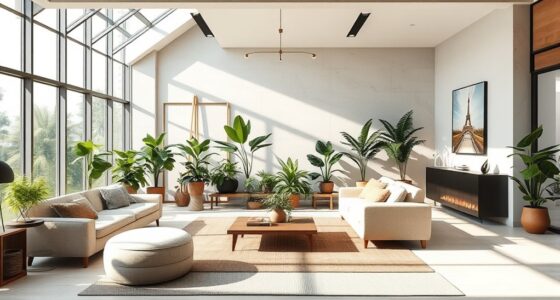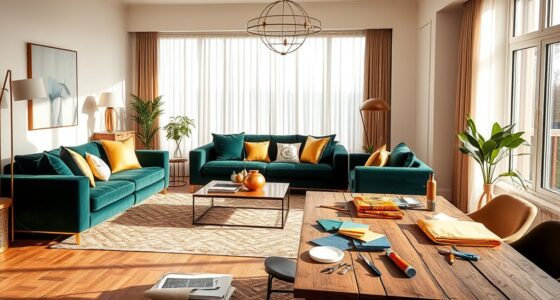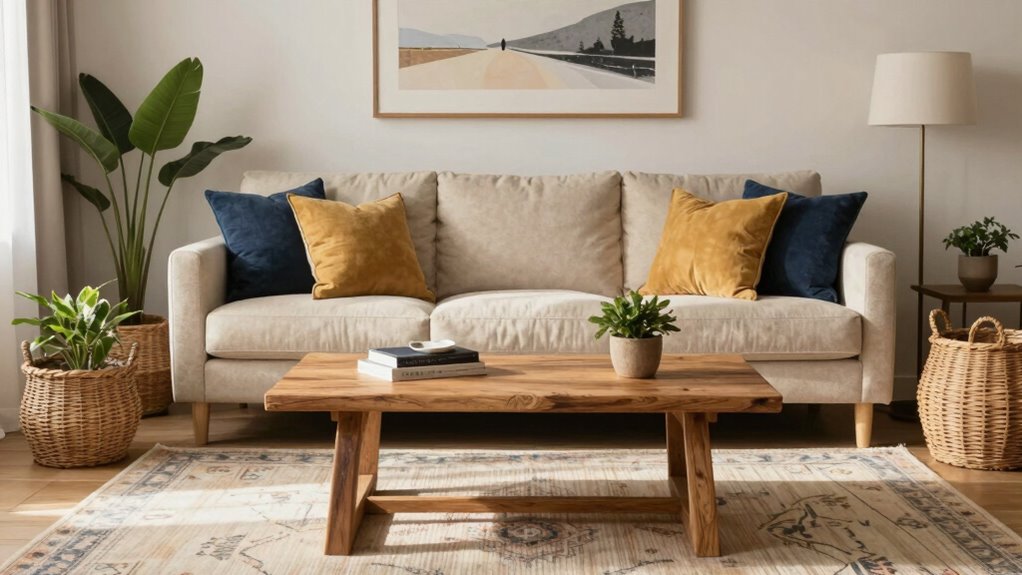

To make your home feel cohesive without everything matching, choose a core color palette with neutrals, pastels, or earthy tones, then use variations of those shades throughout your space. Mix different furniture styles but keep the materials and tones consistent across rooms to create flow. Incorporate similar textures and accessories that reflect your theme, ensuring each space connects smoothly. For more tips on blending styles and maintaining harmony, explore ways to craft a unified, inviting home.
Key Takeaways
- Use a consistent color palette with variations across all rooms to unify the overall look.
- Mix different furniture styles while maintaining cohesive colors and materials.
- Incorporate similar textures and materials throughout to create visual flow.
- Add decor and accessories that reflect the overall theme for layered interest.
- Ensure smooth transitions and balanced layouts to enhance spatial harmony.
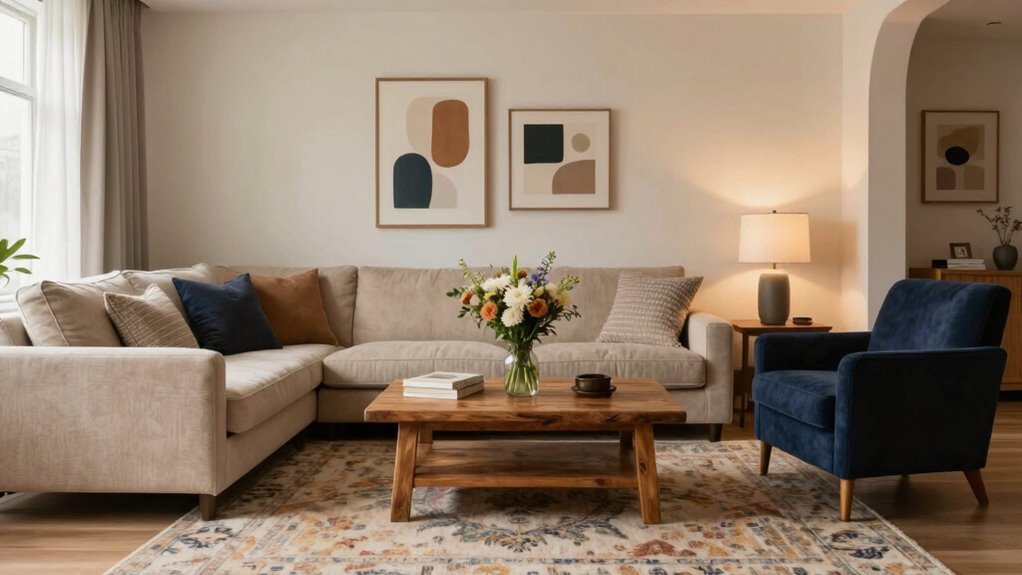
Creating a cohesive home starts with understanding how different design elements work together to reflect your personal style. The goal isn’t to make every room look identical but to create a unified flow that feels intentional and comfortable. One of the most effective ways to do this is by carefully selecting a color palette that ties the space together. You don’t need to stick to a single color for every room, but choosing a core set of hues—perhaps muted neutrals, soft pastels, or deep earthy tones—helps establish visual harmony. Use these colors in your walls, textiles, and accessories to create a sense of continuity from one room to the next. Incorporate variations of the same shades to add depth and interest without disrupting the overall cohesion.
A cohesive home reflects your style through a unified color palette, creating harmony and comfort across every space.
Next, consider your furniture styles. Mixing different styles can add personality and avoid monotony, but it’s important to maintain a sense of balance. For example, pairing modern, sleek furniture with vintage accents can work beautifully if you keep the color palette consistent. Stick to a few key design themes or styles that resonate with you, and then blend them thoughtfully throughout your home. This approach prevents the space from feeling disjointed or chaotic. For instance, if you favor mid-century modern furniture, incorporate pieces with clean lines and natural wood finishes, and complement them with accessories and textiles that echo that aesthetic. When you do introduce different furniture styles, do so gradually and intentionally, ensuring each piece complements the overall palette and style. Additionally, understanding design harmony helps you make intentional choices that unify diverse elements. Incorporating visual balance can further enhance the sense of cohesion and prevent the space from feeling cluttered or uneven. To deepen this sense of unity, paying attention to the flow of movement through your rooms can help create a natural, effortless transition from one area to another.
Textures and materials also play a pivotal role in tying your home together. Incorporate similar materials—like wood, metal, or woven fabrics—across rooms to create a sense of flow. For example, if you have a wooden dining table, include similar wood tones in picture frames or shelving elsewhere. This consistency helps your eye move smoothly from room to room while still allowing for variation in furniture styles or decorative elements.
Finally, pay attention to your accessories and decor. Small details like throw pillows, rugs, artwork, and vases can reinforce your chosen color palette and style. Use these elements to add personality and layers of interest, but keep them aligned with your overall theme. By thoughtfully combining a cohesive color palette, varied yet complementary furniture styles, and consistent textures, you craft a home that feels unified without being monotonous. Ultimately, your home should tell your story—connected, inviting, and uniquely yours.
neutral color palette throw pillows
As an affiliate, we earn on qualifying purchases.
As an affiliate, we earn on qualifying purchases.
Frequently Asked Questions
How Can I Incorporate Different Styles Without Clashing?
You can incorporate different styles without clashing by layering textures and using statement lighting to unify the space. Mix materials like wood, metal, and fabric for visual interest, but keep a consistent color palette to tie everything together. Add statement lighting fixtures in each room to create focal points and continuity. This approach allows diverse styles to coexist harmoniously, making your home feel cohesive yet personalized.
What Are Simple Ways to Unify Varied Color Schemes?
Think of your home as a symphony, where each room is a different instrument. To unify varied color schemes, focus on creating color harmony by repeating a few key hues across spaces. Use pattern consistency with subtle motifs or textures that tie everything together. This way, your rooms harmonize effortlessly, like a beautiful melody, without losing their unique character or style.
How Do I Choose a Consistent Theme for My Home?
Choose a consistent theme by focusing on focal points and maintaining texture balance throughout your home. Pick a central style, like rustic or modern, and carry elements of it into each room, such as similar furniture or decor. Use complementary colors and materials to tie spaces together, and balance textures to add depth without overwhelming. This approach creates a cohesive look that feels intentional, even with varied rooms.
Can I Mix Modern and Vintage Furniture Successfully?
Yes, you can mix modern and vintage furniture successfully by carefully balancing your furniture placement and lighting choices. Focus on creating contrast with your lighting, such as pairing sleek modern fixtures with vintage lamps, to highlight each piece’s unique charm. When arranging furniture, make certain the layout feels intentional and cohesive, blending styles seamlessly. This approach adds personality and depth to your home without sacrificing harmony.
How Do Accessories Help Create a Cohesive Look?
Accessories play a key role in creating a cohesive look by adding decorative accents and textural layers that link different spaces. You can achieve this by choosing accessories in similar color palettes or materials, which tie rooms together visually. Incorporate decorative accents like vases, throw pillows, or artwork that reflect your style. Layer textures through rugs, blankets, and cushions to add depth and harmony, making your home feel unified yet interesting.
Conclusion
Now that you know the secrets to creating a cohesive home without everything matching, imagine the stunning spaces you’ll craft. But here’s the twist—there’s one final touch that ties it all together, something you might overlook. Are you ready to discover it? Stay tuned, because this last detail could transform your entire home into a seamless sanctuary you’ll love coming back to. Trust me, you won’t want to miss what’s coming next.