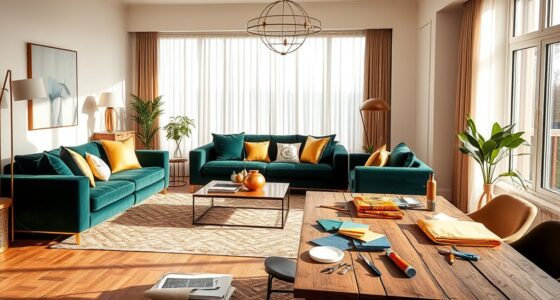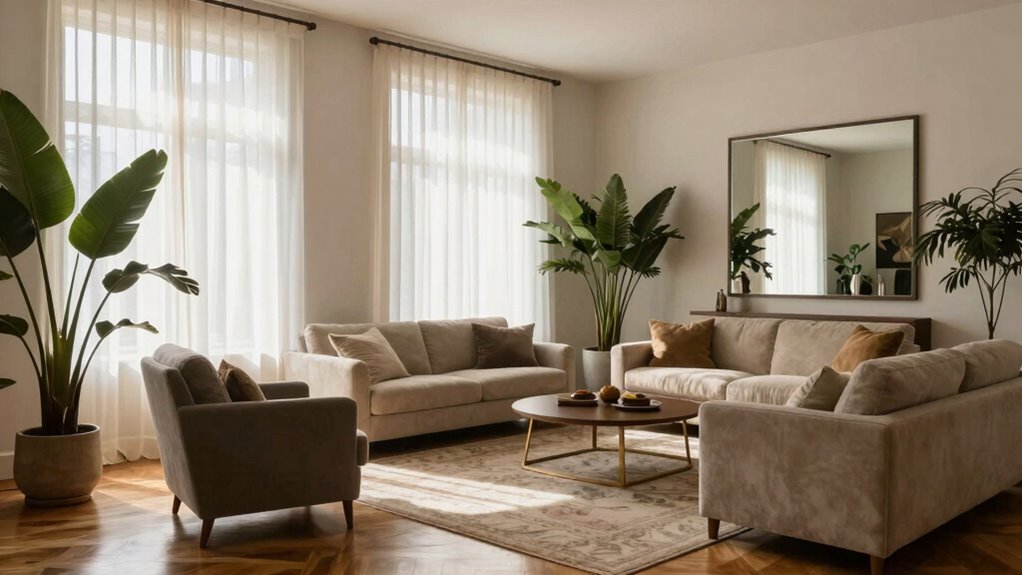

You can easily add depth to your room without renovations by playing with color contrast, textures, and lighting. Use bold accessories or artwork against neutral walls, and mix textures like soft rugs, cushions, and sleek surfaces to create visual interest. Adjust lighting to highlight layered elements and emphasize contrasts. These simple tweaks can transform your space into a dynamic environment. If you stay tuned, you’ll uncover more creative tips to enhance your room’s depth naturally.
Key Takeaways
- Use contrasting colors and bold accessories to add visual layers and depth.
- Incorporate varied textures like rugs, cushions, and decor for tactile richness.
- Experiment with lighting angles and layered lighting to highlight textures and create shadows.
- Add artwork and decorative objects in contrasting hues to draw attention and build dimension.
- Utilize existing furniture creatively by combining different finishes and finishes to enhance depth.
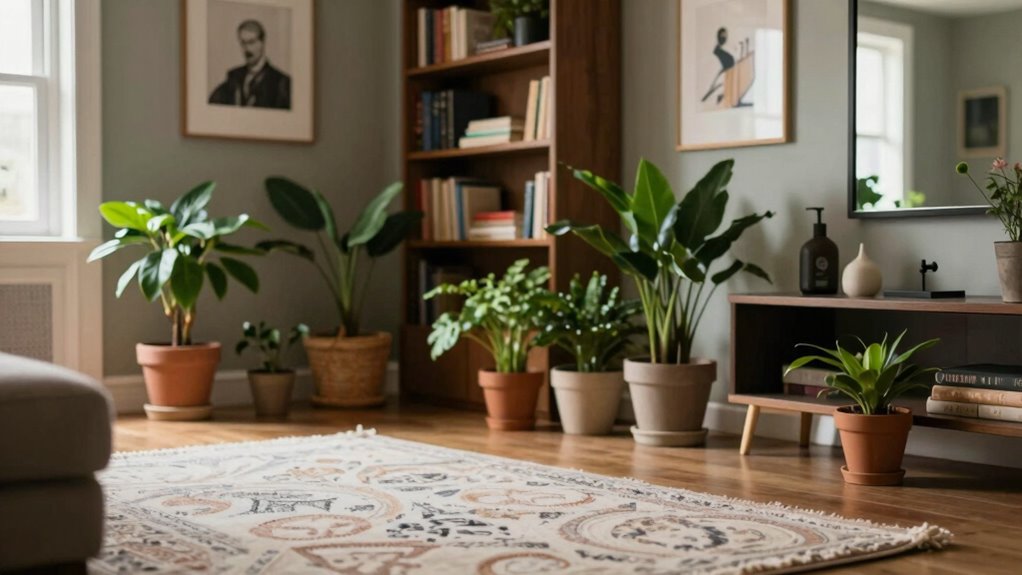
Have you ever wondered how to make a room feel more inviting and dynamic? You don’t need to tear down walls or buy new furniture to create a sense of depth. Instead, you can work with what you already have by paying attention to details like color contrast and layered textures. These simple tricks can transform the space, making it look more interesting and lively without any major renovations.
Start by playing with color contrast. If your walls are a neutral shade, add accessories in contrasting hues to draw the eye and create visual layers. For example, a bold-colored throw pillow or a vibrant piece of artwork can stand out against a subdued background. If your walls are already colorful, incorporate pieces that offer a different tone or shade to add dimension. Contrast isn’t just about the color itself; it’s about how different elements interact. Mixing light and dark tones, warm and cool shades, or matte and shiny finishes adds a subtle but effective sense of depth that guides the eye around the room. Incorporating visual contrast can further enhance the perception of depth by emphasizing differences and creating visual interest.
Use contrasting colors and finishes to add depth and guide the eye around your space effortlessly.
Layered textures are another powerful way to add depth without changing the layout. Think about stacking different fabrics, materials, and finishes to create visual interest. Soft rugs, textured cushions, and cozy throws can soften hard surfaces, making the space more inviting. Incorporate various materials like wood, metal, glass, and fabric—each with its unique texture—to give your room a rich, tactile quality. For instance, pairing a sleek, smooth coffee table with a plush rug and rough-hewn wooden accents can create a layered look that feels multidimensional. The key is to avoid monotony by mixing textures and finishes, which adds depth and keeps the space from feeling flat or one-dimensional. Paying attention to color contrast can further enhance the perception of depth by emphasizing differences and creating visual interest. Understanding how different textures interact with lighting can also help you craft a more dynamic environment. Additionally, experimenting with different lighting techniques can also help highlight these layered textures, making the room appear more depthful and lively.
As an affiliate, we earn on qualifying purchases.
Frequently Asked Questions
Can Artwork Placement Affect Room Depth Perception?
Yes, artwork placement can influence your perception of room depth. By using perspective techniques, you guide the eye toward specific areas, making the space feel larger or more layered. Incorporate visual layering with artwork at different heights or overlapping pieces to add dimension. Strategic placement, such as hanging art on distant walls or creating focal points, tricks your mind into perceiving a deeper, more dynamic space without any renovations.
How Do Lighting Choices Influence Perceived Room Size?
Lighting choices act like a magician’s wand, transforming your space’s perception of size. Natural light floods the room, stretching shadows and opening up corners, making it feel larger and more inviting. Ceiling fixtures add layers, creating depth through contrasts of light and shadow. By strategically using these lighting elements, you’ll make your room feel expansive and dynamic, drawing the eye inward and giving an illusion of more space without a single renovation.
Are Reflective Surfaces Effective for Creating Depth?
Reflective surfaces like mirrored walls and glossy finishes are highly effective for creating depth in a room. They bounce light around, making the space feel larger and more open. By strategically placing mirrored walls or adding glossy furniture, you enhance the sense of dimension and visual interest. These surfaces not only reflect your room’s elements but also draw the eye, giving your space a more dynamic, spacious feel without any renovation.
Does Furniture Arrangement Impact Room Depth?
Yes, furniture arrangement impacts room depth profoundly. You should consider furniture scale—placing larger pieces closer to the walls and smaller ones towards the center to create a sense of space. Additionally, strategic rug placement, such as positioning a rug partially under furniture or using it to define different areas, enhances depth. These techniques draw the eye inward and make the room feel more layered and expansive without any renovations.
Can Color Contrast Enhance a Room’s Depth?
Contrast heightens a room’s depth, making it feel more dynamic and layered. You can achieve this through color contrast—pairing light and dark shades that clash yet complement—while maintaining color harmony. Texture layering also plays a pivotal role; combining smooth and rough surfaces creates visual interest. Together, these techniques draw the eye across the space, giving your room a richer, more dimensional feel without any need for renovations.
Conclusion
With a few clever tricks, you can craft a mesmerizing, cozy space without costly renovations. By playing with paint, pillows, and patterns, you add layers that lend depth and dimension. Remember, small shifts make significant statements—so don’t shy away from experimenting. Embrace effortless enhancements, and you’ll effortlessly elevate your environment, creating a dynamic, delightful decor that feels fresh and fabulous. With these simple strategies, your room will radiate richness and resilience—ready to impress and inspire!