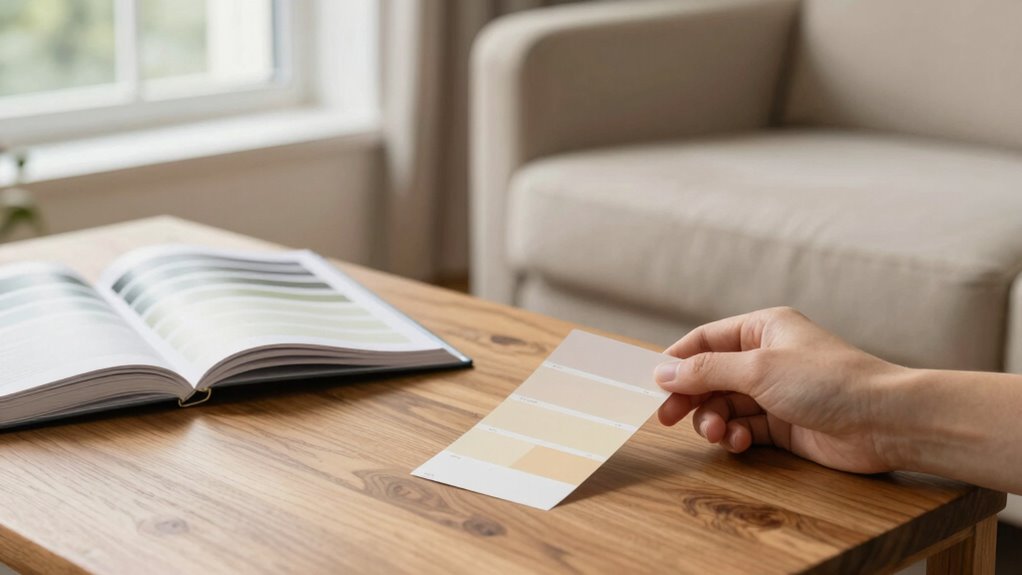

To choose paint that complements your existing furniture, start by identifying its dominant hues and finishes. Match wall colors with your furniture’s tones—warm neutrals for warm-colored pieces or cool shades for cooler hues. Consider the room’s lighting and use finishes like matte or satin for the best effect. Think about the mood you want to create, and select colors accordingly. If you want to learn more tips, keep exploring how to make your space perfect.

Get furniture and decor delivered free with Prime
- Fast, free delivery on millions of items
- Prime Video, Amazon Music and more included
- Member-only deals all year
Key Takeaways
- Match wall colors with dominant hues in your existing furniture for cohesive harmony.
- Use furniture tones as a guide to select complementary or contrasting wall paint shades.
- Consider lighting conditions to see how furniture and paint colors interact in your space.
- Choose paint finishes that enhance furniture features and suit the room’s traffic and use.
- Apply color psychology principles to create desired moods aligned with your current decor.
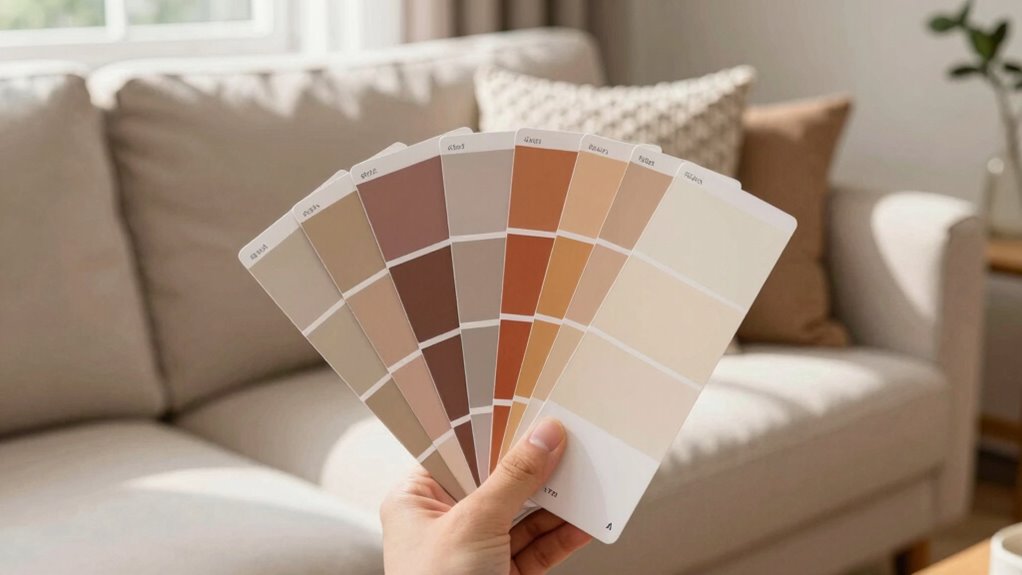
Are you overwhelmed by the countless paint options available? Choosing the perfect color can feel daunting, especially when you already own your furniture and want everything to work harmoniously. The key is to focus on color coordination, ensuring your walls complement your existing pieces. Think about the dominant hues in your furniture—wood tones, fabric colors, or metal finishes—and aim for a paint color that enhances these elements. If your furniture features warm browns or rich reds, consider warm neutrals like beige or taupe, which create a cozy, inviting vibe. On the other hand, if your furniture sports cool tones, like blues or grays, opt for cooler wall colors to keep the space balanced and cohesive. Additionally, understanding paint finishes can help you choose a look and durability that matches your needs and style.
Once you’ve narrowed down your color choices, pay attention to the paint finish. The finish impacts not only the look but also the durability and feel of your walls. A matte or flat finish minimizes imperfections and creates a smooth, sophisticated backdrop—great for bedrooms or living rooms where you want a soft, muted look. If you prefer a more vibrant or modern aesthetic, a satin or eggshell finish offers a subtle sheen that reflects light and adds a touch of elegance without being overly shiny. For high-traffic areas like kitchens or bathrooms, a semi-gloss or gloss finish is practical, as it’s easier to clean and resists moisture. When selecting your paint, consider the lighting conditions in your space, as they influence how colors appear and can help you choose shades that truly complement your furniture and decor. Being aware of color psychology can also guide you to create the mood and atmosphere you desire in each room. Remember, the right paint finish can make your furniture and accessories pop, creating a polished, intentional look. Additionally, understanding paint durability can ensure your chosen finish withstands everyday wear and tear, maintaining your space’s beauty over time.
best paint colors for living room walls
As an affiliate, we earn on qualifying purchases.
As an affiliate, we earn on qualifying purchases.
Frequently Asked Questions
How Do I Select the Right Paint Finish for My Furniture?
To select the right paint finish for your furniture, consider the paint durability and the finish sheen. If your furniture gets a lot of use or moisture, go for a durable finish like satin or semi-gloss. For a softer look with less wear, choose matte or eggshell. Think about how much shine you want—glossy reflects more light, while matte offers a subtle, muted appearance.
Can I Use Wall Paint on Furniture?
Think of wall paint as a suit tailored for walls, not furniture. You can use it, but it’s not ideal for furniture durability or paint adhesion. Wall paints are typically thinner and less durable, which means they may chip or wear faster on furniture. For lasting results, choose a furniture or chalk paint designed to withstand daily use, ensuring your piece looks beautiful and stands the test of time.
What Color Schemes Complement Existing Furniture Styles?
You should choose color schemes that create style harmony and striking color contrast. If your furniture has warm tones, opt for cool wall colors like blues or greens to balance it out. Conversely, if your furniture features cool tones, warm shades such as oranges or reds work well. Keep the overall style in mind—modern, rustic, or traditional—to select colors that enhance your existing furniture and create a cohesive look.
How Do I Test Paint Colors Before Committing?
You should test paint colors before committing to guarantee you don’t jump the gun. Start by painting large swatches on your wall, ideally in different areas, and observe how they look at various times of day. Focus on color matching with your furniture and consider paint durability—pick a finish that withstands everyday wear. This way, you see how colors truly work in your space before making a final decision.
Is It Necessary to Prime Furniture Before Painting?
Yes, priming furniture is essential for a smooth, durable finish. Before painting, you should do furniture prep by cleaning and sanding the surface for better surface smoothing. Priming seals the surface, prevents stains from bleeding through, and helps the paint adhere evenly. Skipping this step might lead to peeling or uneven color, so taking the time to prime guarantees your project looks professional and lasts longer.
Conclusion
Choosing the right paint doesn’t have to be stressful, especially when you already own furniture. Just pick colors that complement or contrast your pieces, and you’ll create a cohesive look effortlessly. Did you know that homes with well-coordinated color schemes sell 32% faster? So, trust your instincts, have fun with the process, and enjoy transforming your space into a stylish haven that truly reflects your personality.
Fall Picks
fall essentials
As an affiliate, we earn on qualifying purchases.