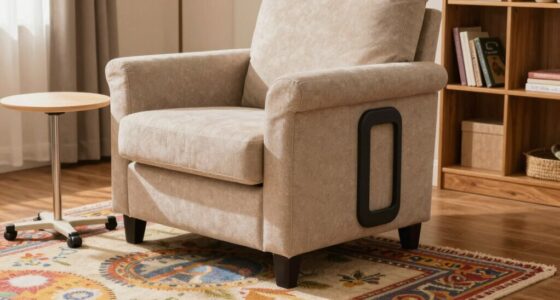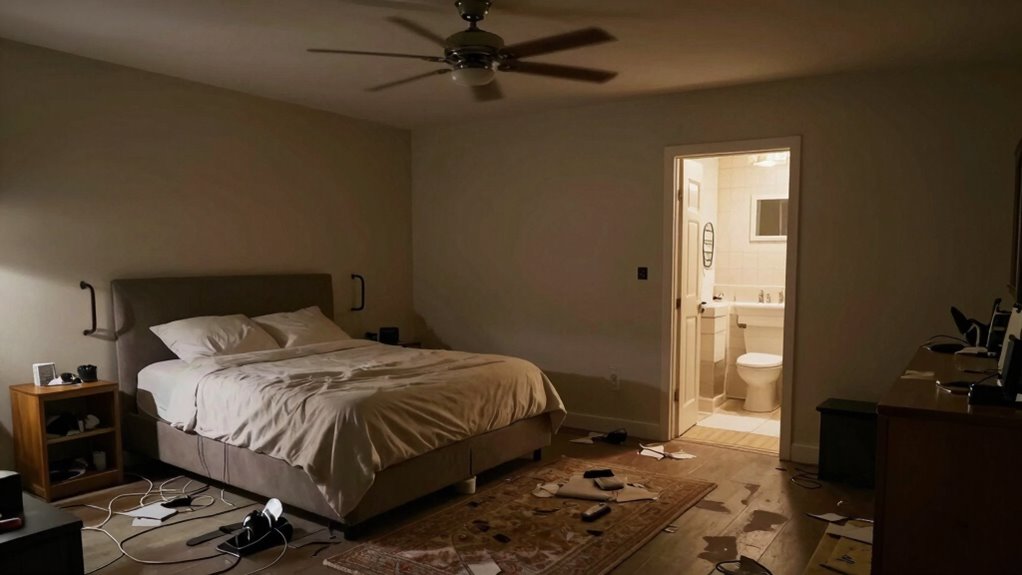

Avoid poor lighting, clutter, and awkward furniture placement, as these can increase safety risks and make nighttime routines difficult. Fumbling in dark rooms or tripping over furniture can lead to falls, especially if essential items are out of easy reach. Make sure your bed and accessories are well-positioned for easy access, and incorporate smart, automatic lighting. Addressing these common mistakes helps you stay safe and independent—keep going to discover how to create a more functional bedroom.
Key Takeaways
- Poor lighting that isn’t adjustable or motion-activated increases fall risk during nighttime navigation.
- Cluttered or poorly arranged furniture obstructs pathways and hampers safe movement.
- Placing essential items far from the bed complicates access and disrupts routine safety.
- Lack of accessible features, such as easy-to-reach switches or smart lighting, reduces independence.
- Inadequate emergency preparedness features can make nighttime safety and quick response difficult.
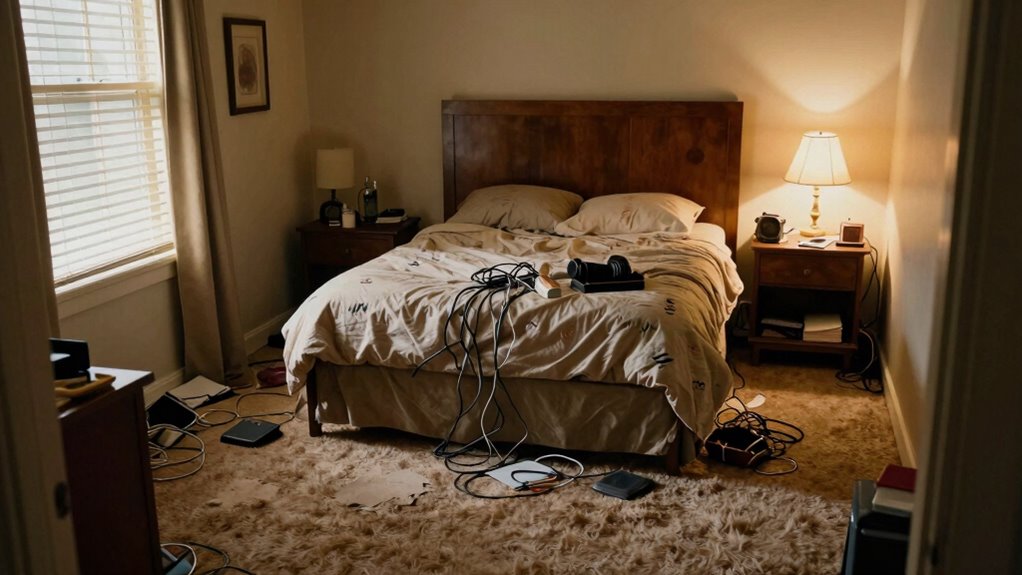
Aging in place can be a rewarding goal, but many overlooked bedroom design mistakes can make it difficult or even unsafe to stay comfortable in your own home. One common mistake is poor lighting, especially at night. If your bedroom isn’t equipped with smart lighting, you might find yourself fumbling in the dark, increasing the risk of falls or accidents. Smart lighting systems allow you to control brightness levels and turn lights on or off remotely, making it safer and easier to navigate your room without having to get up and find the switch. Installing motion-activated lights can also be a game-changer, automatically illuminating pathways as you move, which reduces hazards and provides peace of mind.
Another vital aspect is furniture placement. If your bed, nightstands, or other furniture are positioned poorly, you could struggle with mobility or risk tripping. For example, placing furniture too close together leaves little room to maneuver, especially if you use mobility aids like a walker or cane. You want to guarantee there’s enough space for safe movement and that pathways are clear. The bed should ideally be at a height that makes it easy to get in and out of without strain, and nightstands should be within arm’s reach but not so close that they become obstacles. Cluttered or awkward furniture arrangements can lead to accidents, particularly when you’re tired or trying to get ready for bed in low light conditions. Ensuring your bed height and furniture arrangement are optimal can greatly enhance safety and comfort. Additionally, thoughtful placement of furniture for accessibility can help reduce strain and improve daily routines.
Ensure furniture is arranged with enough space for safe movement and easy access, reducing tripping hazards and improving comfort.
In addition, neglecting the importance of thoughtfully arranged furniture can make nighttime navigation harder. For example, placing your alarm clock or water glass on the far side of the room or behind other objects can make it difficult to reach during the night, forcing you to get up unnecessarily. Instead, position frequently used items within easy reach and keep pathways clear of cords or loose rugs that could cause slips or falls. Incorporating smart lighting and strategic furniture placement isn’t just about safety; it’s about creating a space that feels welcoming and functional. Properly placed lights, such as bedside lamps with easy-to-reach switches, combined with thoughtful furniture arrangement, can transform your bedroom into a haven that supports your independence. Paying attention to emergency preparedness by ensuring your bedroom is equipped with accessible lighting and safe furniture arrangements can also be crucial during weather emergencies or power outages, helping you stay safe and comfortable at all times. Being aware of home safety features and modifications can further prevent accidents and promote peace of mind. Avoiding these common mistakes helps guarantee you can enjoy restful nights and maintain your comfort and safety as you age in place.
smart motion-activated night lights for bedroom
As an affiliate, we earn on qualifying purchases.
As an affiliate, we earn on qualifying purchases.
Frequently Asked Questions
How Can I Improve Bedroom Lighting for Better Visibility at Night?
To improve bedroom lighting for better visibility at night, focus on nightstand organization by keeping essentials within reach and clutter-free. Use adjustable lamps with the right light color temperature—warm light creates a cozy feel, while cooler tones keep you alert. Consider installing dimmable lights so you can easily switch from bright for reading to soft for sleep, ensuring safe, comfortable nights without straining your eyes.
What Are the Best Mattress Options for Aging-In-Place Comfort?
Imagine sinking into a cloud of comfort—that’s what a memory foam mattress offers, contouring perfectly to your body’s curves. Pair it with an adjustable bed, and you control your sleep sanctuary, easing aches and improving circulation. These options provide gentle support and customizable comfort, making nights more restful. By choosing memory foam or adjustable beds, you create a bedroom that adapts to your needs, transforming sleep into a peaceful retreat.
How Can I Reduce Noise Disturbances in the Bedroom?
To reduce noise disturbances in your bedroom, start by investing in soundproofing solutions like acoustic panels or heavy curtains that block sound. You can also use noise-canceling devices, such as white noise machines or earplugs, to create a calmer environment. Make sure your windows and doors are properly sealed to prevent external noise from entering. These steps will help you enjoy quieter, more restful nights.
Are There Specific Safety Features Recommended for Elderly Bedrooms?
To enhance safety in your bedroom, consider installing bedrails to prevent falls and guarantee easy access. You should also set up an emergency call system within reach, so help is always accessible if needed. Keep pathways clear of clutter, add non-slip rugs, and ensure good lighting. These features help create a safer environment, giving you peace of mind and making your nights more comfortable and secure.
How Do I Personalize My Bedroom for Better Sleep Quality?
You can personalize your sleep environment by choosing calming colors and cozy decor that make you feel relaxed. Incorporate familiar photos or artwork to create a sense of comfort. Use soft, adjustable lighting to set the mood, and select a comfortable mattress and pillows suited to your needs. These touches enhance your bedroom’s ambiance, promoting better sleep quality and making your space truly your own.
Conclusion
By avoiding these common bedroom mistakes, you can transform your space into a safe, comfortable haven that supports your independence. Remember, aging in place isn’t about sacrificing style for function—think of it as upgrading your castle for modern knights! With a few simple changes, you’ll sleep soundly in a room that feels more like a cozy retreat than a fortress under siege. Embrace these tips and enjoy your nights with peace of mind.