
TL;DR

Get furniture and decor delivered free with Prime
- Fast, free delivery on millions of items
- Prime Video, Amazon Music and more included
- Member-only deals all year
An Ideal Home report says radiators that fail to warm a home may need cleaning, bleeding or better airflow around them. Heating experts quoted in the article also point to uneven system flow and thermostat use, though the source does not establish that any single problem applies to every home.
Ideal Home has published advice on why radiators may not heat rooms effectively, citing home-heating professionals who recommend checking for dust, trapped air, blocked airflow and uneven heat distribution. The report matters to households preparing to use central heating, but it does not show that every cold home has a radiator problem: draughts and poor insulation can also affect indoor temperatures.
The report’s author describes a draughty, poorly insulated older home that remains cold even when its central heating is running. Experts quoted in the article say radiator performance can be affected by several maintenance and room-layout issues. Their advice is presented as practical guidance, not as a diagnosis of the author’s heating system or a guarantee that the suggested steps will solve every heating problem.
Dust and debris inside a radiator can impede its performance, according to Martin Garbutt, head of technical governance at home services platform Ding. Garbutt says dust may reduce radiator efficiency by up to 10%, although the report does not provide the calculation’s methodology or conditions. He recommends switching the radiator off and letting it cool before cleaning it with a vacuum nozzle or hairdryer; a damp towel can catch falling dust. For deeper cleaning, he suggests warm water with a little dish soap or white vinegar and a long-handled brush.
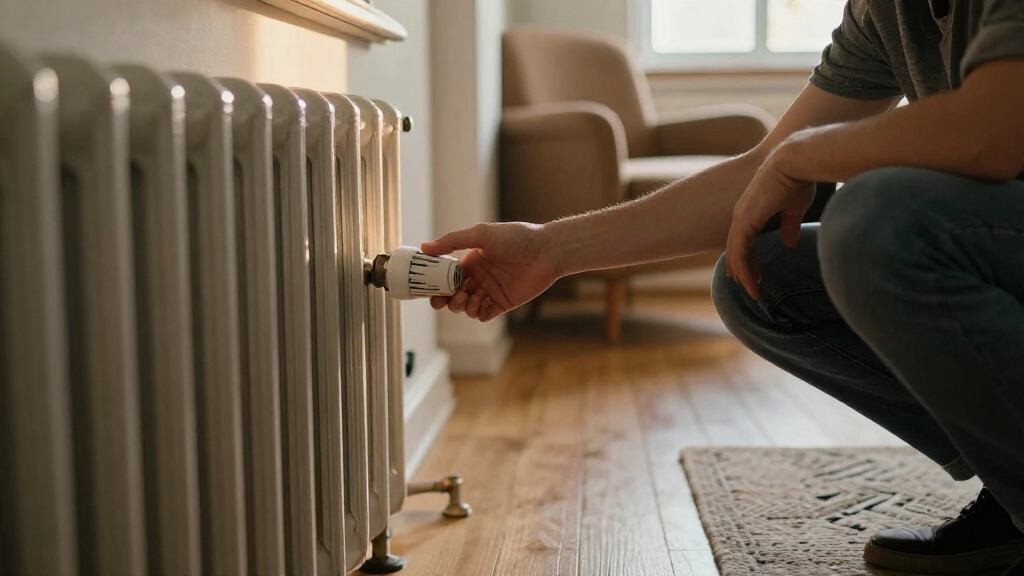
Trapped air is another possible cause of poor heating. Ian Palmer-Smith, an appliance repair expert at Domestic & General, says a radiator that is cold at the top but warm at the bottom, or one making gurgling or banging noises, may need bleeding. He advises bleeding radiators as part of annual maintenance. If some radiators still heat less than others after bleeding, Ant Langston of HeatandPlumb.com says the system may need balancing by adjusting the lockshield valve, located opposite the thermostatic radiator valve. That adjustment affects water flow and may require care.
Small Checks That Affect Room Heat
The advice gives households a set of basic checks before colder weather, when heating systems are used more often. Dust, trapped air or furniture blocking a radiator can make a room feel colder and may prompt people to turn the thermostat up, though the article does not quantify any resulting energy use or bill savings.
It also separates radiator maintenance from the wider causes of a cold home. The report’s author identifies draughts and poor insulation as problems in the house, meaning cleaning or bleeding radiators may not resolve persistent cold. If a boiler, pipework or heating controls are involved, the article’s general tips should not be treated as a substitute for a qualified heating professional’s assessment.
Products Worth Considering

Dyson Ball Animal Total Clean Upright Vacuum

Shark Navigator Robot Vacuum with 30-Day Self-Empty Base, White (AV2110S)

Dyson Ball Animal 2 Plus Corded Vacuum
As an affiliate, we earn on qualifying purchases.
What the Heating Experts Recommend
The report is framed around the author’s experience of an older home that feels cold despite the central heating being on. It gathers comments from professionals in home services, appliance repair and heating supply, then groups possible causes into maintenance, airflow and system operation. The source material includes detailed guidance on cleaning, bleeding and balancing, but its final section about thermostat use is cut off.
For cleaning, Garbutt says radiators should be turned off and allowed to cool first. For bleeding, Palmer-Smith identifies coldness at the top and unusual noises as signs that air may be trapped. Langston discusses balancing only after bleeding has been done and radiator valves are set as desired. The report also warns against placing large furniture in front of radiators: according to Garbutt, this can trap heat and limit circulation through the room.
The source does not establish that radiators are generally being used “wrong.” Rather, it offers possible causes and maintenance steps for people whose radiators do not seem to heat their rooms adequately.
“If your radiator feels cold at the top and hot at the bottom, this means there is trapped air inside of it.”
— Ian Palmer-Smith, appliance repair expert at Domestic & General
Limits of the Radiator Advice
The source material does not include a publication date, test data for the author’s home, or evidence that the proposed radiator checks resolved the reported cold-room problem. Garbutt’s up to 10% efficiency figure is attributed to him, but the article provides no baseline, measurement conditions or independent verification.
The supplied report text ends partway through a section about thermostat use. It is therefore unclear what specific thermostat guidance the full article gives, and no claim about the correct thermostat setting can be supported from the provided material. It is also unclear whether any particular home’s uneven heating is caused by trapped air, system balance, insulation, draughts, boiler performance or another fault.
Checks Before Heating Season
Households following the report can start with low-risk checks: clear dust after switching a radiator off and letting it cool, and move furniture or hanging items that block airflow. If a radiator is cold at the top or making unusual noises, the article suggests bleeding it; readers should follow the heating system’s instructions and take care around hot water and valves.
If uneven heating continues, or a valve adjustment or boiler fault is suspected, the next step is to seek advice from a qualified heating professional rather than assume that cleaning will fix the issue. The source gives no scheduled follow-up or new data, so whether the recommendations improve the author’s home remains unreported.
Key Questions
What does a radiator that is cold at the top indicate?
According to Ian Palmer-Smith, it may indicate trapped air and a need to bleed the radiator. Gurgling or banging noises can also be warning signs, but persistent problems may have another cause.
How should a radiator be cleaned safely?
Martin Garbutt advises turning it off and letting it cool before removing dust with a vacuum nozzle or hairdryer. A damp towel can catch debris. The report also suggests a long-handled brush and warm water with a small amount of dish soap or white vinegar for deeper cleaning.
Can furniture stop a radiator from heating a room properly?
The report’s expert says large furniture placed in front of a radiator can trap heat and restrict its circulation. Moving obstructions may help heat spread, but it will not correct every cause of a cold room.
What if some radiators stay cooler after bleeding?
Ant Langston says the heating system may need balancing by adjusting the lockshield valve. Because the source offers general advice rather than a diagnosis, persistent uneven heating should be checked by a qualified heating professional.
Source: idealhome.co.uk