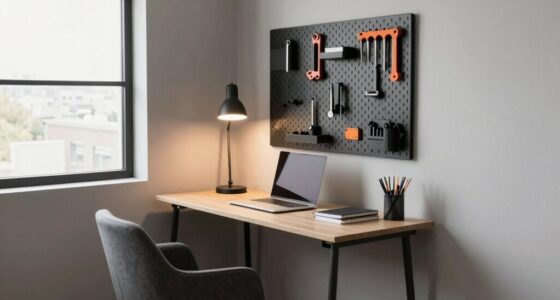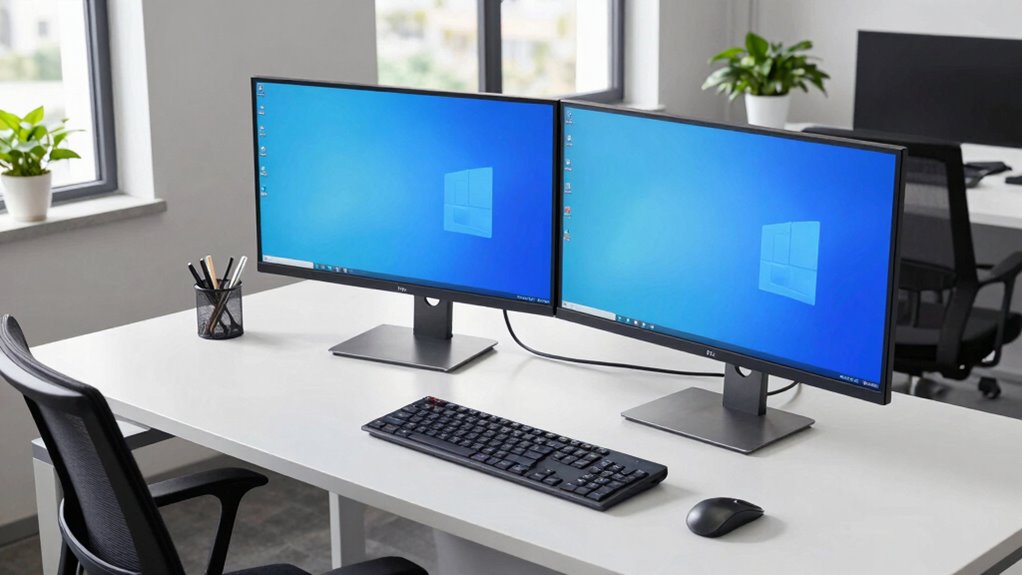

To fully benefit from large office monitors, you need to plan your desk setup carefully. Position your monitor directly in front of you, at eye level, and about an arm’s length away. Use ergonomic accessories like adjustable stands and supportive chairs to improve posture. Proper lighting and glare reduction also help reduce eye fatigue. When your workspace is optimized, your work becomes more comfortable and productive. Keep exploring to discover how these adjustments can transform your workspace even further.
Play games included with Prime
Start a Prime free trial and play with Amazon Luna on your devices.
As an affiliate, we earn on qualifying purchases.
Key Takeaways
- Proper monitor placement reduces neck and eye strain, enhancing comfort and productivity.
- Adjustable ergonomic accessories ensure optimal monitor height and angle for better posture.
- Maintaining adequate distance and positioning minimizes glare and reflections, improving visual clarity.
- Calibrating display settings tailored to tasks enhances accuracy and reduces eye fatigue.
- Creating a balanced lighting environment complements monitor setup for sustained focus and comfort.
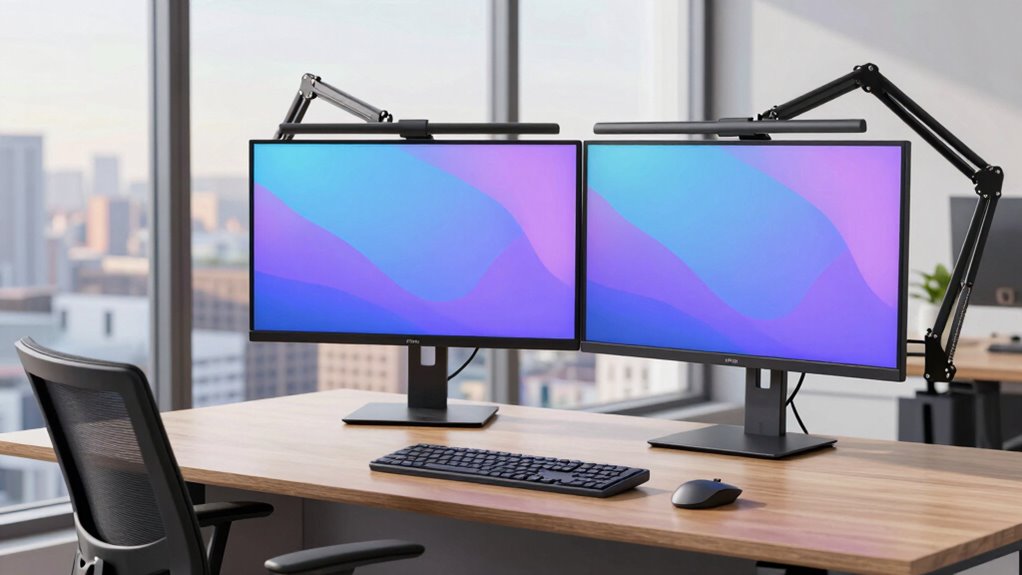
While large office monitors can boost your productivity and enhance your work experience, their benefits only come if you plan your desk setup carefully. Simply installing a big screen isn’t enough; you need to consider how to position it, what accessories to use, and how to optimize your viewing conditions. Proper ergonomic accessories, like adjustable monitor arms and supportive desk chairs, play an essential role in creating a comfortable and efficient workspace. These accessories help you set the monitor at eye level, preventing neck strain and encouraging good posture throughout your workday. Additionally, understanding product comparisons can help you choose the right accessories that fit your needs and workspace setup. Monitoring calibration is another vital aspect of maximizing your large screen’s potential. When you calibrate your monitor correctly, you ensure that colors, contrast, and brightness are aligned with your needs, whether you’re editing images, designing graphics, or simply viewing documents. A well-calibrated monitor reduces eye fatigue and provides a clear, consistent display, making your tasks easier and more precise. It’s worth investing time in calibration tools or software to fine-tune your monitor and avoid the common pitfalls of a poorly adjusted display. Positioning your monitor properly is key. You want the screen to be directly in front of you, about an arm’s length away, with the top of the display roughly at eye level. This setup minimizes neck and eye strain, especially during long work sessions. Use ergonomic accessories like adjustable stands or monitor arms to achieve this ideal position. They give you flexibility and make it easier to switch from sitting to standing or to adjust your screen height without hassle. Remember, the goal is to create a workspace that encourages good posture and reduces physical discomfort. Proper lighting conditions also matter. Set up your workspace so that glare and reflections are minimized, which can cause eye strain and reduce your productivity. Use desk lamps or bias lighting behind the monitor to create a balanced lighting environment. Optimal lighting and proper monitor calibration work hand in hand to help maintain focus and comfort during extended work periods.
adjustable monitor arm for large monitors
As an affiliate, we earn on qualifying purchases.
As an affiliate, we earn on qualifying purchases.
Frequently Asked Questions
How Do I Choose the Right Size Monitor for My Office?
To choose the right monitor size, consider your workspace and how much screen real estate you need. A larger monitor with higher resolution offers clearer images, but make certain your desk can support it comfortably. Check the monitor’s screen brightness to reduce eye strain during long hours. Think about your typical tasks—if you multitask or work with detailed graphics, a bigger screen with high resolution benefits your productivity and comfort.
What Ergonomic Considerations Should I Keep in Mind?
To improve ergonomics, focus on posture correction by keeping your monitor at eye level to avoid neck strain. Make sure your keyboard positioning allows your elbows to stay close to your body and your wrists straight. Regularly adjust your chair height so your feet rest flat on the floor. Taking breaks to stretch helps maintain good posture, reducing fatigue and discomfort during long work hours.
How Does Desk Layout Affect Monitor Performance?
Desk layout is like a carefully arranged symphony, affecting monitor performance considerably. When your desk is organized for ergonomic posture, your monitor sits at eye level, reducing neck strain, and minimizes desk clutter, preventing distractions. A perfect layout guarantees you can work comfortably for longer, boosting productivity. Poor placement causes awkward postures, leading to fatigue, so arranging your workspace thoughtfully directly influences how effectively your monitor supports your work.
Are There Specific Desk Accessories That Enhance Monitor Use?
You can enhance your monitor experience with specific desk accessories like monitor stands, which elevate your screen to eye level, reducing neck strain. Cable management tools help keep cords organized and out of your way, creating a cleaner workspace. These accessories make it easier to adjust your monitor position for comfort and improve overall efficiency, ensuring you get the most out of your large office monitor without clutter or discomfort.
How Can I Reduce Eye Strain With Large Monitors?
To reduce eye strain with large monitors, you should balance screen brightness with ambient lighting, avoiding glare. Practice eye exercises regularly to relax your eye muscles, and take short breaks every 20 minutes to look away. Imagine your eyes as muscles—just like your body—needing rest and care. Keep your monitor at eye level to prevent neck strain, and adjust the contrast for comfortable viewing, ensuring your eyes stay fresh and focused.
Conclusion
Think of your desk as the stage for your productivity performance. When you plan your space thoughtfully, large monitors become your spotlight, illuminating your work with clarity and focus. Without proper planning, they’re like a spotlight that’s misplaced—more blinding than helpful. So, take the time to arrange your desk wisely, and watch how your work shines brighter. A well-organized setup turns your workspace into a symphony of efficiency, where every element plays its part perfectly.
NFL season / tailgating Picks
team gear
As an affiliate, we earn on qualifying purchases.