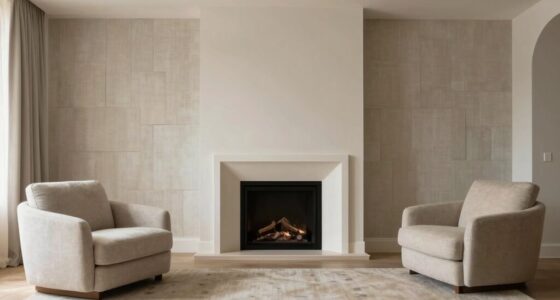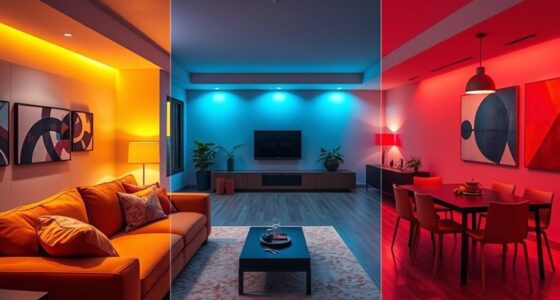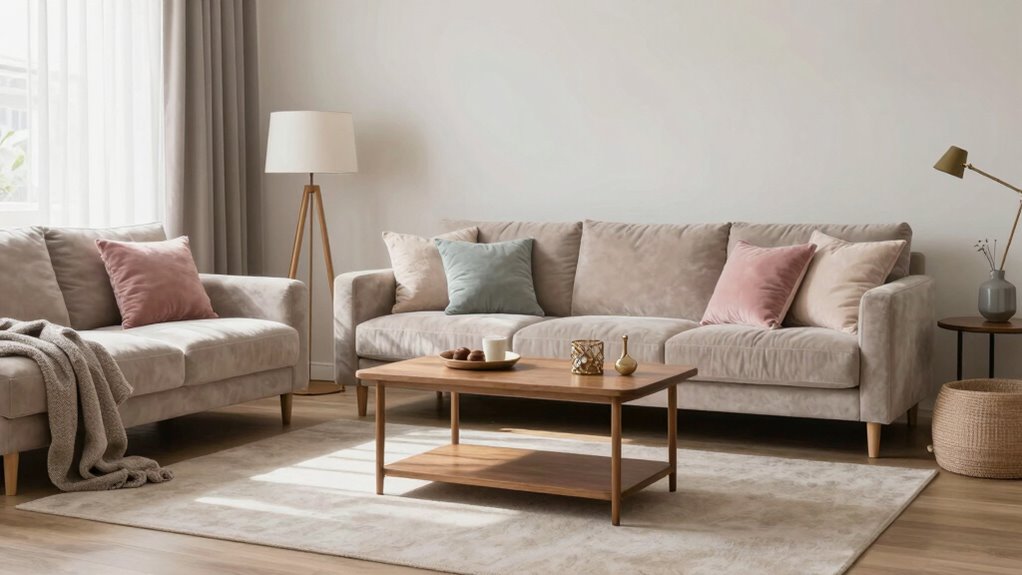

A pretty room catches your eye with its decorative accents and eye-catching colors, but it may lack smooth functionality. A well-designed space balances beauty with purpose, ensuring furniture placement supports daily activities and creates a comfortable flow. Every element, from color harmony to decor, enhances both aesthetics and usability, making the room feel cohesive and inviting. To discover how to make your space both stunning and practical, explore what’s next.
Key Takeaways
- A pretty room prioritizes visual appeal, while a well-designed room balances aesthetics with functionality.
- Well-designed spaces incorporate cohesive color schemes and intentional layout for seamless flow.
- Decorative accents in a well-designed room serve a purpose and enhance the overall harmony.
- Functionality in a well-designed room supports daily activities and improves ease of movement.
- A pretty room may lack practicality, whereas a well-designed room merges beauty with comfort and usability.
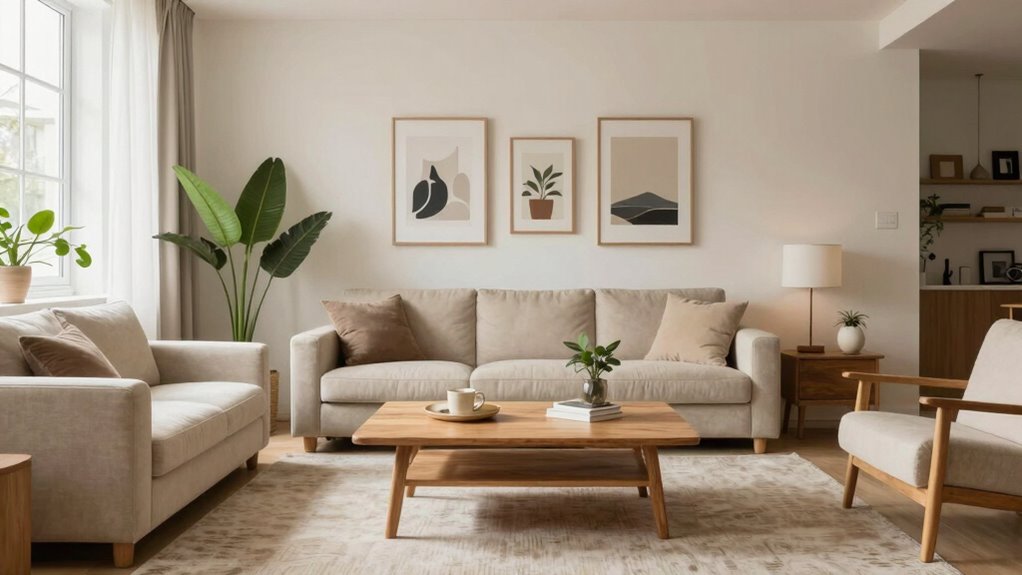
A room that looks pretty can catch your eye, but a well-designed space makes you feel at home and functions effortlessly. The difference lies in how the elements come together to create a cohesive environment rather than just an appealing one. When you focus on decorative accents, you’re adding personality and depth, but it’s essential that these accents complement the overall design. Instead of randomly placing vases, artwork, or cushions, you select pieces that enhance the room’s style and contribute to a unified look.
Color harmony plays a critical role in elevating a room from merely attractive to truly inviting. When your colors work together, they set a mood and guide the eye smoothly around the space. You might choose a neutral base and add pops of color through accessories, or go for a bold palette that’s balanced carefully across walls, furniture, and decorative accents. The key is consistency; mismatched colors can make a room feel chaotic, even if it’s visually interesting. A well-designed room uses color to create a sense of flow, making everything feel intentional rather than haphazard. Incorporating design principles ensures that every element contributes to a harmonious atmosphere. Additionally, considering the layout of a space helps optimize functionality and comfort, ensuring that the room supports your daily activities. You also want your furniture and layout to support how you live and move within the space. It’s not enough for the room to look good; it has to work for you. This means arranging furniture for easy conversation, good lighting, and accessibility. When you incorporate decorative accents thoughtfully, they shouldn’t just be pretty objects placed randomly—they should serve a purpose or tell a story. For example, a well-placed throw pillow that matches the room’s color scheme can add comfort and style simultaneously. These details, when chosen with purpose, reinforce the overall design and make your space feel cohesive.
Color harmony creates a inviting flow, making your space feel intentional and cohesive rather than chaotic.
A well-designed room balances form and function effortlessly. It’s about more than just decorating; it’s about creating an environment that supports your lifestyle and reflects your personality. When you pay attention to color harmony and use decorative accents strategically, your space transforms from just a beautiful room into a sanctuary that feels right for you. Every piece, color, and detail works together to craft an atmosphere that’s both pleasing to the eye and functional. That’s the secret behind turning a pretty room into a genuinely well-designed one—making sure every element contributes to a harmonious, comfortable, and personalized environment.
functional living room furniture
As an affiliate, we earn on qualifying purchases.
As an affiliate, we earn on qualifying purchases.
Frequently Asked Questions
How Do I Measure if My Room Is Well-Designed?
You can measure if your room is well-designed by checking for color harmony and furniture placement. If the colors complement each other and create a cohesive feel, that’s a good sign. Also, guarantee furniture is arranged to promote easy movement and functionality. When everything feels balanced and inviting, your room is likely well-designed. Trust your instincts, and don’t be afraid to tweak elements until they feel just right.
Can a Room Be Both Pretty and Well-Designed?
Yes, your room can be both pretty and well-designed. To achieve this, balance decorative accessories and choose cohesive color schemes that reflect your style. Thoughtful placement of accessories adds visual interest without clutter, while a harmonious color palette creates a unified look. Focus on functionality and aesthetics, ensuring each element complements the others. This way, your space will be visually appealing and thoughtfully arranged, blending beauty with design purpose.
What Are Common Mistakes in Designing a Room?
You might accidentally turn your space into a chaos of mismatched colors and awkward furniture placement. A common mistake is neglecting color coordination, making the room look disjointed. Poor furniture placement can block pathways or make the space feel cramped. To avoid this, plan your layout carefully and choose complementary colors. You want your room to flow effortlessly, not look like a jumble of random choices.
How Important Is Functionality in Room Design?
Functionality is vital in room design because it directly impacts your daily comfort and usability. When you prioritize functionality, you create a space where everything serves a purpose, enhancing your experience. Balancing aesthetic appeal with visual harmony guarantees your room looks beautiful while also being practical. If your space isn’t functional, even the prettiest room can feel cluttered or awkward, diminishing its overall effectiveness and your satisfaction.
What Budget Is Needed for a Well-Designed Room?
You can create a well-designed room on a flexible budget by thoughtfully considering color schemes and lighting choices. While costs vary, investing in quality lighting and a cohesive palette makes a big difference. You don’t need a fortune—prioritize key pieces and subtle details that elevate the space. With smart planning, you’ll enjoy a beautiful, functional room that feels personalized without overspending, turning your vision into reality.
Conclusion
Remember, a pretty room may catch your eye, but a well-designed one captures your soul. It’s the difference between surface beauty and lasting harmony. Like a symphony where every note counts, a thoughtfully planned space resonates with purpose and personality. So, when you step into your next room, ask yourself: is it merely pretty, or truly well-designed? Because in the end, true beauty lies in the balance between form and function.