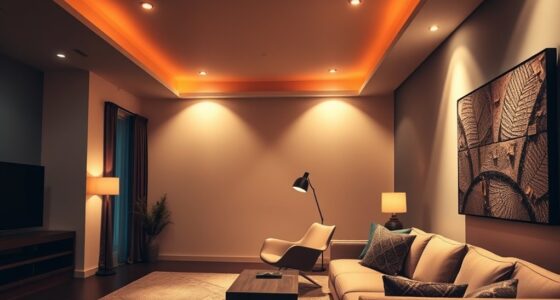
If you want to avoid making your good rooms feel tired, don’t rely too much on artificial lighting or block natural light with heavy curtains. Make sure your fixtures suit the room’s purpose and style, and incorporate layered, adjustable lighting for different moods and activities. Pay attention to color temperature, mixing warm and cool tones thoughtfully. Proper placement and balanced illumination are key—if these mistakes sound familiar, keep going to discover how to refresh your space.

Get furniture and decor delivered free with Prime
- Fast, free delivery on millions of items
- Prime Video, Amazon Music and more included
- Member-only deals all year
Key Takeaways
- Overreliance on artificial lighting and minimal natural light can make rooms feel dull and lifeless.
- Using inappropriate ceiling fixtures that clash with the room’s style causes visual dissonance and flat lighting.
- Lack of layered, adjustable lighting prevents mood setting and can result in harsh or uneven illumination.
- Mixing different color temperatures without coordination dulls the room’s vibrancy and cohesiveness.
- Poor lighting placement creates uneven brightness, highlighting flaws and reducing overall energy and warmth.
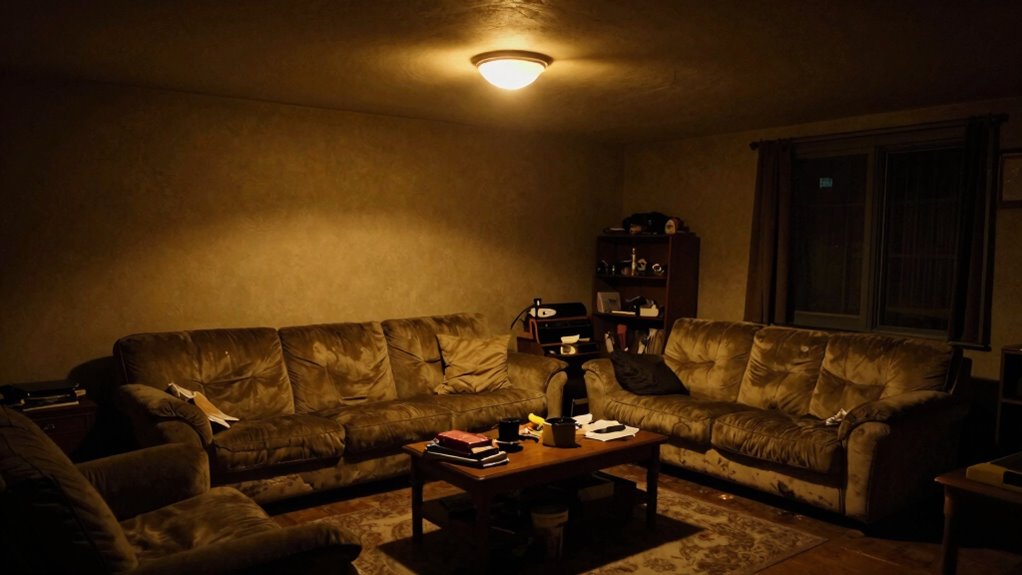
Have you ever walked into a room and felt instantly drained or uninspired? That’s often a sign that the lighting isn’t working in your favor. The way you light a space can dramatically influence its energy and mood. One common mistake is relying too heavily on artificial lighting without considering natural light. Natural light not only brightens a room but also enhances its atmosphere, making it feel more open and inviting. If your room lacks windows or if the windows are blocked by heavy curtains, it can become dull and lifeless. To avoid this, try to maximize natural light during the day by keeping window treatments light and airy, and consider placing mirrors strategically to reflect sunlight into darker corners.
Another mistake many make is choosing ceiling fixtures that don’t match the room’s purpose or style. Overly bright or harsh ceiling lights can create a sterile, unwelcoming environment, while inadequate or poorly placed fixtures leave the space feeling dim and tired. It’s essential to select ceiling fixtures that provide the right amount of light and complement the room’s design. For instance, a dining area benefits from a statement chandelier that offers both illumination and aesthetic appeal, whereas a reading nook needs focused, task lighting. Layering different types of lighting—ambient, task, and accent—helps create balance and prevents the space from feeling flat or overly stark. Incorporating lighting design principles can help you achieve a cohesive and lively environment.
You might also be making the mistake of neglecting dimmable options. Having the ability to adjust lighting levels allows you to set the mood and adapt the space to different times of day or activities. Without dimmers, you’re stuck with a fixed brightness that might feel either too harsh or too faint, contributing to that tired, lifeless ambiance. Additionally, using the wrong color temperature can make a room feel dull. Cooler tones (like daylight or cool white) can make a space feel more energetic, while warmer tones (soft white or warm white) create a cozy, relaxed vibe. However, mixing color temperatures without thought can result in a disjointed look that saps energy from the room. Paying attention to lighting layering techniques ensures a cohesive and vibrant space.
Furthermore, neglecting to consider lighting placement can lead to uneven illumination, which may cause certain areas to feel neglected or overly bright. When properly planned, the right placement of lights can highlight architectural features and improve overall ambiance. When done right, your space will feel vibrant, welcoming, and far from tired. When you pay attention to these details, you turn a bland room into a lively haven that energizes everyone who enters.
As an affiliate, we earn on qualifying purchases.
Frequently Asked Questions
How Can I Correct Harsh Lighting in My Living Room?
To correct harsh lighting in your living room, start by adding layered illumination with a mix of ambient, task, and accent lights. Use dimmers to control brightness and create a softer, more inviting atmosphere. Swap out harsh bulbs for softer, warmer ones, and incorporate lamps or sconces to diffuse light. This approach enhances mood and balances the light, making your living room feel cozy and welcoming instead of tired and stark.
What’s the Best Type of Lighting for Small Spaces?
For small spaces, opt for layered lighting using accent fixtures like wall sconces or small pendant lights to add depth without clutter. Choose a warm color temperature, around 2700K to 3000K, to create a cozy atmosphere. Avoid harsh overhead lights, and instead, focus on task lighting where needed. This combination helps make the room feel larger and inviting, while accent fixtures add visual interest and warmth.
How Do I Balance Natural and Artificial Light Effectively?
Think of your space as a symphony, where natural and artificial light must harmonize. Use lighting design and light layering to balance the two, letting daylight fill the room during the day and soft, layered artificial lights at night. Open curtains to invite sunlight, then add warm lamps or accent lighting to create depth and mood. This balance keeps your room energized and inviting, no matter the time of day.
Can Lighting Affect the Perceived Size of a Room?
Yes, lighting can considerably influence your room perception. Clever lighting illusions, like using bright, directed lights, can make a space feel larger and more open. Conversely, dim lighting or uneven placement can make a room seem smaller or cramped. By adjusting the lighting to highlight specific areas and create depth, you can enhance your space’s perceived size, making it feel more inviting and spacious.
What Are Affordable Lighting Upgrades for a Tired-Looking Room?
Think of your room as a blank canvas waiting to come alive. You can instantly uplift the space with affordable lighting fixtures, like stylish pendants or sleek sconces. Swap out old bulbs for ones with a warm color temperature to add coziness and vibrancy. These simple upgrades brighten dull corners and refresh your room’s vibe without breaking the bank, making it feel inviting and energized again.
Conclusion
Now that you know these common lighting mistakes, you can brighten your space with confidence. Imagine your room bathed in warm, inviting light, each corner lively and welcoming. When you avoid harsh shadows and uneven fixtures, your space transforms into a vibrant sanctuary—no longer tired or dull, but alive with energy. With thoughtful lighting, your rooms become the backdrop for joyful moments, casting a glow that makes every detail shine and your mood lift.
Halloween Picks
halloween
As an affiliate, we earn on qualifying purchases.