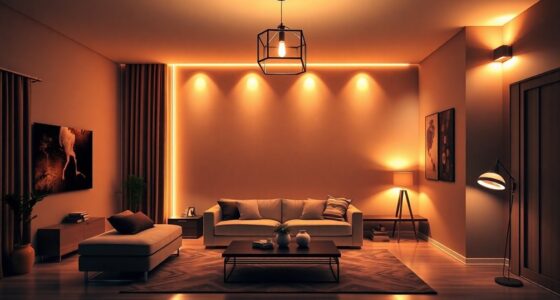
Layered lighting combines ambient, task, and accent lights to create a balanced and inviting space. You can achieve this by strategically placing ceiling fixtures for general illumination, focused lights for specific activities, and spotlights to highlight artwork or architectural features. This approach not only enhances the room’s appeal but also maximizes energy efficiency. If you want to learn how to effectively mix these layers for any room, keep exploring; there’s more to discover.

Get furniture and decor delivered free — and shop member deals
- Fast, free delivery on millions of items
- Access to Prime Big Deal Days deals on October 6–7
- Prime Video, Amazon Music and more included
Key Takeaways
- Combining ambient, task, and accent lighting creates a balanced, functional, and inviting space tailored to different activities and moods.
- Proper layering enhances room depth and visual interest by highlighting architectural features and decor.
- Strategic placement of each layer improves energy efficiency and reduces unnecessary power consumption.
- Adjustable fixtures and dimmers allow seamless control over lighting levels, enhancing ambiance and focus.
- Effective mixing supports safe navigation, reduces shadows, and highlights key areas without overwhelming the space.

Have you ever wondered how to make a room both functional and inviting? The secret lies in effective lighting design, especially when you embrace layered lighting. This approach combines different types of lights—ambient, task, and accent—to create a balanced, versatile space that feels warm and practical. Not only does layered lighting improve the overall atmosphere, but it also plays a vital role in energy efficiency. By strategically placing and choosing your lighting sources, you can reduce unnecessary energy consumption while enhancing your room’s appeal.
Start with ambient lighting, which provides the general illumination for the entire space. Think of it as the foundation of your lighting design. It’s usually achieved with ceiling-mounted fixtures, recessed lights, or wall sconces, offering a soft, even glow that allows you to move comfortably through the room. When selecting ambient lighting, opt for LED options—they consume less energy and last longer, helping you achieve energy efficiency without sacrificing brightness. Proper placement of these fixtures ensures an even spread of light, reducing dark corners and eliminating harsh shadows, which contributes to a more welcoming environment.
Ambient lighting sets a warm, even glow, creating a welcoming foundation for your room.
Next, incorporate task lighting to meet specific needs like reading, cooking, or working. These lights are more focused and brighter, aiming at areas where you perform detailed activities. For example, a desk lamp, under-cabinet lighting in the kitchen, or a reading light next to your favorite chair all serve this purpose. To maximize energy efficiency, choose adjustable fixtures or dimmable LEDs, so you can control the intensity based on your current needs. This not only conserves energy but also enhances comfort, preventing glare and eye strain. Installing task lighting with smart controls or motion sensors can further cut down on unnecessary energy use when the area isn’t in use.
Finally, add accent lighting to highlight specific features like artwork, architectural details, or decorative objects. These lights create visual interest and depth in your room, making it feel more layered and dynamic. Use spotlights, track lighting, or wall-mounted fixtures to draw attention to focal points. To keep energy costs low, opt for LED accent lights with adjustable angles and brightness levels. This way, you can easily change the mood or focus of a room without wasting energy. Combining all three layers thoughtfully results in a space that’s not only beautifully lit but also optimized for energy efficiency, reducing your utility bills and environmental impact. Additionally, understanding the importance of vetted lighting options can help you select safe and effective fixtures that meet your needs.
As an affiliate, we earn on qualifying purchases.
Frequently Asked Questions
How Do I Balance Different Lighting Layers for a Cohesive Look?
To balance your lighting layers, start by choosing bulbs with similar color temperatures for a cohesive look. Use dimming controls to adjust brightness levels, creating seamless progressions between ambient, task, and accent lights. Focus on harmony by coordinating the intensity and warmth of each layer. Regularly tweak these settings until the space feels inviting and well-balanced, ensuring all lighting elements work together smoothly without overpowering each other.
What Are the Best Bulbs for Layered Lighting Setups?
Your lighting setup can transform your space into a masterpiece! For layered lighting, choose bulbs with a versatile color temperature, like 2700K to 3000K, for a warm, inviting glow. Use varying wattages—higher for ambient lighting and lower for task or accent lights—to create depth. Opt energy-efficient LEDs that offer dimming options, so your lighting can adapt to any mood or activity effortlessly.
How Can I Control Layered Lighting With Smart Home Systems?
You can easily control layered lighting with smart home systems by integrating voice control and motion sensors. Use voice commands to adjust brightness or switch between lighting modes instantly. Motion sensors help automate lighting, turning lights on or off as you move through a space, ensuring perfect ambiance without needing manual switches. This seamless control enhances convenience and helps you create the ideal layered lighting setup effortlessly.
What Are Common Mistakes to Avoid in Layered Lighting Design?
You should avoid overusing lighting fixtures, which can create clutter and confusion. Be mindful of color temperature; mixing warm and cool lights can disrupt the room’s harmony. Also, don’t neglect dimming options—failing to include dimmers limits control over ambiance. Finally, make certain your layered lighting balances brightness across different zones, preventing glare or dark spots, so your space feels inviting and functional at all times.
How Does Layered Lighting Impact Energy Efficiency?
Layered lighting acts like a symphony, balancing brightness and mood. It can reduce energy consumption by allowing you to use only necessary lights, avoiding waste. When you incorporate energy-efficient fixtures and smart controls, you lower both your energy consumption and environmental impact. This thoughtful approach guarantees your space is well-lit without overdoing it, helping you save money and protect the planet simultaneously.
Conclusion
By combining ambient, task, and accent lighting, you create a space that’s both functional and inviting. Think about how the right lighting transforms a room into a cozy retreat or a lively gathering spot—can you imagine the perfect ambiance you want to achieve? Layering these lights allows you to tailor your environment effortlessly. So, why not start mixing and matching today to turn your space into a beautifully lit sanctuary that truly reflects you?
Fall Picks
fall essentials
As an affiliate, we earn on qualifying purchases.