To get motion sensors that feel helpful and not annoying, focus on proper placement, calibration, and sensitivity adjustment. Position sensors where they won’t be obstructed or trigger from pets or trees, and fine-tune the sensitivity and detection zones. Use reliable sensors suited for indoor or outdoor use, and regularly test and adjust settings for ideal performance. Keep these tips in mind, and you’ll enjoy lighting that’s effective without unnecessary disturbances—plus, you’ll discover more ways to perfect your setup.

Get furniture and decor delivered free — and shop member deals
- Fast, free delivery on millions of items
- Access to Prime Big Deal Days deals on October 6–7
- Prime Video, Amazon Music and more included
Key Takeaways
- Proper sensor placement and clear field of view prevent false triggers and ensure reliable lighting.
- Adjust sensitivity and detection zones to respond accurately without causing nuisance activations.
- Use appropriate power sources and consider weatherproof options for consistent outdoor performance.
- Regularly test and calibrate sensors to maintain optimal settings and avoid flickering or missed detections.
- Focus on seamless integration with your environment to create helpful, unobtrusive lighting experiences.
outdoor motion sensor lights with adjustable sensitivity
As an affiliate, we earn on qualifying purchases.
As an affiliate, we earn on qualifying purchases.
How Motion Sensors Detect Movement and Common Installation Mistakes

Have you ever wondered how motion sensors reliably detect movement? It all comes down to sensor sensitivity, which determines how much motion is needed to trigger the light. If sensitivity is too high, the sensor might activate unnecessarily, causing annoyances. If it’s too low, it might miss genuine movement. Proper calibration is key. Additionally, power consumption plays a pivotal role; sensors designed to use less energy often have adjustable sensitivity settings to optimize performance without draining power. Proper placement and sensor technology are crucial for accurate detection. Advanced European cloud servers often incorporate smart algorithms that enhance detection accuracy and reduce false triggers. Wiring basics and proper installation are essential to ensure the sensor functions correctly within your system. Common installation mistakes include placing sensors in areas where they’re obstructed or facing away from typical movement paths. Ensuring the sensor’s field of view is clear and correctly angled helps improve detection accuracy. When installed properly, motion sensors seamlessly provide lighting that’s helpful without being overly sensitive or wasting energy.
Choosing the Best Motion Sensor Lighting for Your Space
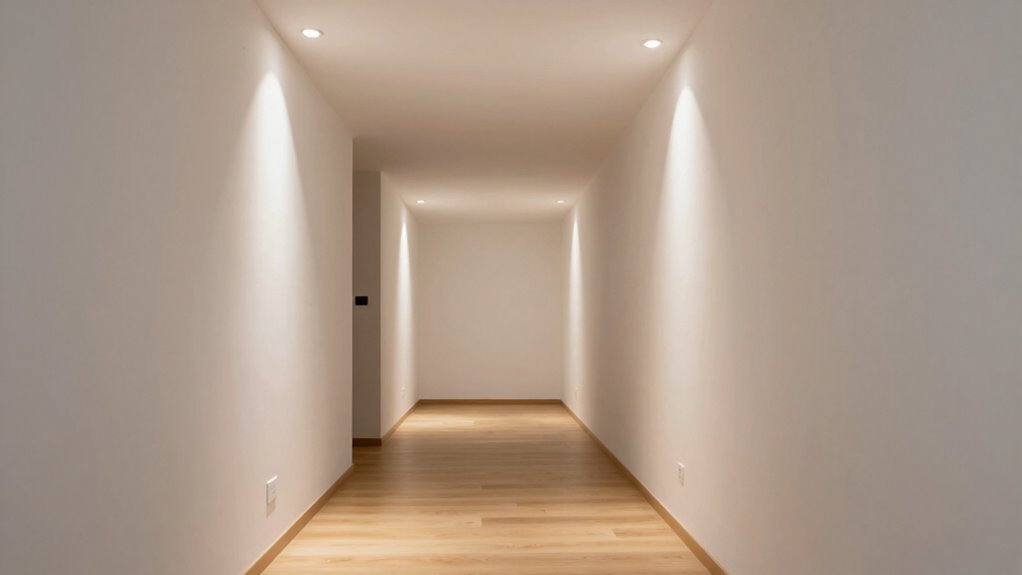
Selecting the right motion sensor lighting depends on your specific needs and the space’s layout. Start by considering sensor placement—aim for areas where movement is frequent but avoid spots with constant motion that could cause false triggers. Think about the environment: outdoor lights need weatherproof options, while indoor setups benefit from discreet placement. Power considerations are also vital; decide between wired or battery-powered lights based on accessibility and convenience. Wired installations may offer more consistent power, but batteries provide flexibility and easier setup. Additionally, choose sensors with adjustable sensitivity and light timers to prevent unnecessary activation and guarantee the lighting feels helpful, not intrusive. Tailoring these factors ensures reliable performance and a seamless lighting experience.
Installing Your Motion Sensor Correctly for Reliable Performance

Proper installation is key to guaranteeing your motion sensor performs reliably. Start with sensor placement; position it where it can detect movement without obstructions like trees or furniture. Aim for a spot that covers the intended area without triggering false alarms from passing cars or pets. Consider the sensor’s field of view and angle to maximize effectiveness. Additionally, evaluate power source options—wired or battery-powered—based on your setup. Wired sensors require proper wiring and secure mounting, while battery-powered units offer flexibility but need regular replacements. Guarantee the sensor is installed at the correct height, typically around eye level, for optimal detection. Correct placement and choosing the right power source help your motion sensor operate consistently and avoid frustrating false triggers. Ensuring your sensor is properly sensor placement and understanding its detection range contributes significantly to its reliability and effectiveness. Regularly testing your sensor and adjusting its settings can further optimize performance and extend its lifespan. Additionally, consulting manufacturer guidelines can help you follow proper installation techniques, further enhancing performance and longevity of your setup.
Adjusting Settings to Prevent False Triggers and Flickering

Once your motion sensor is installed correctly, fine-tuning its settings can markedly reduce false triggers and flickering. Adjusting sensor sensitivity is key; too high, and minor movements or shadows might activate it unnecessarily. To prevent false triggers, consider these steps:
Adjust sensor sensitivity and zones to reduce false triggers and flickering effectively.
- Lower sensor sensitivity to ignore small or distant movements.
- Increase detection delay so the light stays on longer, avoiding rapid flickers.
- Set a suitable detection zone to focus on the desired area and minimize unnecessary triggers.
- Regularly review and update your settings to adapt to changing environmental conditions and ensure optimal performance. sensor calibration
These adjustments help balance responsiveness with false trigger prevention. By customizing sensitivity and zones, you ensure the sensor reacts only when needed, providing reliable lighting that feels helpful rather than annoying. Properly configured settings improve overall performance and user experience.
Troubleshooting Common Motion Sensor Lighting Problems

Despite careful installation and fine-tuning, motion sensor lighting can still encounter common issues that disrupt its performance. One frequent problem is improper sensor calibration, which may cause the lights to turn on too often or not at all. Adjust the sensor’s sensitivity and detection range to match your space, ensuring it responds only when needed. Additionally, inconsistent power consumption can lead to flickering or dim lighting. Check your wiring and power source to ensure a steady supply. Sometimes, adjusting the sensor’s position or cleaning its lens can improve detection accuracy. Regularly reviewing and fine-tuning these settings helps prevent false triggers, saves energy, and maintains reliable lighting. Properly landscaping around the sensor can also reduce false activations caused by moving branches or pets. Ensuring your sensor is free from dust and debris can also improve its detection accuracy and overall performance. Incorporating security zone info insights can further optimize sensor placement and functionality. Additionally, understanding sensor calibration best practices can help you fine-tune the device for optimal operation. To further enhance performance, consider the ambient lighting conditions in your space, which can influence sensor sensitivity and responsiveness.
Frequently Asked Questions
How Long Should Motion Sensors Typically Last Before Replacement?
Typically, motion sensors last about 3 to 5 years before you need a replacement, depending on sensor durability and usage. Keep an eye on performance; if it becomes unreliable or false triggers increase, it’s time to follow replacement guidelines. Regularly checking your sensor’s functionality helps ensure your lighting system remains helpful rather than annoying, and replacing it at the right time keeps your setup efficient and dependable.
Can Motion Sensors Work With Smart Home Automation Systems?
Your motion sensors can absolutely work with smart home automation systems, making your life way easier. Many sensors are designed for smart home compatibility, allowing seamless integration with platforms like Alexa, Google Home, or Apple HomeKit. Just verify proper sensor calibration to avoid false triggers. When set up correctly, your smart sensors become a powerful tool, transforming your space into a truly intelligent home where lighting responds effortlessly to your needs.
Are There Privacy Concerns With Outdoor Motion Sensor Lighting?
Yes, there are privacy concerns with outdoor motion sensor lighting, especially if cameras are involved. You might worry about who sees or records your activity, which can impact outdoor security and your peace of mind. To address this, choose sensors with adjustable settings and camera privacy features. Regularly review your device permissions and placement to make sure you’re safeguarding your privacy while maintaining effective outdoor security.
What Are the Best Practices for Maintaining Motion Sensors?
To keep your motion sensors working well, regularly check sensor calibration to make sure they detect movement accurately. Clean the sensor lenses to prevent dust or debris from causing false triggers. Consider vandalism prevention measures like installing sensors higher or using protective covers. By maintaining proper calibration and safeguarding your sensors, you guarantee reliable, helpful lighting that enhances security without becoming a nuisance.
How Energy-Efficient Are Modern Motion Sensor Lighting Options?
Modern motion sensor lighting options are highly energy-efficient, helping you save on energy bills while supporting sustainability. You’ll notice significant energy savings because these lights only turn on when needed, reducing unnecessary power use. Their advanced technology maximizes efficiency without sacrificing convenience, making them an eco-friendly choice. By choosing smart motion sensors, you actively contribute to a greener environment while enjoying well-lit spaces that feel helpful, not intrusive.
Conclusion
When you master motion sensor lighting, you’re guiding a silent guardian—like a lighthouse guiding ships safely home. Proper installation and adjustments guarantee it’s helpful, not annoying, shining just when needed. Think of your sensors as trustworthy friends, always alert but never intrusive. When tuned right, they become a seamless part of your space—brightening your path without casting shadows of frustration. Embrace this balance, and your lighting will serve as a dependable beacon, not a disruptive flicker.
Fall Picks
fall essentials
As an affiliate, we earn on qualifying purchases.