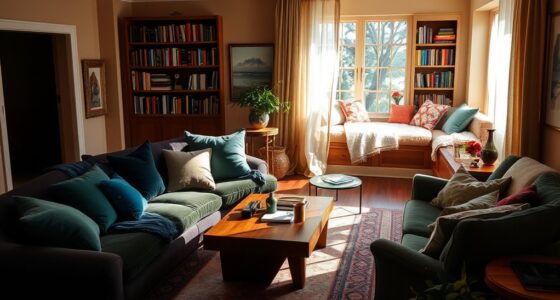
To maximize space in a shared bedroom, create distinct zones for each child using room dividers, curtains, or furniture placement. Incorporate personalized storage solutions like labeled bins, shelves, or under-bed drawers to promote independence and reduce clutter. Bunk beds or twin beds placed on opposite sides help establish clear boundaries and privacy. Add personal touches like posters or soft lighting to make each zone inviting. Keep exploring for more tips on designing a functional, organized shared space.

Get furniture and decor delivered free — and shop member deals
- Fast, free delivery on millions of items
- Access to Prime Big Deal Days deals on October 6–7
- Prime Video, Amazon Music and more included
Key Takeaways
- Use room dividers or curtains to create distinct sleep zones and enhance privacy for each child.
- Incorporate personalized storage solutions like labeled bins and shelves to promote independence and organization.
- Arrange beds strategically, such as bunk beds or opposite sides, to maximize space and prevent conflicts.
- Add individual decor, lighting, and personal items to make shared spaces inviting and tailored to each child’s preferences.
- Optimize space with multifunctional furniture and smart layouts to ensure comfort, functionality, and easy access for both kids.

Sharing a bedroom with a sibling can be both a practical and rewarding experience for your kids. It encourages companionship, teaches sharing, and can make the most of limited space. To make this setup work smoothly, you need to think carefully about how to organize the room, especially when it comes to personalized storage and sleep zone design. These elements are key to creating a functional environment where both kids feel comfortable and have their own space.
Start by focusing on personalized storage. Each child should have designated areas to keep their belongings organized and easily accessible. Use individual bins, shelves, or cubbies that are clearly labeled with their names or favorite colors. This way, your kids learn to take responsibility for their stuff, reducing clutter and conflicts. Personal storage solutions also help to give each child a sense of ownership over their space, which is essential for their comfort and independence. Incorporate drawers under beds, hanging organizers, or customized wardrobe sections to maximize space without making the room feel crowded. When each kid has their own storage, they can keep toys, books, and personal items tidy, making shared bedroom living less stressful. Additionally, considering the use of home cinema projectors or other entertainment setups can add a personal touch to their space, making it more inviting and functional.
Next, think about sleep zone design. Creating distinct sleeping areas helps prevent disputes and gives each child a sense of privacy. Use room dividers, curtains, or even strategically placed furniture to carve out individual sleep zones. Position beds in a way that maximizes space and allows for easy movement around the room. Bunk beds are a popular option, especially in smaller rooms, since they free up floor space for play or study areas. Alternatively, placing beds on opposite sides of the room can create a clear boundary, which is especially useful if your kids are of different ages or have different sleep routines. Adding personal touches like nightlights, posters, or bedtime shelves with books makes each sleep zone feel unique and inviting. Consider the sleep zone design carefully to promote restful nights and minimize disturbances, especially if your kids have different schedules.
As an affiliate, we earn on qualifying purchases.
Frequently Asked Questions
How Can I Ensure Both Kids Have Enough Privacy?
To make certain both kids have enough privacy, create dedicated privacy zones within the shared room. Use sound barriers like thick curtains, rugs, or bookshelf walls to reduce noise transfer. Incorporate individual spaces with dividers or furniture arrangements that give each child a sense of personal territory. Encourage respect for each other’s privacy zones, fostering a comfortable environment where both kids feel secure and independent despite sharing the room.
What Are the Best Storage Solutions for Shared Bedrooms?
Think of your shared bedroom as a bustling city; smart storage solutions keep it organized and lively. Use multi-functional furniture with built-in toy storage to clear clutter and maximize space. Incorporate closet organizers to separate clothes and accessories, making everything easy to find. Baskets and bins are your city’s parks—simple, accessible spots for toys and supplies. This setup keeps both kids happy and the room tidy.
How Do I Balance Design Preferences Between Siblings?
To balance your kids’ design preferences, start with color coordination by choosing complementary or neutral tones that suit both. Incorporate theme differentiation through personalized decor, bedding, or wall art to reflect each child’s personality. Encourage them to share ideas, fostering a sense of ownership. This approach guarantees the space feels harmonious yet personalized, making both kids feel comfortable and valued in their shared bedroom.
What Safety Considerations Are Important in Shared Spaces?
Did you know that home fires are the leading cause of injury in children? To guarantee safety, regularly check smoke alarms and keep fire extinguishers nearby. For electrical safety, avoid overloading outlets and use outlet covers to prevent accidents. In shared bedrooms, secure furniture to walls and keep cords out of reach. Prioritizing fire safety and electrical safety helps protect your kids and creates a secure, shared space.
How Can I Create a Flexible Layout for Growing Kids?
To create a flexible layout for growing kids, start with neutral color coordination that can easily adapt as their tastes change. Choose a versatile theme that can evolve over time, and incorporate adjustable furniture like beds with storage or desks that can shift as they grow. Keep the space open and clutter-free, allowing your kids to personalize their area with accessories or décor updates, making it a comfortable, adaptable shared bedroom.
Conclusion
With these clever layouts, you’ll transform a tiny room into a sprawling palace where your kids can conquer kingdoms side by side. Say goodbye to arguments over space—this setup turns shared bedrooms into the ultimate playground of imagination and harmony. Soon, your kids will be so comfortable, they’ll never want to leave their magnificent shared kingdom. Get ready for peaceful mornings and happy nights, all thanks to these genius designs that make sharing feel like a dream come true!
Fall Picks
fall essentials
As an affiliate, we earn on qualifying purchases.