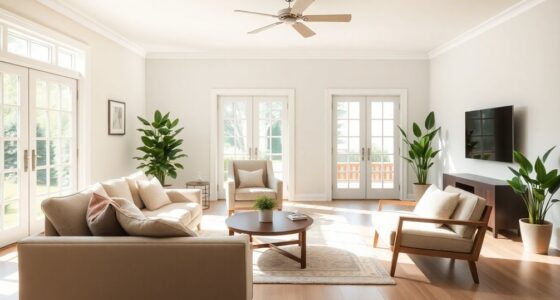
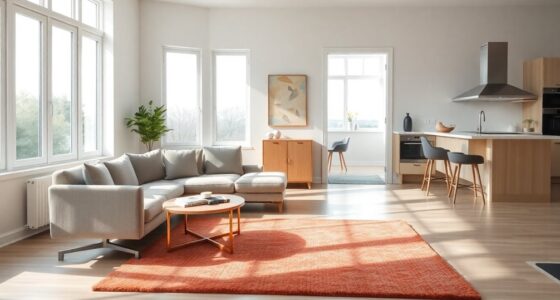
To make your family home accessible and stylish, focus on universal design principles like step-free entryways, wider doorways, and adaptable living spaces. Incorporate smart technology such as voice-activated controls and automated lighting for convenience. Choose design elements like adjustable counters, supportive furniture, and good lighting while blending these features seamlessly into your decor. Prioritizing both safety and style creates an inviting, functional space for everyone—discover more ways to achieve this balance as you explore further.

Get furniture and decor delivered free — and shop member deals
- Fast, free delivery on millions of items
- Access to Prime Big Deal Days deals on October 6–7
- Prime Video, Amazon Music and more included
Key Takeaways
- Incorporate universal design features like step-free entryways and widened doorways to ensure accessibility for all users.
- Use smart technology such as voice-activated controls and automated lighting to enhance safety and independence stylishly.
- Select adjustable-height fixtures and furniture with rounded edges that blend seamlessly with home decor for safety and aesthetics.
- Maximize lighting with natural and artificial sources to create a bright, hazard-free environment for everyone.
- Balance functionality with style by choosing finishes and fixtures that support accessibility while maintaining visual appeal.

Have you ever considered how well your designs serve everyone? When it comes to creating a family home that’s both accessible and stylish, thinking about universal design is essential. Universal design aims to make spaces usable by people of all ages, abilities, and backgrounds. It’s not just about disability; it’s about creating a space that’s flexible and welcoming for everyone. Incorporating smart technology into your home further enhances accessibility, making daily tasks easier and more intuitive. Together, these approaches help you craft a space that’s inclusive without sacrificing style.
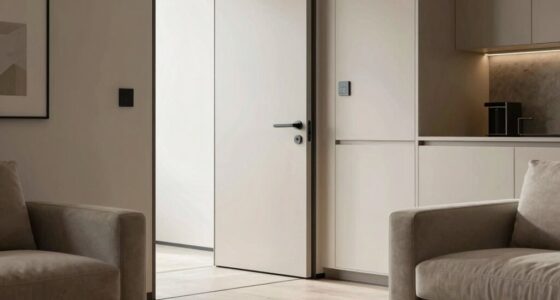
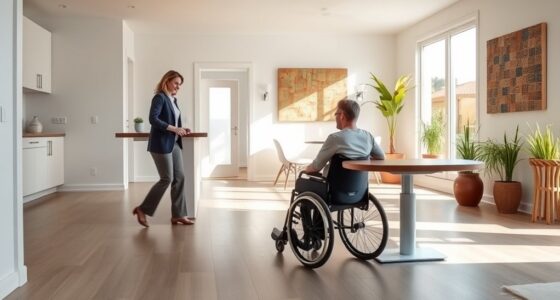
Start by evaluating your home’s layout and features through the lens of universal design. Think about entryways—are they step-free or equipped with ramps, so anyone with mobility challenges can enter comfortably? Widen doorways and hallways to accommodate wheelchairs or walkers, ensuring no one feels restricted. Visual simplicity and clear pathways make navigation easier for everyone, reducing confusion and potential hazards. Use contrast in colors to delineate different areas or to aid those with visual impairments. These adaptations don’t have to be obvious or bulky; they can seamlessly blend into your home’s aesthetic, maintaining its stylish appeal. Additionally, understanding personal goal tracking can help you plan and implement these modifications systematically over time.
Evaluate your home’s layout with universal design—think ramps, wider doors, and clear, stylish pathways for all.
Smart technology plays a pivotal role in making your home more accessible. Voice-activated assistants allow family members to control lights, thermostats, or even open doors without physical effort. Automated lighting systems can turn on automatically when someone enters a room, providing safety and convenience. Smart locks and security systems enable keyless entry, which is especially helpful if someone has difficulty handling traditional keys. These innovations don’t just add convenience—they foster independence and confidence for all family members. Plus, they can be integrated with sleek, modern designs that elevate the overall look of your home.
Lighting, furniture, and fixtures are critical elements that can enhance accessibility while remaining stylish. Use adjustable-height counters and sinks in the kitchen and bathroom to accommodate different users comfortably. Consider furniture with rounded edges and supportive designs, which can be both attractive and safe. Incorporate ample lighting—both natural and artificial—so every corner is well-lit, reducing shadows and obstacles. When choosing fixtures and finishes, opt for colors and textures that complement your decor, creating a cohesive and inviting environment.
Ultimately, designing a family home that’s accessible and stylish involves balancing functionality with aesthetic appeal. By embracing universal design principles and smart technology, you create a space that’s inclusive, safe, and beautiful. It’s about thinking ahead, anticipating needs, and ensuring your home works for everyone—making daily life easier and more enjoyable for your entire family.
widened doorways for wheelchair accessibility
As an affiliate, we earn on qualifying purchases.
As an affiliate, we earn on qualifying purchases.
Frequently Asked Questions
How Can I Incorporate Accessible Design Without Sacrificing Style?
You can incorporate accessible design without compromising style by choosing smart storage solutions that blend seamlessly with your decor, keeping clutter out of sight. Use visual cues, like contrasting colors or textured surfaces, to guide everyone effortlessly around your space. Opt for stylish, ergonomic furniture and accessible fixtures that enhance your home’s aesthetic. This approach guarantees your home is both functional and beautiful, welcoming everyone with comfort and elegance.
What Are Cost-Effective Ways to Improve Home Accessibility?
You can improve home accessibility with budget-friendly upgrades and DIY improvements. Start by adding non-slip rugs and grab bars in key areas like bathrooms. Widen doorways where possible and install lever handles instead of knobs to make them easier to operate. These DIY accessibility improvements are cost-effective, simple to implement, and make your home safer and more accessible for everyone, all without breaking the bank.
How Do I Choose Durable, Stylish Materials for Accessibility Features?
Imagine your home as a welcoming canvas, where eco-friendly materials and space-saving solutions blend style with durability. To choose the right ones, look for options like bamboo or recycled metals that withstand daily wear and tear. Opt for sleek, low-profile designs that save space without sacrificing elegance. Prioritize quality, ease of maintenance, and sustainability, ensuring your accessibility features remain beautiful and functional for years to come.
What Are the Best Lighting Solutions for Accessibility and Aesthetics?
You should consider smart lighting options that offer adjustable brightness and color temperature, making your space more accessible and inviting. Incorporate ambient illumination to create a warm, welcoming atmosphere while ensuring visibility for everyone. Smart lighting allows you to control lights easily, whether through voice commands or apps, enhancing both functionality and aesthetic appeal. This combination helps you achieve a stylish home that’s also highly accessible for all family members.
How Can I Personalize Accessible Design to Match My Family’s Style?
Think of your home as a canvas waiting for your unique brushstrokes. To personalize accessible design, you can incorporate custom fixtures that reflect your family’s personality, blending function with style. Add personalized decor like artwork, textiles, or color schemes that resonate with your vibe. This approach guarantees your space remains welcoming, practical, and a true reflection of who you are, making everyone feel at home in your stylish sanctuary.
Conclusion
By prioritizing accessibility and style, you create a home that truly welcomes everyone—no matter their age or ability. Remember, good design isn’t a thing of the past like a pocket watch; it’s an ongoing journey. Keep adapting, stay creative, and don’t be afraid to blend timeless elements with modern touches. Ultimately, a thoughtfully designed space becomes a sanctuary where all can feel comfortable and cherished, proving that accessibility and style go hand in hand.
Fall Picks
fall essentials
As an affiliate, we earn on qualifying purchases.