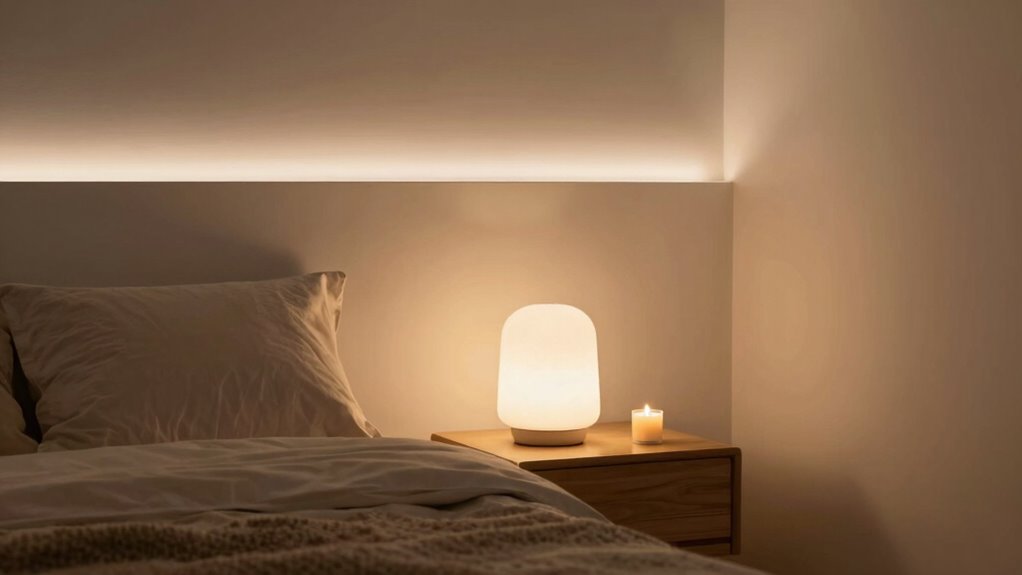

To make your bedroom feel more restful, choose warm, soft lighting with a color temperature around 2700K-3000K to create a cozy vibe. Opt for fixtures with diffused light, like shaded lamps or frosted glass, to prevent harsh shadows. Use dimmers and layered lighting—such as ambient, task, and accent lights—to easily adjust brightness and add depth. Incorporate smart controls for convenience. If you keep exploring, you’ll discover even more ways to craft the perfect relaxing atmosphere.

Get furniture and decor delivered free with Prime
- Fast, free delivery on millions of items
- Prime Video, Amazon Music and more included
- Member-only deals all year
Key Takeaways
- Use warm color temperatures (2700K-3000K) to create a cozy, calming atmosphere.
- Incorporate diffused, soft lighting fixtures like shaded lamps or frosted glass.
- Install dimmer switches for adjustable brightness and mood control.
- Layer lighting with ambient, task, and accent lights for depth and relaxation.
- Opt for smart lighting solutions for remote control and automated ambiance adjustments.
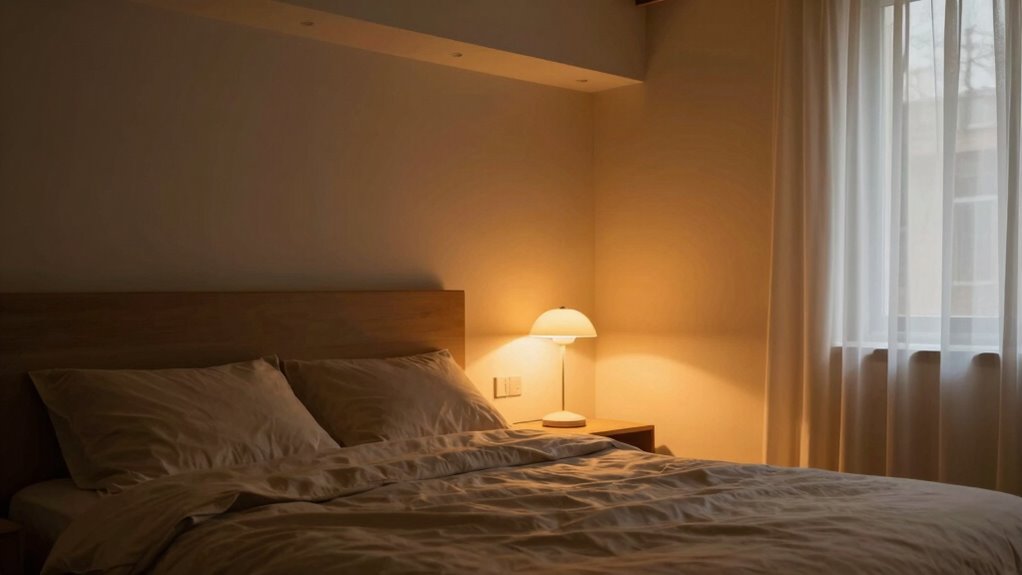
Creating a restful bedroom begins with choosing the right lighting. The type of lighting you select directly impacts the room’s ambiance and your ability to unwind at the end of the day. One of the most important factors to take into account is color temperature. Opt for warm light with a color temperature around 2700K to 3000K, which creates a cozy, calming environment that mimics sunset tones. Cooler light temperatures, like 5000K, tend to feel too stark and energizing, making it harder to relax. By choosing soft, warm lighting, you set a tranquil mood that signals your body to wind down.
Warm lighting around 2700K to 3000K creates a cozy, calming bedroom atmosphere that promotes relaxation and restful sleep.
In addition to color temperature, fixture styles play a vital role in establishing a restful atmosphere. You want fixtures that diffuse light gently rather than harshly, so look for options like shaded lamps, frosted glass, or fabric-covered fixtures. Bedside lamps with adjustable brightness allow you to control the intensity of light, helping you shift smoothly from activity to relaxation. Wall sconces with dimmable features are also excellent because they free up space on your bedside tables and eliminate clutter, contributing to a sense of calm. Incorporating diffused light fixtures also helps to create a softer, more soothing environment that is ideal for winding down.
When selecting fixtures, prioritize those that emit a soft, diffused glow. Direct, bright lights can be disruptive and overstimulating, making it difficult to fall asleep. Instead, choose fixtures with shades that direct light downward or outward, avoiding glare. For ceiling lighting, think about installing a dimmer switch that allows you to easily adjust brightness levels. This flexibility ensures your lighting adapts to different times of day and activities, whether you’re winding down with a book or just relaxing in bed. Using layered lighting techniques further enhances the relaxing atmosphere by providing options for adjusting light levels based on your mood and needs. Incorporating smart lighting options can also enhance convenience by allowing you to control brightness and color temperature remotely or through automation, further improving your bedroom environment. Paying attention to lighting placement can also help to minimize shadows and create a more balanced, peaceful setting.
Remember that layering your lighting creates a more inviting and restful environment. Use a combination of ambient lighting, task lighting, and accent lighting to add depth and warmth. For example, a warm overhead light, a bedside lamp, and perhaps some subtle accent lights behind furniture or along the floor can make your bedroom feel cozy and inviting. Keep the overall design simple and cohesive to promote tranquility, avoiding overly bright or busy fixtures that can overstimulate your senses. Incorporating dimmable lighting options allows you to effortlessly adjust the mood and brightness to suit your needs at any moment.
Ultimately, selecting the right lighting for your bedroom isn’t just about brightness; it’s about creating an atmosphere that encourages rest and relaxation. Pay attention to the color temperature and fixture styles, and invest in options that offer flexibility and softness. Your bedroom should be a sanctuary—calm, inviting, and conducive to restful sleep.
warm LED bedside lamps with dimmer
As an affiliate, we earn on qualifying purchases.
As an affiliate, we earn on qualifying purchases.
Frequently Asked Questions
How Does Natural Light Affect Sleep Quality in Bedrooms?
Natural light positively impacts your sleep quality by regulating your circadian rhythm when you get sunlight exposure during the day. It helps reinforce your sleep environment’s natural cycle, making it easier to fall asleep and wake up refreshed. During the day, let sunlight into your bedroom, but in the evening, dim the lights to signal your body it’s time to wind down. This balance improves your overall sleep comfort and health.
Can Smart Lighting Improve Sleep Habits?
Smart lighting can be your sleep’s best ally, gently guiding your circadian rhythm like a lighthouse in a foggy night. When programmed to mimic natural light, it transforms your sleep environment into a calming oasis, easing you into rest and waking you refreshed. By adjusting brightness and color temperature, you create a seamless flow from day to night, making it easier to relax, fall asleep, and wake up feeling revitalized.
What Color Temperature Is Best for Bedroom Lighting?
The best color temperature for bedroom lighting is warm, around 2700K to 3000K, because it creates a relaxing atmosphere. This warm light falls within the light spectrum that promotes calmness and helps prepare your body for sleep. Cooler temperatures, above 4000K, can be more stimulating and interfere with rest. So, choose warm-colored bulbs to foster a more restful, inviting bedroom environment that supports your sleep habits.
How Do Dimmer Switches Influence Bedroom Relaxation?
Dimmer switches allow you to adjust your bedroom’s lighting levels, enhancing ambient ambiance and mood modulation. By lowering the light intensity, you create a softer, more relaxing environment, perfect for winding down. This flexibility helps you shift seamlessly from daytime brightness to evening coziness. You gain control over your space’s atmosphere, making it easier to relax, unwind, and prepare for restful sleep.
Are There Any Safety Concerns With Certain Lighting Fixtures?
You should definitely consider safety when choosing lighting fixtures, as poor fixture installation can cause serious hazards—think of a loose fixture as a ticking time bomb. Always guarantee proper fixture installation and use bulbs that meet safety standards to prevent electrical fires or damage. Avoid fixtures with exposed wiring, and opt for those with sturdy, child-proof designs. Prioritizing fixture installation and bulb safety keeps your bedroom cozy and secure.
Conclusion
Imagine slipping into a bedroom softly bathed in the gentle glow of warm, dimmed lights, where shadows dance lazily across plush sheets. By choosing the right lighting, you create a sanctuary that embraces you in serenity every night. Let your space whisper calm with subtle, restful illumination, turning your bedroom into a peaceful retreat. With thoughtful lighting choices, each evening becomes a soothing escape, inviting you to unwind and drift into restful sleep effortlessly.
Halloween Picks
halloween
As an affiliate, we earn on qualifying purchases.